
Introduction: Your Tax Refund Is a Credit-Building Opportunity
Every spring, millions of Americans get a lump sum deposited into their bank accounts — and most of it goes toward bills, shopping, or a vacation. But if you know how to use your tax refund to build credit, that same money can quietly reshape your financial future.
The average federal tax refund in 2024 was around $3,050, according to the IRS. That’s enough to make a real dent in your credit profile — if you use it strategically. A few smart moves now can mean lower interest rates, better loan terms, and more financial options within 6 to 12 months.
This guide walks you through the best ways to put your refund to work for your credit score — no complicated finance jargon, just practical steps that actually move the needle.
Key Takeaways
- Paying down revolving credit card debt is one of the fastest ways to improve your credit utilization ratio.
- A secured credit card funded with your refund can establish or rebuild credit history quickly.
- Becoming an authorized user or opening a credit-builder loan are low-risk options for thin credit files.
- Avoiding new debt and keeping accounts open protects the credit gains you make this tax season.
Section 1: Pay Down Credit Card Debt to Improve Your Utilization Ratio
Why Credit Utilization Matters So Much
Credit utilization is the percentage of your available revolving credit that you’re currently using. It accounts for roughly 30% of your FICO score — second only to payment history. Most experts recommend keeping it below 30%, and ideally below 10%.
If you’re carrying balances across multiple cards, your tax refund can make an immediate impact. Paying down even one high-balance card can drop your utilization significantly and push your score higher within one billing cycle.
Where to Focus Your Payoff First
Target the card with the highest utilization rate first — not necessarily the highest balance. For example, a $900 balance on a $1,000-limit card (90% utilization) is hurting your score far more than a $2,000 balance on a $10,000-limit card (20% utilization).
If you want to learn more about how your score is calculated and what “good” looks like, check out our guide on what is a good credit score before you start prioritizing your payments.
Section 2: Use Your Tax Refund to Build Credit With a Secured Card
How a Secured Credit Card Works
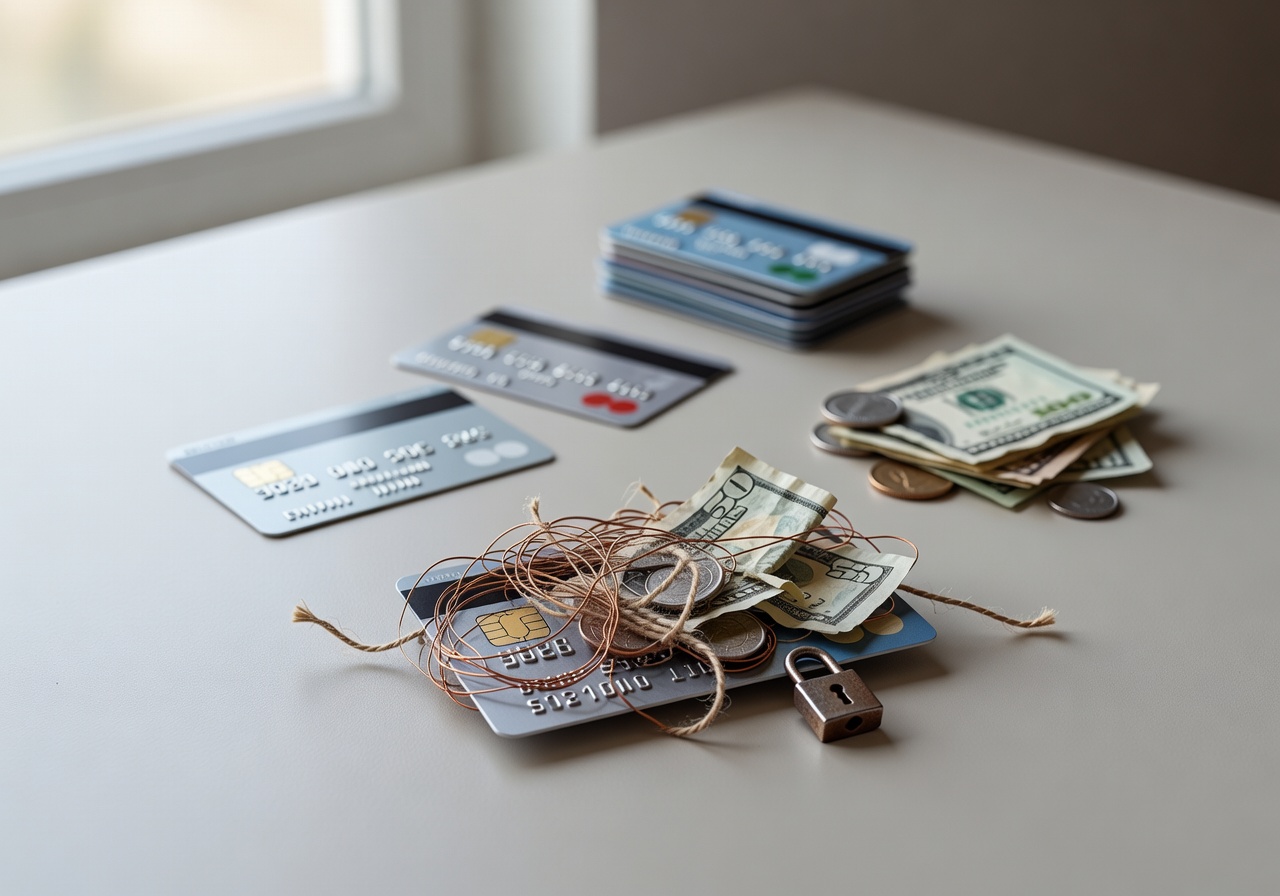
A secured credit card requires a cash deposit — usually $200 to $500 — that becomes your credit limit. The card reports to the major credit bureaus just like a regular credit card, so every on-time payment builds your credit history.
If you have no credit or damaged credit, this is one of the most reliable tools available. Your tax refund covers the deposit, and responsible use does the heavy lifting from there.
What to Look For in a Secured Card
Not all secured cards are equal. Look for cards that report to all three bureaus (Experian, Equifax, and TransUnion), have a clear upgrade path to an unsecured card, and charge low or no annual fees.
The Consumer Financial Protection Bureau’s credit card comparison tool can help you evaluate secured card options side by side before you commit.
Section 3: Open a Credit-Builder Loan With Your Refund
What Is a Credit-Builder Loan?
A credit-builder loan is a small loan — typically $300 to $1,000 — designed specifically to help people establish or improve their credit. Unlike a traditional loan, the money is held in a savings account while you make monthly payments. Once the loan is paid off, you receive the funds.
You’re essentially paying yourself while building a positive payment history. Credit unions, community banks, and online lenders like Self Financial offer these products. According to a study by the CFPB, credit-builder loans helped 24% of participants establish a credit score for the first time.
Using Your Refund to Fund the Payments
Here’s the smart move: set aside a portion of your refund in a separate account and automate your monthly credit-builder loan payments from it. This guarantees on-time payments — the single most important factor in your credit score — without requiring you to change your monthly budget.
If you’re working on a broader credit repair strategy, our 90-day credit score improvement plan pairs well with this approach and gives you a full roadmap.
Section 4: Protect Your Credit Gains — What Not to Do With Your Refund
Avoid Opening Too Many New Accounts at Once
Each time you apply for new credit, a hard inquiry appears on your credit report and temporarily lowers your score. Opening multiple new accounts at once also reduces your average account age — another key scoring factor.
If your refund is helping you build credit, don’t undermine the work by applying for five new cards in the same month. Be selective and strategic.
Don’t Close Old Accounts After Paying Them Off
Paying off a credit card with your refund is great. Closing it right after is not. Closing an account reduces your total available credit, which can spike your utilization ratio and potentially lower your score.
Keep paid-off accounts open and use them for small, recurring purchases — like a streaming subscription — to keep them active without accumulating debt.
Be Careful With Personal Loans
Some people consider using their refund as a down payment on a personal loan to consolidate debt. This can work, but only if the loan interest rate is lower than what you’re currently paying. The personal lending market has shifted significantly — learn more about how rising interest rates are affecting personal loans before taking on new debt.
Also consider that a new installment loan can temporarily dip your score. If you’re planning a major purchase — like financing a vehicle — knowing what credit score you need to buy a car can help you decide whether to consolidate now or wait until after the purchase.

FAQ
How much of my tax refund should I use to build credit?
There’s no fixed rule, but prioritize high-impact moves first. If you have high-utilization credit cards, put the bulk of it toward those balances. If your credit is thin, $200 to $500 for a secured card deposit or credit-builder loan is a solid starting point. Keep some in an emergency fund so you don’t need to rely on credit cards for unexpected expenses.
How fast will my credit score improve if I pay down debt with my refund?
If your credit utilization drops significantly after a payoff, you can see score changes within one to two billing cycles — sometimes within 30 days. The exact increase depends on your overall credit profile, but drops in utilization tend to show results faster than most other credit moves.
Can I use my tax refund to build credit if I have no credit history?
Yes. A secured credit card or a credit-builder loan is the best path for someone starting from scratch. Both products are designed for people with no credit file and report to the major bureaus. Consistent on-time payments over six to twelve months can help you establish a scoreable credit file.
Is it better to pay off debt or put money in savings with my tax refund?
High-interest credit card debt almost always costs more than savings accounts earn, so paying off debt first typically makes more financial sense. However, having at least a small emergency fund ($500 to $1,000) prevents you from turning to credit cards when unexpected expenses arise — which protects the gains you’re making on your credit score.
Will opening a secured credit card hurt my credit score?
Opening a new account triggers a hard inquiry, which can cause a small, temporary dip — usually five points or fewer. Over time, the new account adds to your credit history and increases your available credit, which typically outweighs that initial dip. The net effect is usually positive within three to six months of responsible use.
Can I use my refund to become an authorized user on someone else’s account?
Becoming an authorized user doesn’t cost money — it’s a favor someone grants you. However, you can offer to pay down a family member’s card balance with your refund in exchange for being added as an authorized user. Their positive payment history can transfer to your credit file, which is a legitimate credit-building strategy.
What if my tax refund is small — less than $500?
Even a small refund can make a meaningful difference. A $200 secured card deposit is enough to get started. Alternatively, use it to pay down the card with your highest utilization rate, even if you can’t clear the full balance. Partial paydowns still improve your utilization ratio and, by extension, your score.
Sources
- IRS — Filing Season Statistics: Average Refund Amounts
- Consumer Financial Protection Bureau — Credit Card Comparison Tool
- Consumer Financial Protection Bureau — Credit-Builder Loans Study
- MyFICO — What’s in Your Credit Score
- Experian — What Is a Good Credit Score?
- Federal Reserve — Consumer Credit Statistical Release
Introduction: Your Tax Refund Is a Credit-Building Opportunity
Every spring, millions of Americans get a lump sum deposited into their bank accounts — and most of it goes toward bills, shopping, or a vacation. But if you know how to use your tax refund to build credit, that same money can quietly reshape your financial future.
The average federal tax refund in 2024 was around $3,050, according to the IRS. That’s enough to make a real dent in your credit profile — if you use it strategically. A few smart moves now can mean lower interest rates, better loan terms, and more financial options within 6 to 12 months.
This guide walks you through the best ways to put your refund to work for your credit score — no complicated finance jargon, just practical steps that actually move the needle.
Key Takeaways
- Paying down revolving credit card debt is one of the fastest ways to improve your credit utilization ratio.
- A secured credit card funded with your refund can establish or rebuild credit history quickly.
- Becoming an authorized user or opening a credit-builder loan are low-risk options for thin credit files.
- Avoiding new debt and keeping accounts open protects the credit gains you make this tax season.
Section 1: Pay Down Credit Card Debt to Improve Your Utilization Ratio
Why Credit Utilization Matters So Much
Credit utilization is the percentage of your available revolving credit that you’re currently using. It accounts for roughly 30% of your FICO score — second only to payment history. Most experts recommend keeping it below 30%, and ideally below 10%.
If you’re carrying balances across multiple cards, your tax refund can make an immediate impact. Paying down even one high-balance card can drop your utilization significantly and push your score higher within one billing cycle.
Where to Focus Your Payoff First
Target the card with the highest utilization rate first — not necessarily the highest balance. For example, a $900 balance on a $1,000-limit card (90% utilization) is hurting your score far more than a $2,000 balance on a $10,000-limit card (20% utilization).
If you want to learn more about how your score is calculated and what “good” looks like, check out our guide on what is a good credit score before you start prioritizing your payments.
Section 2: Use Your Tax Refund to Build Credit With a Secured Card
How a Secured Credit Card Works
A secured credit card requires a cash deposit — usually $200 to $500 — that becomes your credit limit. The card reports to the major credit bureaus just like a regular credit card, so every on-time payment builds your credit history.
If you have no credit or damaged credit, this is one of the most reliable tools available. Your tax refund covers the deposit, and responsible use does the heavy lifting from there.
What to Look For in a Secured Card
Not all secured cards are equal. Look for cards that report to all three bureaus (Experian, Equifax, and TransUnion), have a clear upgrade path to an unsecured card, and charge low or no annual fees.
The Consumer Financial Protection Bureau’s credit card comparison tool can help you evaluate secured card options side by side before you commit.
Section 3: Open a Credit-Builder Loan With Your Refund
What Is a Credit-Builder Loan?
A credit-builder loan is a small loan — typically $300 to $1,000 — designed specifically to help people establish or improve their credit. Unlike a traditional loan, the money is held in a savings account while you make monthly payments. Once the loan is paid off, you receive the funds.
You’re essentially paying yourself while building a positive payment history. Credit unions, community banks, and online lenders like Self Financial offer these products. According to a study by the CFPB, credit-builder loans helped 24% of participants establish a credit score for the first time.
Using Your Refund to Fund the Payments
Here’s the smart move: set aside a portion of your refund in a separate account and automate your monthly credit-builder loan payments from it. This guarantees on-time payments — the single most important factor in your credit score — without requiring you to change your monthly budget.
If you’re working on a broader credit repair strategy, our 90-day credit score improvement plan pairs well with this approach and gives you a full roadmap.
Section 4: Protect Your Credit Gains — What Not to Do With Your Refund
Avoid Opening Too Many New Accounts at Once
Each time you apply for new credit, a hard inquiry appears on your credit report and temporarily lowers your score. Opening multiple new accounts at once also reduces your average account age — another key scoring factor.
If your refund is helping you build credit, don’t undermine the work by applying for five new cards in the same month. Be selective and strategic.
Don’t Close Old Accounts After Paying Them Off
Paying off a credit card with your refund is great. Closing it right after is not. Closing an account reduces your total available credit, which can spike your utilization ratio and potentially lower your score.
Keep paid-off accounts open and use them for small, recurring purchases — like a streaming subscription — to keep them active without accumulating debt.
Be Careful With Personal Loans
Some people consider using their refund as a down payment on a personal loan to consolidate debt. This can work, but only if the loan interest rate is lower than what you’re currently paying. The personal lending market has shifted significantly — learn more about how rising interest rates are affecting personal loans before taking on new debt.
Also consider that a new installment loan can temporarily dip your score. If you’re planning a major purchase — like financing a vehicle — knowing what credit score you need to buy a car can help you decide whether to consolidate now or wait until after the purchase.
FAQ
How much of my tax refund should I use to build credit?
There’s no fixed rule, but prioritize high-impact moves first. If you have high-utilization credit cards, put the bulk of it toward those balances. If your credit is thin, $200 to $500 for a secured card deposit or credit-builder loan is a solid starting point. Keep some in an emergency fund so you don’t need to rely on credit cards for unexpected expenses.
How fast will my credit score improve if I pay down debt with my refund?
If your credit utilization drops significantly after a payoff, you can see score changes within one to two billing cycles — sometimes within 30 days. The exact increase depends on your overall credit profile, but drops in utilization tend to show results faster than most other credit moves.
Can I use my tax refund to build credit if I have no credit history?
Yes. A secured credit card or a credit-builder loan is the best path for someone starting from scratch. Both products are designed for people with no credit file and report to the major bureaus. Consistent on-time payments over six to twelve months can help you establish a scoreable credit file.
Is it better to pay off debt or put money in savings with my tax refund?
High-interest credit card debt almost always costs more than savings accounts earn, so paying off debt first typically makes more financial sense. However, having at least a small emergency fund ($500 to $1,000) prevents you from turning to credit cards when unexpected expenses arise — which protects the gains you’re making on your credit score.
Will opening a secured credit card hurt my credit score?
Opening a new account triggers a hard inquiry, which can cause a small, temporary dip — usually five points or fewer. Over time, the new account adds to your credit history and increases your available credit, which typically outweighs that initial dip. The net effect is usually positive within three to six months of responsible use.
Can I use my refund to become an authorized user on someone else’s account?
Becoming an authorized user doesn’t cost money — it’s a favor someone grants you. However, you can offer to pay down a family member’s card balance with your refund in exchange for being added as an authorized user. Their positive payment history can transfer to your credit file, which is a legitimate credit-building strategy.
What if my tax refund is small — less than $500?
Even a small refund can make a meaningful difference. A $200 secured card deposit is enough to get started. Alternatively, use it to pay down the card with your highest utilization rate, even if you can’t clear the full balance. Partial paydowns still improve your utilization ratio and, by extension, your score.
Sources
- IRS — Filing Season Statistics: Average Refund Amounts
- Consumer Financial Protection Bureau — Credit Card Comparison Tool
- Consumer Financial Protection Bureau — Credit-Builder Loans Study
- MyFICO — What’s in Your Credit Score
- Experian — What Is a Good Credit Score?
- Federal Reserve — Consumer Credit Statistical Release



)