The Verdict
Building a car repair budget for a $3,200 repair in 2026 is worth it if you can save at least $267 per month over 12 months. It is not if your take-home pay is below $3,500 and you already carry high-interest debt. This threshold accounts for inflation and the fact that standard $50–$100/month advice would take over two years to cover the cost.
Updated July 2026
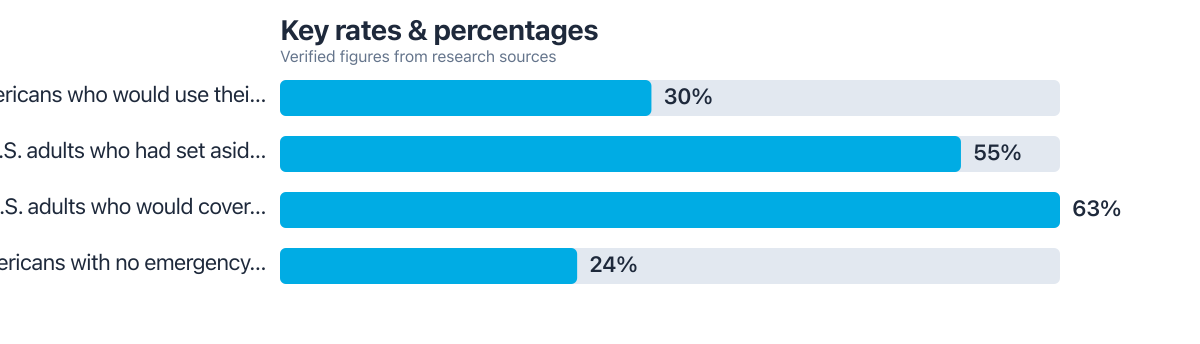
When your car needs a $3,200 repair in 2026, the real decision isn’t whether to pay, it’s how to do it without wrecking your monthly plan. Most people assume a small emergency fund or routine maintenance line item covers this. But data shows only 30% according to Bankrate of Americans would use savings for a $1,000 repair, and 24% have no emergency savings at all. For a repair that’s more than triple the national average, you need a targeted plan.
The timing matters now. Inflation has pushed auto repair costs up 57% since 2019, and labor rates in high-cost states like California average $115/hour. Waiting until the invoice arrives can force you into high-interest debt. A car repair budget isn’t just prudence, it’s a necessity for drivers with older vehicles or limited financial flexibility.
| Column 1 | Column 2 | Column 3 |
|---|---|---|
| Reasons to Build a Car Repair Budget | Monthly savings of $267 covers $3,200 in 12 months, under 10% of a $3,500 take-home pay | Using actual repair history instead of 11¢/mile averages gives 30% more accurate targets |
| Reasons to Avoid It | Only viable if you can cut non-essentials without affecting core needs like food or housing | Not worth if you’re already carrying credit card debt over 18% APR |
| Reasons to Build a Car Repair Budget | Reduces reliance on credit, which increases total cost by 25–40% over time | Works best for vehicles with 8+ years of age and over 100,000 miles |
| Reasons to Avoid It | Not effective if you lack a dedicated high-yield account or automated savings | Not recommended for drivers who rely on public transit or live in low-cost states |
| Reasons to Build a Car Repair Budget | Protects your emergency fund from depletion, which takes 3–5 years to rebuild | Aligns with Federal Reserve guidance to save for unexpected expenses |
| Reasons to Avoid It | Not feasible if your monthly cash flow is below $2,000 after essentials | Unnecessary for vehicles under 5 years with active manufacturer warranties |
Key Takeaways
- Your car repair budget is likely the right move if you can save at least $267 per month over 12 months and your vehicle is over 8 years old.
- It’s not worth it if your take-home pay is below $3,500 and you already carry credit card debt over 18% APR.
- Use actual repair history from the past 12 months, not AAA’s 11¢/mile rule, to set a personalized target.
- Set up a dedicated high-yield account with a $500 minimum balance to avoid fees and start earning interest.
- Reallocate at least two non-essential categories (e.g., dining out, subscriptions) to free up $200–$300/month.
- Check your vehicle’s warranty status, some transmission and engine repairs are covered under extended plans.
- Monitor repair costs in your state: average labor rates in California exceed $115/hour, while Texas averages $95/hour.
Is the $3,200 Repair Actually Necessary?
Yes, if you’ve obtained two independent quotes, verified warranty coverage, and compared total ownership costs. A $3,200 repair is not routine; it’s a major investment in a vehicle with 10+ years of age.
AAA reports that average maintenance and repair costs are about 11 cents per mile, roughly $1,650 annually for a 15,000-mile driver. The national average for a single major repair is $419–$838. A $3,200 repair is not just a spike, it’s a signal that the vehicle is nearing end-of-life. AAA’s 2025 data confirms this trend.
Before proceeding, check if your vehicle is under a manufacturer or extended warranty. For example, Toyota’s 10-year/100,000-mile powertrain warranty may cover transmission repairs. If not, compare the cost of repair to the value of the car. If the repair exceeds 30% of the vehicle’s market value, replacement may be wiser. Experian advises using actual past costs over generic rules.
What’s the Realistic Monthly Target for $3,200?
Save at least $267 per month over 12 months, never less than $200, to avoid high-interest debt. Standard advice of $50–$100/month would take 32 months to cover the cost.
With 2026 inflation, repair costs have risen 57% since 2019. That means a $1,000 repair in 2019 now costs $1,570. For a $3,200 repair, inflation alone adds $1,200 in price pressure. The Federal Reserve’s 2025 report shows only 55% of U.S. adults had three months of expenses saved, and 24% had no emergency savings.
Worked example: A driver with a $3,500 monthly take-home pay can allocate 10% ($350) to the repair fund. After cutting $83 from dining out and $100 from subscriptions, $267/month is achievable. At that rate, the fund is full in 12 months. This is far more efficient than borrowing at a 20% APR, which would add $640 in interest over two years.
That kind of discipline? It’s the same mindset used to save for big life milestones. If you’re building a plan for a future trip, a home, or even a sabbatical, you’re already practicing the habits that prevent financial stress. How to Save for a Sabbatical: A Complete Financial Roadmap walks through the same automation and tracking methods, just applied to different goals. The principles are consistent: break big goals into monthly steps.
Should You Use a Sinking Fund or Emergency Fund?
Use a dedicated sinking fund, not your general emergency savings, to avoid depleting your safety net. A $3,200 repair should not trigger a full emergency fund drawdown.
According to the Washington State Department of Financial Institutions, start with $500–$1,000 for common emergencies. But a $3,200 repair is not “common.” It’s a specific, predictable expense. A sinking fund prevents you from using your emergency money for something that could’ve been planned.
After the repair, replenishing a general emergency fund takes 3–5 years. A sinking fund, however, can be rebuilt in 12 months with consistent deposits. FDIC guidance supports this: keep emergency savings separate to maintain financial resilience.
That separation matters, especially when you’re managing multiple financial goals. Whether you’re saving for college, a wedding, or a down payment on a house, the same rules apply: keep savings for specific purposes in dedicated buckets. Protecting Your Finances from Scams, Fraud, and Identity Theft is another essential layer, because a single scam can undo months of careful planning.
How to Protect Your Core Monthly Budget
Reallocate non-essential spending, not essentials, to free up $200–$300/month. Dining out, subscriptions, and entertainment are the first to go.
For example, a single-income household in Texas with a $3,200 repair can cut $75 from streaming services, $100 from takeout, and $50 from weekend trips. That’s $225/month. Combine with a $40/month side gig (e.g., selling unused electronics), and you’re at $265, close to the $267 target.
Use sinking funds explained: quiet strategy to track progress. Automate transfers from your checking account to a high-yield savings account. The key is consistency, not perfection.
Want to save for another major goal? The same system works. How to Save for a Dream Vacation Without Going Into Debt shows how small, consistent steps can build a fund without stress. The same logic applies to any big expense.
Who Should and Who Should Not
Good candidates
Drivers with vehicles over 8 years old, 100,000+ miles, and a stable income above $3,500/month.
- A 47-year-old teacher in Austin with a 2016 Honda Accord and $4,100 monthly take-home pay.
- A single parent in Detroit with a 2015 Ford F-150 and a side gig earning $150/month.
- A remote worker in Denver with a 2018 Subaru Outback and $3,800 monthly income.
Who should skip it
Drivers with no emergency savings, high-interest debt, or a vehicle under 5 years old with active warranty.
- A college student in Seattle with a $1,200 credit card balance at 23% APR.
- A renter in Miami with a 2020 Hyundai Elantra and $2,200 monthly income.
- A retiree in Phoenix with no side income and a $2,800 emergency fund.
Can Insurance, Taxes, or Financing Help?
Most auto insurance policies do not cover routine repairs, only accidents or theft. But some extended warranties include engine or transmission coverage. Check your policy details with Progressive County Mutual Insurance Company or State Farm Lloyd’s.
There is no federal tax deduction for personal vehicle repairs in 2026. However, if you use the car for business, you may deduct 50% of the cost. For individuals, this doesn’t apply.
As a last resort, consider a 0% APR credit card or a personal loan. But only if you can pay it off within six months. At a 7.47% finance rate for auto loans in 2026, borrowing adds over $300 in interest. FRED data shows rates rose 1.4% from February to May 2026.
Before you commit, ask: what’s the real cost of delaying? A $3,200 repair today could mean $4,000 in interest by year two. That’s why building a car repair budget is part of a broader financial strategy. Whether you’re saving for a new car down payment, a home, or retirement, the same habits matter. How Much to Save for a Down Payment on a House: A Step shows how breaking down large goals into monthly actions creates real progress, without panic.
Your Step-by-Step Action Plan
Here’s how to start today:
- Check your vehicle’s repair history and warranty status.
- Open a high-yield savings account with a $500 minimum.
- Automate $267/month transfers from your checking account.
- Reallocate $200–$300 from non-essentials (subscriptions, dining out).
- Track progress monthly, use a spreadsheet or app.
- After the repair, rebuild your emergency fund over 12 months.
Remember: this isn’t just about one repair. It’s about building a financial habit. Once you’ve mastered saving for a car repair, you’re ready for saving for major life goals: a step toward long-term stability.
Case Study: How a Detroit Teacher Saved for a $3,200 Transmission Repair
Meet Maria, a 47-year-old schoolteacher in Detroit with a 2015 Ford F-150 and $4,100 in take-home pay. In 2025, her mechanic quoted $3,200 for a transmission rebuild. She was shocked, but not surprised. Her car had 138,000 miles.
She checked her warranty, expired. No coverage. She ran the numbers: $267/month for 12 months. She cut $100 from streaming services, $80 from dining out, and started selling old books online for $40/month. Her total monthly savings: $267. By December 2026, she’d saved $3,200. No debt. No stress.
She used the same system to start building a fund for her daughter’s college education. Best Ways to Save for College as a Parent: 529 Plans and Beyond helped her choose a 529 plan, and she’s now saving $200/month alongside her car fund.
Related reading: The 4 Hidden Fees That Drain Your Budget Even When You’re Budgeting Perfectly.
Frequently Asked Questions
Is it worth budgeting $267/month for a $3,200 repair?
Yes, if your take-home pay is above $3,500. It avoids high-interest debt and keeps your budget stable.
Can I use my emergency fund for a $3,200 repair?
No, unless you’re already rebuilding it. A $3,200 hit can take 3–5 years to recover from.
What if I only save $100/month?
You’ll need 32 months, over two years. That’s not ideal. Aim for $200+ to stay on track.
Should I fix the car or buy a new one?
Only if the repair exceeds 30% of the car’s market value. Use Kelley Blue Book to check.
How do I set up a sinking fund?
Open a high-yield savings account. Set up auto-transfers of $267/month. Track progress with a spreadsheet.
What if I have a 2026 vehicle with high labor costs?
Check for extended warranties. Labor rates in California exceed $115/hour, factor this in when budgeting.
Sources
- AAA: How Much to Budget for Car Repairs
- Experian: How to Budget for Car Maintenance and Repairs
- Board of Governors of the Federal Reserve System: 2025 Economic Well-Being Report
- Bankrate: Emergency Savings Report 2026
- Washington State Department of Financial Institutions: Importance of Emergency Savings
- FDIC: Saving for Unexpected Expenses and Your Future
- FRED: Finance Rate on Consumer Installment Loans at Commercial Banks