Quick Answer
Using your savings account for investments risks losing principal during market downturns. The average savings account yields 4.4% annually, below long-term inflation. The S&P 500 has returned 11.5% annually over 40 years, but with volatility. For short-term goals, the FDIC-insured savings account is safer. Investing emergency funds can lead to sequence-of-returns risk and forced sales at a loss. Always build a 3-6 month emergency fund first.
When you hear “savings vs investments,” you’re not choosing between two tools. You’re choosing between safety and growth. A savings account protects capital with FDIC insurance. An investment portfolio grows over time but carries market risk. In August 2025, the U.S. personal saving rate stood at 4.4%, according to the U.S. Bureau of Economic Analysis (2026). This rate is near the historical inflation average, meaning your money may not truly grow in purchasing power.
Understanding this distinction is critical. Many people treat their savings balance as “available cash” for investing. That leads to poor timing, emotional decisions, and financial loss. This guide breaks down why separating savings from investments isn’t just smart, it’s necessary. You’ll learn the real cost of inflation, how market timing can destroy your emergency fund, and when it’s safe to move money into stocks or mutual funds.
Key Takeaways
- 24% of U.S. adults have no emergency savings at all, according to Bankrate’s 2026 Annual Emergency Savings Report.
- The S&P 500 has delivered an average annual return of 11.5% over the past 40 years, per Fidelity Investments (2026).
- FDIC-insured accounts protect up to $250,000 per depositor, per institution.
- Even high-yield savings accounts (HYSA) rarely exceed 4.4% in 2025, while inflation has averaged 3% over the past decade.
- Investing emergency funds exposes you to sequence-of-returns risk. Selling at a loss during downturns can derail short-term goals.
In This Guide
- Why Savings vs Investments Serve Different Purposes
- Your Emergency Fund Belongs in a Savings Account, Not the Market
- Inflation Silently Erodes Money Left in Traditional Savings
- The Real Risks When You Move Savings Money into Investments Too Early
- How Much You Actually Need in Savings Before Any Investing Makes Sense
- High-Yield Savings and Cash Equivalents as a Middle Ground
Why Savings vs Investments Serve Different Purposes
Savings prioritize capital preservation and immediate access. Investments prioritize long-term growth through risk. The two exist on opposite ends of a financial spectrum. A savings account is like a vault. An investment portfolio is like a ship with sails.
Capital Preservation vs. Growth
As Sebastian Rollén, Senior Investing Researcher at Betterment, notes: *“An FDIC-insured savings account is nearly risk-free for short-term savings and is not subject to market fluctuations.”* This means your principal remains intact. Investments do not offer that guarantee. A stock can drop 30% in a single quarter. A savings account will not.
According to the SEC, savings are for “safe, accessible products,” while investments involve “higher-risk products like stocks.” That’s not a suggestion. It’s a structural distinction. Trying to grow your emergency fund in the market is like gambling with your safety net. The risk is real. The cost of error is too high.
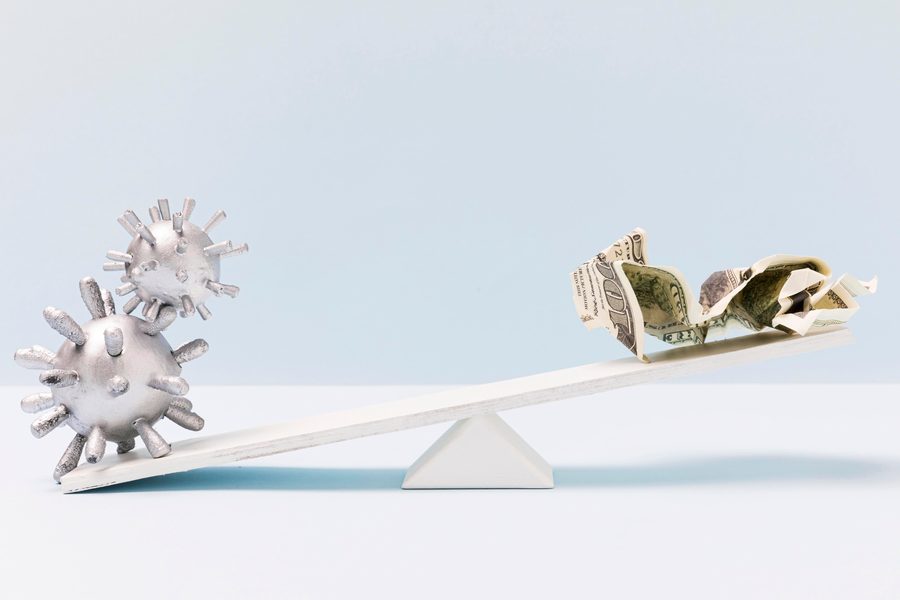
The S&P 500 has returned 11.5% annually on average since 1980, but with 20%+ drawdowns every 5–7 years, according to Fidelity Investments (2026).
Your Emergency Fund Belongs in a Savings Account, Not the Market
Investing your emergency fund is like putting your lifeboat in the ocean during a storm. You’re not protecting yourself, you’re gambling with survival.
Why Liquidity Matters
Emergency funds must be accessible. If you lose a job, face a medical bill, or need to repair your car, you can’t wait for a market recovery. The average U.S. household needs 5.7 months of expenses saved, according to the Board of Governors of the Federal Reserve System (2025).
Even if your account is in a “safe” fund, the market won’t guarantee liquidity. In 2022, some mutual funds suspended redemptions during volatility. You couldn’t access your money when you needed it. A savings account doesn’t do that. It’s designed for instant access.

Set up automatic transfers from your checking account to a high-yield savings account. Save $200/month to build a 6-month emergency fund in under three years.
Inflation Silently Erodes Money Left in Traditional Savings
Even though savings accounts protect your principal, they often fail to beat inflation. This means your money loses real value over time.
Real Purchasing Power Decline
As Sebastian Rollén points out: *“If a savings account has a lower interest rate than inflation, the purchasing power of the cash in the account will decrease over time.”* In 2024, inflation averaged 3% annually. The average savings account yield was 4.4% in early 2026, just barely ahead.
Over five years, $10,000 in a savings account earning 4.4% grows to $12,345. But with 3% inflation, that same $10,000 only buys what $11,593 could in 2020. You’ve gained $800 in nominal terms, but only $752 in real purchasing power.
Over 10 years, the gap widens. That $10,000 grows to $15,280. Inflation-adjusted, it’s worth only $13,439. You’ve lost $641 in real value. That’s not growth. It’s slow erosion.
The Real Risks When You Move Savings Money into Investments Too Early
Here’s the thing: investing your savings too soon can destroy your financial stability. A single market downturn can erase years of progress.
Sequence-of-Returns Risk
Sequence-of-returns risk is real. If you withdraw money from an investment portfolio during a market crash, you sell low and lock in losses. For example, if you’re saving for a home down payment and the market drops 25% in the year before you buy, you may have to sell at a loss, just to meet your goal.
In 2022, a parent with $20,000 invested in a balanced fund saw it drop to $15,200. They needed $20,000 for a down payment. They had to sell at a $4,800 loss. That’s not a strategy. That’s a breakdown.
Even if you avoid selling, emotional stress can lead to poor decisions. Panic selling is the #1 way people lose money in investing.
How Much You Actually Need in Savings Before Any Investing Makes Sense
Before you invest, you need three things: no high-interest debt, a 3–6 month emergency fund, and a clear long-term goal.
Priority Hierarchy
Never invest until your emergency fund is set. The 3–6 month rule is not a suggestion. It’s a standard repeated by Vanguard, Fidelity, and the Federal Reserve. You can’t have both safety and growth if you’re not protected.
For example, if you’re saving for a car down payment, use the guide on car down payments to determine your target. Then save that amount in a high-yield savings account first. Only move the money after you’ve hit your goal.
Similarly, if you’re planning a wedding, use this guide on wedding savings to set a realistic budget. Build the fund in savings first. Don’t risk it in stocks.
High-Yield Savings and Cash Equivalents as a Middle Ground
Yes, investing beats savings long-term. But you don’t need to rush. High-yield savings accounts (HYSAs) offer better returns than traditional ones.
Current Rates and Trade-Offs
As of early 2026, the average HYSA yields 4.4%, according to the U.S. Bureau of Economic Analysis (2026). This is close to the 10-year Treasury yield of 4.38%, per FRED Economic Indicators (2025). Both are safer than stocks. But HYSAs offer instant access. Treasuries don’t.
For short-term goals under 3 years, a HYSA is better than any investment. For longer goals, even conservative bonds or index funds outperform. But only after your emergency fund is secure.
Consider using a sinking fund to set aside money for future goals. Once you’ve saved $10,000 in a HYSA for a home down payment, you can consider moving a portion to low-cost ETFs, but never all of it.
| Financial Goal | Recommended Tool | Expected Return (2025) | Accessibility |
|---|---|---|---|
| Emergency Fund (0–6 months) | FDIC-insured savings account | 4.4% | Immediate |
| Car Down Payment (1–3 years) | High-Yield Savings Account (HYSA) | 4.4% | Immediate |
| Home Down Payment (3–5 years) | Conservative bond fund or HYSA | 4.38%–6.2% | Variable (3–5 days) |
| Retirement (10+ years) | Stock index fund or target-date fund | 11.5% average (S&P 500) | Delayed (3–7 business days) |
Related reading: Why You Shouldn’t Ignore Your Savings Goal Milestones, Even If You’re Ahead.
Frequently Asked Questions
Can I use my savings account to invest in stocks?
No. Savings accounts are for short-term safety. Stocks are volatile. Putting savings in stocks risks losing money when you need it most.
What happens if I invest my emergency fund and the market crashes?
If the market crashes near your withdrawal date, you may have to sell at a loss. This is known as sequence-of-returns risk. You could lose 20–50% of your savings.
How much should I keep in savings before investing?
Save at least 3–6 months of essential expenses in a savings account. Only invest after that goal is met. Use this guide to clarify financial goals.
Is a high-yield savings account better than investing?
For goals within 1–3 years, yes. For goals over 5 years, investing usually beats savings. But only after your emergency fund is secure.
Can I lose money in a savings account?
No, not if the account is FDIC-insured. The FDIC covers up to $250,000 per depositor, per institution. But you can lose purchasing power if inflation exceeds your interest rate.
How do I protect my savings from inflation?
Use a high-yield savings account or short-term Treasuries. For long-term goals, invest in diversified portfolios. But never move emergency funds into the market.
What’s the risk of not having an emergency fund?
You’ll face debt, late fees, or reliance on high-interest credit. According to Bankrate’s 2026 report, 24% of Americans have no emergency savings at all.
Sources
- Bankrate (2026), 24% of U.S. adults have no emergency savings
- Board of Governors of the Federal Reserve System (2025)
- Fidelity Investments (2026), 11.5% average annual S&P 500 return
- U.S. Bureau of Economic Analysis (2026), 4.4% personal saving rate
- U.S. Securities and Exchange Commission, Guide to Savings and Investing
- Federal Deposit Insurance Corporation, Savings and Future Planning
- CNBC, Saving vs Investing (Sebastian Rollén quotes)
- FRED Economic Indicators, 10-Year Treasury Yield (4.38%)