
Fact-checked by the The Credit Scout editorial team
Quick Answer
To save money home repairs without cutting corners, combine a consistent maintenance fund, a repair-or-replace decision framework, and smart contractor sourcing. Budget 1% to 2% of your home’s purchase price each year for planned upkeep, emergency fixes routinely cost 50% to 100% more than scheduled work.
The fastest way to save money home repairs is to stop treating them as surprises. The industry-standard recommendation, budget 1% to 2% of your home’s purchase price every year for maintenance, exists for a reason: unplanned breakdowns routinely cost double what a scheduled fix would. When a water heater fails on a holiday weekend, the repair bill isn’t just the part; it’s the emergency surcharge, the rushed labor, and sometimes the cascade of water damage that follows.
According to Bankrate and State Farm, the 1% to 2% rule, and up to 4% when major repairs are included, gives homeowners a clear target (Bankrate, 2025; State Farm, 2025). The challenge isn’t the math; it’s that most households treat home repair as a last-minute expense instead of a planned line item. That reactive habit is what inflates costs and forces compromises on quality.
This guide gives you a complete, evidence-backed system to spend less while protecting your home’s value. You’ll learn how to build a repair fund that actually works, prioritize fixes when money is tight, decide between DIY and pro help, and negotiate contracts without getting burned, all using tactics verified by U.S. government housing programs, insurer data, and trade group cost research.
Key Takeaways
- Budget 1% to 2% of your home’s purchase price annually for maintenance, rising to 4% when repairs are included (Bankrate, 2025).
- Emergency repairs often cost 50% to 100% more than planned work, preventive routines close that gap (HomeAdvisor, 2025).
- DIY projects like painting, caulking, and basic fixture swaps can save $300 to $1,000 each year compared to hiring a pro (Angi, 2025).
- Getting three competitive bids lowers typical job costs by 10% to 15%, according to consumer-savings research (Angi, 2025).
- HUD Title I loans offer up to $30,000 for home improvements at fixed interest rates, far cheaper than credit card financing (U.S. Department of Housing and Urban Development, 2025).
- Regular HVAC tune-ups can extend system life by 3 to 5 years and trim energy consumption by roughly 15% (ENERGY STAR, 2025).
In This Guide
- Why Home Repairs Drain Your Budget Faster Than You Think
- How Much Should You Save for Home Maintenance Each Year?
- How Do You Prioritize Repairs When Money Is Tight?
- DIY vs. Hiring a Pro: When Does Saving Money Actually Cost More?
- How to Choose Materials and Contractors That Deliver Long-Term Value
- Smart Financing Options That Don’t Trap You in Debt
- Prevent Future Repairs With Targeted Home Upgrades
- Repair or Replace? A Simple Decision Framework to Stop Wasting Money
- Seasonal Maintenance Checklist That Prevents Costly Damage
- How to Get Accurate Repair Quotes and Avoid Contractor Scams
Why Home Repairs Drain Your Budget Faster Than You Think
Home repairs feel expensive because most people treat them as one-off shocks rather than predictable line items. The average cost of an emergency plumbing call, for example, can hit $300 to $600 just for diagnosis (HomeAdvisor, 2025), and that’s before the actual fix. When a furnace dies in January or a roof leaks during a storm, the urgency strips away your negotiating power and doubles the total spend.
The hidden multiplier is delay. A small roof leak that could have been patched for $400 becomes a $3,000 interior repair once water reaches drywall and insulation. The National Association of Home Builders documents that deferred maintenance is the single biggest driver of homeownership cost overruns, because materials degrade exponentially once a system is compromised. In personal-finance terms, you’re trading a predictable $50 monthly set-aside for a $2,000 surprise, and that’s a losing trade.
There’s also a hidden credit cost. Homeowners who lack a repair fund often reach for a high-interest credit card or a personal loan with rates above 18% APR. That financing charge gets layered onto the repair bill itself, making an already steep cost even harder to absorb. The most effective way to save money home repairs is to fund them before they happen, so you never have to finance a crisis at premium rates.
How Much Should You Save for Home Maintenance Each Year?
Set aside 1% to 2% of your home’s purchase price each year for routine maintenance, and bump that to 4% if the house is older than 30 years or in a harsh climate (Bankrate, 2025). For a $350,000 home, that means $3,500 to $7,000 annually, roughly $290 to $580 per month. The number sounds big until you line it up against the cost of a single major system failure: a full furnace swap often runs $5,000 to $10,000 (HomeAdvisor, 2025), and an asphalt shingle roof replacement lands around $9,200 nationally (Angi, 2025).
This isn’t a rigid formula; it’s a baseline that financial planners and insurers use to help households avoid reactive spending. On a $350,000 house, budgeting on the low end, 1%, still gives you a repair cushion that flat-out prevents the majority of debt-financed fixes. Building a cash cushion as a single-income household often starts with exactly this kind of predictable allocation, and the same logic applies.
Adjust the percentage based on three factors:
- Age of the home: Houses built before 1990 often have original plumbing and electrical systems nearing end-of-life. Budget closer to 3%.
- Climate zone: Freeze-thaw regions stress foundations and roofs; humid areas accelerate wood rot and mold. Add 0.5% to your target.
- System condition: If your HVAC unit is 12 years old, earmark extra because replacement is likely within 24 to 36 months.
HomeAdvisor data shows that the average range for a roof repair is $350–$1,500, while a full replacement averages $5,800–$12,000. Funding repairs proactively, not reactively, avoids the 50% to 100% emergency premium baked into last-minute calls.

How Do You Prioritize Repairs When Money Is Tight?
Put safety and structural issues first, active water intrusion second, and everything else third. A broken railing on a second-floor deck is a lawsuit risk; a dripping faucet is an annoyance. The hierarchy saves you from spending limited dollars on cosmetic fixes while a foundation crack gets worse.
Use a simple three-tier triage:
- Safety and code violations. Exposed wiring, gas leaks, broken stairs, non-functioning smoke detectors. These carry injury risk and potential fines. Fix immediately.
- System failures and water damage. A leaking water heater, a failed sump pump, a roof leak that’s hitting sheathing. Water doubles repair cost within 48 hours. This tier also includes HVAC breakdowns in extreme temperatures.
- Functionality and curb appeal. Peeling paint, squeaky floors, outdated appliances. Delay these until you’ve funded the top two tiers.
When the repair list is long and the checking account is short, a zero-based budgeting method can help you carve out repair dollars without gutting other priorities. Assign every dollar a job, and make Tier 1 repairs the job for the first $500 to $1,000 you free up.
Always fix active leaks before insulating or finishing a space. Mold remediation after a hidden leak costs $2,000 on average, and insurance rarely covers it when neglect is the cause.
DIY vs. Hiring a Pro: When Does Saving Money Actually Cost More?
DIY saves real money on tasks that don’t require a permit and won’t cause systemic damage if you get them slightly wrong. Painting a room yourself costs under $100 in supplies; hiring a pro averages $600 to $1,200 per room (Angi, 2025). Re-caulking a bathtub runs $15 for a tube of sealant versus $200 for a handyman. These are the low-risk, high-return projects.
Where DIY backfires is in plumbing, electrical, and structural work. A botched wiring job can trip breakers, damage appliances, or create fire hazards. Code violations discovered at resale may require expensive retrofits. According to the U.S. Department of Housing and Urban Development, improper DIY electrical work is a leading cause of home insurance claim denials for fire damage. In those cases, “saving” $500 turns into a $5,000 licensed-electrician fix, plus a higher insurance premium.
Never DIY gas appliance connections, main panel electrical work, or structural wall removal. The liability risk alone, if a future buyer discovers unpermitted work, can wipe out any upfront savings.
When hiring a pro, consumer advocates recommend asking for detailed cost breakdowns that separate labor from materials, purchasing any needed materials yourself when possible, grouping multiple small projects into a single visit to reduce call-out fees, and holding the labor balance until the job is complete and inspected (AARP, 2025).
| Task | DIY Cost Range | Pro Cost Range | Safest Route |
|---|---|---|---|
| Interior painting (one room) | $50–$150 | $600–$1,200 | DIY |
| Faucet replacement | $30–$150 | $150–$350 | DIY with plumbing tape |
| Drywall patch (small) | $15–$40 | $200–$400 | DIY |
| Circuit breaker swap | $20–$60 | $150–$300 | Pro only |
| Water heater install | $400–$800 (unit) | $900–$1,800 (installed) | Pro for gas; DIY possible for electric with permit |
How to Choose Materials and Contractors That Deliver Long-Term Value
Cheapest upfront isn’t cheapest over time. A $35 gallon of exterior paint may need recoating in 4 years; a $65 gallon of high-solids acrylic can last 10. The annualized cost flips in favor of the pricier option once you factor in labor. Apply that logic to roofing, flooring, and HVAC systems, and the savings from buying quality compound quickly.
| Material | Upfront Cost | Average Lifespan | Cost Per Year of Service |
|---|---|---|---|
| Asphalt shingle roof | $9,200 | 20–25 years | $368–$460 |
| Metal roof | $16,500 | 40–70 years | $235–$412 |
| Laminate flooring | $3,000 (1,500 sq ft) | 10–15 years | $200–$300 |
| Engineered hardwood | $7,500 (1,500 sq ft) | 30–50 years | $150–$250 |
| Standard water heater | $900 | 8–12 years | $75–$112 |
| Heat pump water heater | $2,200 | 13–15 years | $147–$169 (plus energy savings offset) |
On the contractor side, the single most effective way to save money home repairs is to source three detailed bids. Angi research shows that collecting multiple estimates reduces the final job cost by 10% to 15% because it reveals market pricing and strips out outlier quotes. When comparing bids, flag any line item that’s more than 20% higher than the others and ask the contractor to explain it. Often, it’s a mistake or a markup that disappears when challenged.
When you time projects for a contractor’s slow season, roofing in late winter, HVAC in spring and fall, you can negotiate 5% to 10% off because crews are hungry to fill schedules.

Smart Financing Options That Don’t Trap You in Debt
Cash is always cheapest, but when a repair can’t wait, favor government-insured loans and grant programs over credit cards. The U.S. Department of Housing and Urban Development offers Title I loans up to $30,000 for home improvements through approved lenders, with fixed rates and terms up to 20 years (HUD, 2025). That’s a stark contrast to the average 18% to 24% APR on revolving credit card debt.
For energy-efficiency upgrades, check the ENERGY STAR tax credit schedule. In 2025, qualifying heat pumps, insulation, and windows can net a federal credit of up to 30% of the installed cost. Utility companies also run rebate programs that knock $100 to $500 off high-efficiency appliances. Stacking a state rebate with a federal credit often cuts the effective price of a heat pump water heater by nearly half.
Many states, meanwhile, distribute Community Development Block Grant funds for emergency repairs to low- and moderate-income homeowners. USAGov maintains a directory of these programs, and eligibility typically hinges on income limits and the nature of the repair (safety, accessibility, weatherization). Before you swipe a credit card, spend 30 minutes checking what’s available, it’s the highest hourly return you’ll get all year.
If you’re weighing financing against dipping into savings, the question of whether to pay off debt or build an emergency fund often arises. In the context of home repairs, using a funded emergency account avoids interest entirely, but only if you rebuild the cushion immediately afterward.
A $5,000 repair charged to a 22% APR credit card and repaid over 36 months costs roughly $1,800 in interest. That same repair financed through a HUD Title I loan at 6% fixed adds only $480 in interest over the same term.
Prevent Future Repairs With Targeted Home Upgrades
Every dollar spent on prevention displaces $3 to $5 in future emergency spending. The math is clearest with water management: installing gutter guards ($400 to $1,200) prevents overflow that rots fascia boards and foundation walls, repairs that can cost $2,000 to $8,000 depending on extent. Likewise, a $3 tube of exterior caulk around window frames stops moisture intrusion that leads to $1,500-plus sill replacements.
Schedule an HVAC technician in early spring and a chimney sweep in late summer, both are off-peak periods that avoid the “first cold snap” price bump and catch problems when parts are in stock.
Energy-efficient upgrades also pay dual dividends. Blown-in attic insulation to R-49 costs about $2,000 for a typical 1,500-square-foot home but cuts heating and cooling bills by 15% annually, recovering its cost in about four years. Pair that with a smart thermostat (under $150, often subsidized by utility rebates), and you’ve created a system that detects efficiency drops before they become repair calls.
Repair or Replace? A Simple Decision Framework to Stop Wasting Money
Replace when the cost of a repair exceeds 50% of the replacement cost and the item is past half its expected lifespan. That’s the rule of thumb used by HVAC technicians, appliance service companies, and property managers, and it prevents throwing good money after temporary fixes. If a 14-year-old furnace needs a $2,500 blower motor and inducer replacement, and a new unit costs $5,000 installed, replacement is the better financial move because the repaired unit is likely to need another major part within two years.
For appliances, pair the 50% rule with an efficiency check. A 12-year-old refrigerator that needs a $400 compressor repair and costs $120 per year to run vs. a new Energy Star model at $900 that uses $60 per year: you’ll break even in about five years and avoid a second breakdown. Keep a running list of appliance ages in your phone so you can make these calls under pressure.
| System/Appliance | Typical Lifespan | Repair Threshold (50% Rule) | Action When Past Threshold |
|---|---|---|---|
| Gas furnace | 15–20 years | Repair cost > $2,500–$3,000 | Replace, ideally with high-efficiency unit for tax credits |
| Central AC | 10–15 years | Repair cost > $2,000 | Replace, check for SEER2 rebates |
| Water heater (tank) | 8–12 years | Repair cost > $450 | Replace with heat pump model if electrical panel permits |
| Refrigerator | 10–15 years | Repair cost > $500 | Replace, prioritize Energy Star |
| Roof (asphalt shingle) | 20–25 years | Multiple leaks across >30% of surface | Replace, consider metal for longevity |
Seasonal Maintenance Checklist That Prevents Costly Damage
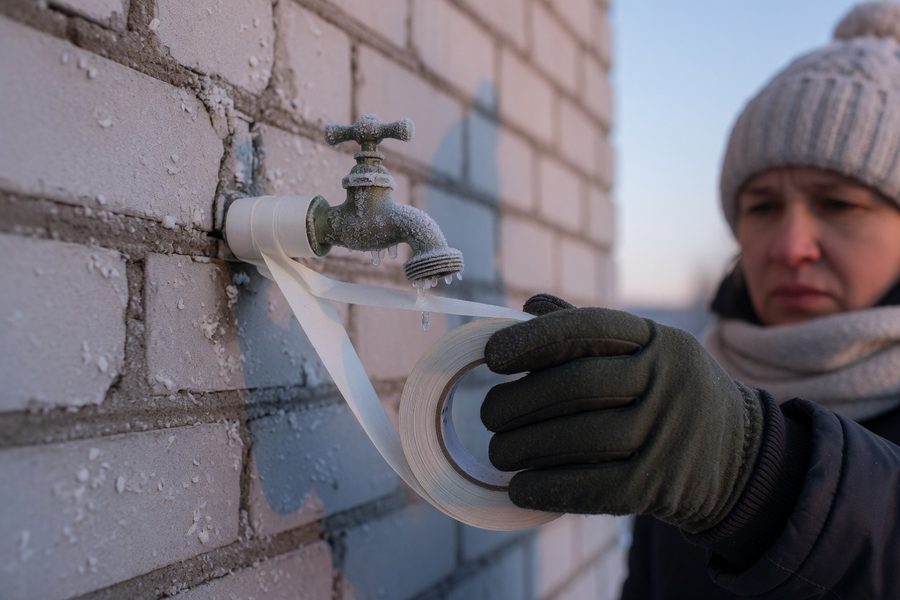
Most expensive repairs start as seasonal neglect. A frozen hose bib that bursts in February costs $300 to $500 to replace, and thousands more if it floods a finished basement. A clogged gutter in autumn sends water under shingles, creating ice dams that peel back roofing and require $1,000-plus repairs. The fix is a short, climate-specific checklist executed twice a year.
In cold climates, your fall routine should include draining outdoor spigots, sealing foundation cracks, and having the furnace inspected. In hot, humid regions, spring is for cleaning AC condensate drains, checking attic ventilation, and treating for termites. The checklist itself doesn’t need to be long; consistency matters far more than comprehensiveness. Print it, laminate it, and tape it inside a utility closet. Ten minutes of seasonal checking prevents the $500-plus emergency call.
Cleaning a clothes dryer vent annually costs nothing but a brush, and reduces fire risk while cutting drying time by 25%. The alternative is a $200 service call or a much larger insurance claim.
How to Get Accurate Repair Quotes and Avoid Contractor Scams
Start every project by requesting a scope of work in writing, not just a price. A legitimate contractor will break out materials, labor, permits, and disposal fees. If someone gives you a single number without detail, or asks for full payment upfront, walk away. Pay only for materials before work begins and hold the labor balance until the job is complete and inspected (AARP, 2025).
Red flags to spot: high-pressure “today only” discounts, an unwillingness to provide insurance certificates, and a request for cash-only deals. Verify a contractor’s license and complaint history through your state’s contractor licensing board. Also check the CFPB complaint database, though the volume of complaints in adjacent categories (money transfer, virtual currency) hit 1,495 in the last 30 days alone, reminding homeowners that payment disputes are common when project terms aren’t documented clearly.
Never let a contractor pull permits in your name. If the permit is in your name, you’re legally responsible for code compliance long after the crew is gone. Legitimate pros pull their own permits.
Real-World Example: The $1,200 Quote That Became a $3,800 Trap
Consider an illustrative example: a homeowner in Ohio received a $1,200 estimate to replace a water-damaged bathroom subfloor. The contractor asked for 50% upfront, then “discovered” mold and plumbing issues after demo, pushing the final bill to $3,800. Because there was no detailed scope of work, the homeowner had no leverage to dispute the overages. A second opinion from a licensed, insured competitor would have revealed the original subfloor job averaged $1,500 with no mold remediation needed, and that the plumbing was intact. The lesson: two extra bids and a written scope of work would have saved $2,300.
Your Action Plan
-
Set your annual maintenance budget
Calculate 1% to 2% of your home’s purchase price. Open a separate high-yield savings account and automate monthly transfers. For a $300,000 home, that’s $250 to $500 monthly.
-
Inspect and triage every 6 months
Walk your home in spring and fall with a clipboard and prioritize issues: Safety, then water, then function. Use the three-tier list from this guide. Photograph everything for future bids.
-
Know your DIY limits
Paint, caulk, patch drywall, replace fixtures, handle these yourself. Electrical panel work, gas lines, and structural changes must go to licensed pros. Check USAGov’s repair resources for permit requirements in your area.
-
Get three written bids for any job over $500
Use platforms like Angi or local trade associations to find contractors. Require a scope-of-work document and material breakdown. Compare line items, and question any that deviate more than 20% from the average.
-
Search for grants and rebates before spending cash
Check the ENERGY STAR tax credit page, your utility’s rebate portal, and HUD’s Title I program. Income-qualified programs through your county often cover emergency safety repairs.
-
Time major work for off-peak seasons
Schedule roofing in late winter, HVAC in spring or fall, and exterior painting in late summer. Discounts of 5% to 10% are common when crews aren’t booked solid.
-
Apply the repair-or-replace 50% rule
When a repair bill exceeds half the cost of a new unit and the item is past half its expected life, replace it. Finance it through a low-interest HUD loan or rebate-stacked cash, not a credit card.
-
Review your insurance policy annually
Understand what’s covered, your deductible, and how a claim might raise premiums. For minor repairs under $2,000, paying out-of-pocket often beats a 20% rate hike that lasts three years. If your credit score needs work before you explore financing, improving your credit score before applying for any home improvement loan ensures you qualify for the best fixed rates.
Frequently Asked Questions
What’s the quickest way to save money home repairs?
Build a dedicated repair fund equal to 1% to 2% of your home’s value, secured in a separate savings account. Cash eliminates interest costs and the pressure to accept the first contractor bid.
How can I tell if a contractor is overcharging me?
Collect three detailed bids with line-item breakdowns for labor and materials. Any single line item more than 20% above the average signals a potential markup, ask for an explanation in writing.
Are home warranties a good way to save on repairs?
They can offset costs for older appliances, but they often carry service-call fees of $75 to $125 per visit and may cap coverage at depreciated value. Read the contract’s exclusions carefully and calculate whether the annual premium exceeds the typical repair cost of the covered items.
Which home repairs should I never attempt myself?
Anything involving gas lines, main electrical panels, structural wall removal, or work that requires a permit you aren’t certified to pull. Mistakes in these areas create safety hazards and can void your homeowners insurance.
How do I prioritize when my repair list is long and money is short?
Address safety threats and active leaks first, followed by system failures that will worsen or cause collateral damage. Cosmetic fixes and upgrades wait until the urgent items are resolved.
When is it better to replace than repair?
When the repair cost exceeds 50% of the price of a new unit and the existing one is past half its expected lifespan. This “50% rule” prevents repeated investments in failing systems.
Can I get government help for home repairs?
Yes. HUD Title I loans provide up to $30,000 for home improvements, and many states distribute CDBG grants for emergency safety repairs to income-eligible homeowners. Check USAGov’s directory for programs near you.
Should I file a homeowners insurance claim for a minor repair?
Generally no, if the repair cost is below your deductible plus the expected premium increase. A single claim can raise premiums 20% or more for three years, often outweighing the payout on small jobs.
What seasonal maintenance gives the biggest return?
Cleaning gutters and downspouts each fall, draining outdoor faucets before freezing weather, and having your HVAC system serviced in spring both prevent the kinds of failures that produce $1,000-plus emergency calls.
Is it worth paying extra for higher-quality materials?
Over a 20‑year window, yes. Materials like metal roofing and engineered hardwood often have a lower cost-per-year-of-service than their cheaper counterparts, and they reduce the frequency of disruptive repairs.
Our Methodology
The cost data and recommendations in this article were gathered by cross-referencing publicly available figures from HomeAdvisor, Angi, Bankrate, the U.S. Department of Housing and Urban Development, ENERGY STAR, and state insurance regulators. All contractor-pricing guidance reflects published 2025 surveys and trade association benchmarks. Financing and assistance program details were verified against official .gov sources in June 2025. We evaluate every option against three criteria: total cost of ownership per year of service, availability of third-party performance data, and protection for the homeowner from hidden fees or liability.
Sources
- HomeAdvisor, Cost Guides
- U.S. Department of Housing and Urban Development, Home Improvements
- ENERGY STAR, Federal Tax Credits
- USAGov, Repairing Your Home
- AARP, How to Trim Home Maintenance Costs (featuring Angie Hicks)
- Consumer Financial Protection Bureau, Complaint Database
- IRS, Energy Efficient Home Improvement Credit
{“@context”:”https://schema.org”,”@graph”:[{“@type”:”Organization”,”@id”:”https://the-credit-scout.com/#organization”,”name”:”The Credit Scout”,”url”:”https://the-credit-scout.com”},{“@type”:”Person”,”@id”:”https://the-credit-scout.com/#person-tobias-wrenfield”,”name”:”Tobias Wrenfield”,”description”:”Tobias Wrenfield is a certified financial planner with over 12 years of experience helping individuals navigate the complexities of retirement planning and long-term investing. He previously worked as a senior advisor at a regional wealth management firm before transitioning to financial education and writing. Tobias is passionate about making retirement strategies accessible to everyday Americans”,”knowsAbout”:[“Personal Finance”]},{“@type”:”Article”,”headline”:”How to Spend Less on Home Repairs Without Sacrificing Quality”,”datePublished”:”2026-07-01″,”dateModified”:”2026-07-01″,”publisher”:{“@id”:”https://the-credit-scout.com/#organization”},”mainEntityOfPage”:{“@type”:”WebPage”,”@id”:”https://the-credit-scout.com/save-money-home-repairs-quality”},”inLanguage”:”en”,”author”:{“@id”:”https://the-credit-scout.com/#person-tobias-wrenfield”}},{“@type”:”FAQPage”,”mainEntity”:[{“@type”:”Question”,”name”:”What’s the quickest way to save money home repairs?”,”acceptedAnswer”:{“@type”:”Answer”,”text”:”Build a dedicated repair fund equal to 1% to 2% of your home’s value, secured in a separate savings account. Cash eliminates interest costs and the pressure to accept the first contractor bid.”}},{“@type”:”Question”,”name”:”How can I tell if a contractor is overcharging me?”,”acceptedAnswer”:{“@type”:”Answer”,”text”:”Collect three detailed bids with line-item breakdowns for labor and materials. Any single line item more than 20% above the average signals a potential markup, ask for an explanation in writing.”}},{“@type”:”Question”,”name”:”Are home warranties a good way to save on repairs?”,”acceptedAnswer”:{“@type”:”Answer”,”text”:”They can offset costs for older appliances, but they often carry service-call fees of $75 to $125 per visit and may cap coverage at depreciated value. Read the contract’s exclusions carefully and calculate whether the annual premium exceeds the typical repair cost of the covered items.”}},{“@type”:”Question”,”name”:”Which home repairs should I never attempt myself?”,”acceptedAnswer”:{“@type”:”Answer”,”text”:”Anything involving gas lines, main electrical panels, structural wall removal, or work that requires a permit you aren’t certified to pull. Mistakes in these areas create safety hazards and can void your homeowners insurance.”}},{“@type”:”Question”,”name”:”How do I prioritize when my repair list is long and money is short?”,”acceptedAnswer”:{“@type”:”Answer”,”text”:”Address safety threats and active leaks first, followed by system failures that will worsen or cause collateral damage. Cosmetic fixes and upgrades wait until the urgent items are resolved.”}},{“@type”:”Question”,”name”:”When is it better to replace than repair?”,”acceptedAnswer”:{“@type”:”Answer”,”text”:”When the repair cost exceeds 50% of the price of a new unit and the existing one is past half its expected lifespan. This “50% rule” prevents repeated investments in failing systems.”}},{“@type”:”Question”,”name”:”Can I get government help for home repairs?”,”acceptedAnswer”:{“@type”:”Answer”,”text”:”Yes. HUD Title I loans provide up to $30,000 for home improvements, and many states distribute CDBG grants for emergency safety repairs to income-eligible homeowners. Check USAGov’s directory for programs near you.”}},{“@type”:”Question”,”name”:”Should I file a homeowners insurance claim for a minor repair?”,”acceptedAnswer”:{“@type”:”Answer”,”text”:”Generally no, if the repair cost is below your deductible plus the expected premium increase. A single claim can raise premiums 20% or more for three years, often outweighing the payout on small jobs.”}},{“@type”:”Question”,”name”:”What seasonal maintenance gives the biggest return?”,”acceptedAnswer”:{“@type”:”Answer”,”text”:”Cleaning gutters and downspouts each fall, draining outdoor faucets before freezing weather, and having your HVAC system serviced in spring both prevent the kinds of failures that produce $1,000-plus emergency calls.”}},{“@type”:”Question”,”name”:”Is it worth paying extra for higher-quality materials?”,”acceptedAnswer”:{“@type”:”Answer”,”text”:”Over a 20‑year window, yes. Materials like metal roofing and engineered hardwood often have a lower cost-per-year-of-service than their cheaper counterparts, and they reduce the frequency of disruptive repairs.”}}]},{“@type”:”HowTo”,”name”:”How to Spend Less on Home Repairs Without Sacrificing Quality”,”step”:[{“@type”:”HowToStep”,”position”:1,”text”:”Why Home Repairs Drain Your Budget Faster Than You Think”},{“@type”:”HowToStep”,”position”:2,”text”:”How Much Should You Save for Home Maintenance Each Year?”},{“@type”:”HowToStep”,”position”:3,”text”:”How Do You Prioritize Repairs When Money Is Tight?”},{“@type”:”HowToStep”,”position”:4,”text”:”DIY vs. Hiring a Pro: When Does Saving Money Actually Cost More?”},{“@type”:”HowToStep”,”position”:5,”text”:”How to Choose Materials and Contractors That Deliver Long-Term Value”},{“@type”:”HowToStep”,”position”:6,”text”:”Smart Financing Options That Don’t Trap You in Debt”},{“@type”:”HowToStep”,”position”:7,”text”:”Prevent Future Repairs With Targeted Home Upgrades”},{“@type”:”HowToStep”,”position”:8,”text”:”Repair or Replace? A Simple Decision Framework to Stop Wasting Money”},{“@type”:”HowToStep”,”position”:9,”text”:”Seasonal Maintenance Checklist That Prevents Costly Damage”},{“@type”:”HowToStep”,”position”:10,”text”:”How to Get Accurate Repair Quotes and Avoid Contractor Scams”}]}]}