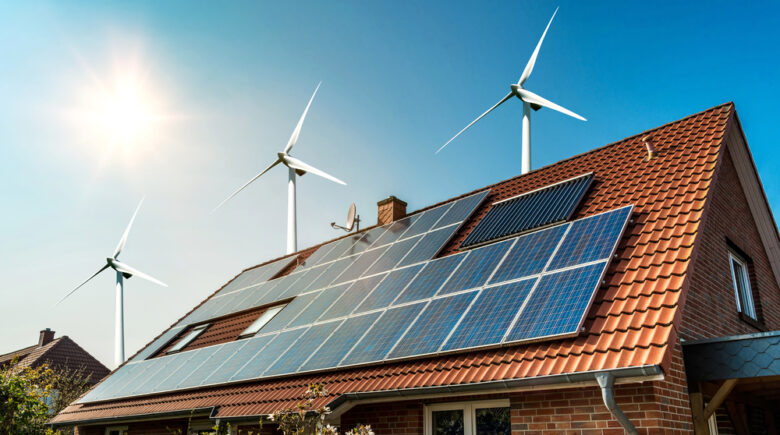
Renewable energy is not the only form of clean energy, but it is a necessary part of any serious effort to reduce emissions and cut dependence on finite fuels. Renewable sources come from naturally occurring materials that replenish themselves, which means they can be used continuously without the depletion problem that defines coal, oil, and natural gas. There are a variety of renewable energy types available, each with distinct strengths and real trade-offs. Here are some of the most common sources and what sets them apart from fossil fuels.
Key Takeaways
- Renewables generated over 30% of global electricity in 2024, according to the International Energy Agency.
- The cost of solar photovoltaic energy has dropped by over 89% since 2010, per IRENA’s 2023 cost data.
- Wind energy capacity worldwide surpassed 1,000 gigawatts for the first time in 2023, according to the Global Wind Energy Council.
- Hydropower remains the largest single source of renewable electricity, supplying about 15% of global power, per the International Hydropower Association.
- The U.S. Department of Energy projects that geothermal energy could power 40 million American homes by 2050 under its Enhanced Geothermal Shot initiative, as detailed by the U.S. Department of Energy.
- Biofuels supplied roughly 4% of global road transport fuel in 2024, according to the IEA’s Biofuels 2024 report.
Types of Renewable Energy Sources
1. Wind Energy
Turbines capture the kinetic energy of moving air and convert it into usable electricity. They are typically installed on hills or mountaintops where wind is consistent, and once construction is complete, they require relatively little upkeep beyond occasional blade cleaning. The Global Wind Energy Council reported that global wind capacity additions reached a record 117 gigawatts in 2023 alone.
The technology is efficient, but it comes with a real noise problem. Large turbines can generate significant sound that affects nearby wildlife and residents. They also require substantial land, and major manufacturers such as Vestas and Siemens Gamesa have invested heavily in quieter blade designs to address community concerns.
2. Solar Power
Solar power is generated when sunlight strikes a panel and is converted into electricity. Panels come in many configurations depending on local sun exposure and available roof or ground space. Cost has long been the central objection, but that picture has changed substantially. The International Renewable Energy Agency (IRENA) found that utility-scale solar PV now costs as little as $0.044 per kilowatt-hour in competitive markets.
Panels still depend on materials such as glass and copper, and those input costs are not trivial. For lower-income households, the upfront price remains a genuine barrier even after price declines. Companies such as First Solar and SunPower have introduced thin-film and high-efficiency panels that gradually reduce per-unit material costs and broaden access for residential consumers, though full cost parity for all buyers is not yet a reality.
3. Hydroelectricity
Hydroelectric power comes from moving water, typically routed through turbines inside a dam built across a river. The turbines connect to a generator and produce electricity from the water’s flow. According to the International Hydropower Association, the world’s total installed hydropower capacity reached 1,392 gigawatts.
The environmental costs are significant. Damming a river blocks fish migration, floods upstream habitat, and displaces communities. Building the infrastructure is expensive and disruptive. The U.S. Army Corps of Engineers and organizations such as the Natural Resources Defense Council have both called for stricter environmental impact assessments before new dam construction is approved.
4. Geothermal Energy
This source draws on heat from beneath the earth’s surface, using steam and hot water to spin turbines and generate electricity. It is most practical near volcanic regions and causes far less habitat disruption than hydroelectric dams since it does not require flooding valleys. Countries such as Iceland and Kenya already generate a substantial share of their electricity from geothermal sources, as documented by the International Renewable Energy Agency. The limitation is geographic: areas without sufficient subsurface heat cannot realistically build geothermal plants at scale.
5. Biofuel
Biofuels are energy sources derived from living organisms or organic matter. Because the organic material keeps growing and reproducing, the fuel supply is technically renewable. Biobutanol and ethanol are two common examples, and both can be blended into gasoline for use in standard combustion engines. The U.S. Energy Information Administration (EIA) notes that the United States is the world’s largest producer of fuel ethanol, accounting for roughly 54% of global ethanol production in 2023. The trade-off is real: large-scale biofuel crop production can cause soil erosion and competes for land and water that might otherwise support food production.
6. Geothermal Heat Pumps
Geothermal heat pumps work differently from geothermal power plants. Rather than tapping deep volcanic heat, they circulate water through shallow ground loops to exchange heat with the relatively stable temperature just below the surface. That heat is then transferred into a building for warming or extracted from a building for cooling. The U.S. Department of Energy states that geothermal heat pumps can reduce energy use for heating and cooling by 25% to 50% compared to conventional systems.
7. Photovoltaic Energy
Photovoltaic (PV) cells convert sunlight into electricity through semiconductors. Historically, large panel sizes and low efficiency ratings made the cost per unit difficult to justify for most buyers. That gap is closing fast. The National Renewable Energy Laboratory (NREL) has recorded laboratory PV cell efficiencies of over 47% for multijunction concentrator cells, a figure that would have seemed implausible a generation ago.
PV technology is now the cheapest source of new electricity generation in many markets. What began as a niche product for satellites and specialized applications has become a mainstream power source, and efficiency gains continue to improve the economics for both utility projects and residential installations.
Renewable Energy Sources Comparison
The table below compares the most common renewable energy types across key metrics, based on data from the International Renewable Energy Agency (IRENA) and the U.S. Energy Information Administration (EIA).
| Energy Type | Avg. Cost (USD/kWh) | Global Installed Capacity (GW) | Primary Environmental Concern | Typical Capacity Factor |
|---|---|---|---|---|
| Solar PV (Utility-Scale) | $0.044 | 1,419 | Land use, panel disposal | 10–25% |
| Onshore Wind | $0.033 | 1,017 | Noise, wildlife impact | 25–40% |
| Offshore Wind | $0.081 | 75 | Marine ecosystem disruption | 35–45% |
| Hydropower | $0.030 | 1,392 | Habitat flooding, fish migration | 40–60% |
| Geothermal | $0.068 | 15 | Localized land use, emissions | 80–90% |
| Biofuel (Power Generation) | $0.076 | 145 | Soil erosion, resource competition | 50–70% |
Advantages of Using Renewable Energies
1. They are Eco-Friendly
Sources such as wind, solar, and run-of-river hydroelectric power generate electricity without burning fuel, which means they produce little to no direct greenhouse gas emissions during operation. The U.S. Environmental Protection Agency (EPA) notes that the energy sector is the largest contributor to U.S. greenhouse gas emissions, which is exactly why the source of electricity generation matters so much. Switching away from coal and natural gas is one of the most direct levers available for reducing those numbers.
2. They are Renewable
Unlike coal or natural gas, sun and wind cannot be used up. Fossil fuels release carbon dioxide when burned, adding to atmospheric concentrations that drive global warming. Solar and wind generation involves no combustion at all. The Intergovernmental Panel on Climate Change (IPCC) has identified rapid deployment of these sources as one of the most cost-effective pathways to limiting global warming to 1.5°C above pre-industrial levels.
3. They are Sustainable
Because the underlying resources (sunlight, wind, flowing water, geothermal heat) are not location-specific or finite, countries with different geographies can all identify at least one viable option. This matters for energy equity as much as for climate. According to the United Nations Sustainable Development Goal 7, ensuring access to affordable, reliable, sustainable, and modern energy for all remains a top global priority through 2030.
4. They Offer Independence
With the right setup, individuals and communities can generate their own power and reduce dependence on utility companies entirely. The U.S. federal Inflation Reduction Act of 2022 introduced tax credits covering up to 30% of residential solar installation costs, making energy independence more financially accessible, as detailed by the Internal Revenue Service (IRS). That same credit structure also applies to small wind turbines and geothermal heat pump installations.
Frequently Asked Questions
What is the most common type of renewable energy?
Hydropower is currently the most widely used form of renewable energy globally., it accounts for approximately 15% of total global electricity generation and has an installed capacity of around 1,392 gigawatts, according to the International Hydropower Association. Solar and wind are growing rapidly and are expected to surpass hydropower in total output within the next decade.
What is the cheapest form of renewable energy?
Onshore wind and utility-scale solar PV are currently the cheapest sources of new electricity generation. According to IRENA’s 2023 cost data, onshore wind averages around $0.033 per kilowatt-hour and utility-scale solar PV averages around $0.044 per kilowatt-hour, both cheaper than most new fossil fuel plants worldwide.
How does renewable energy help the environment?
It reduces greenhouse gas emissions by replacing fossil fuel combustion, which the EPA identifies as the top source of U.S. emissions. Beyond carbon, the shift to renewables also cuts air and water pollution tied to coal and natural gas extraction. Where projects are planned responsibly, they can reduce pressure on local ecosystems rather than adding to it.
What are the disadvantages of renewable energy?
Intermittency is the central problem. Solar panels produce nothing at night, and wind turbines go idle when air is still. Many installations require large land areas, and localized impacts (turbine noise, dam flooding) are real and not always adequately addressed. High upfront installation costs and the need for upgraded grid infrastructure are also notable challenges, though costs continue to fall year over year.
Is solar power worth it for homeowners?
For most homeowners, yes, provided the roof has adequate sun exposure and the household has sufficient tax liability to absorb the credit. The federal Residential Clean Energy Credit allows homeowners to deduct 30% of installation costs from their federal taxes, per the IRS. With average payback periods of 6–10 years and system lifespans of 25–30 years, most households see substantial long-term savings on electricity bills. Renters and low-income households in shaded locations benefit far less, which is an honest limitation of the current incentive structure.
What is geothermal energy and where is it used?
Geothermal energy draws heat from beneath the earth’s surface to generate electricity or provide direct space heating. It is most practical in geologically active regions such as Iceland, Kenya, Indonesia, and parts of the western United States. Iceland generates approximately 66% of its primary energy from geothermal and hydropower combined, making it one of the clearest examples of what high renewable penetration looks like at a national scale.
How does wind energy work?
Turbines capture the kinetic energy of moving air and convert it into electricity. When wind spins the blades, a connected generator produces electrical current. Onshore turbines are typically placed in open or elevated terrain, while offshore wind farms (operated by companies such as Ørsted and Equinor) are sited in coastal waters where wind speeds are stronger and more consistent.
What role do biofuels play in renewable energy?
Biofuels serve as a renewable alternative to petroleum-based fuels, particularly in road transport and aviation. The U.S. Energy Information Administration reports that the United States produces roughly 54% of the world’s fuel ethanol. Critics including the Natural Resources Defense Council note that large-scale biofuel crop production can compete with food supply and contribute to land-use changes that partially offset the climate benefit, a trade-off worth weighing seriously.
Can renewable energy power an entire country?
Yes, and several already do it. Norway generates over 98% of its electricity from renewables, primarily hydropower, according to the International Energy Agency. Costa Rica, Iceland, and Uruguay have also reached or approached 100% renewable electricity for extended periods. Battery storage technology from companies such as Tesla Energy and Fluence is making full renewable grids increasingly viable for more nations, though large fossil-fuel-dependent economies face a far longer transition timeline.
What government incentives are available for renewable energy in the U.S.?
The Residential Clean Energy Credit provides a 30% tax credit for solar, wind, and geothermal installations through 2032, per the IRS. The Production Tax Credit (PTC) and Investment Tax Credit (ITC) support utility-scale projects. The U.S. Department of Energy’s Loan Programs Office also provides financing to accelerate clean energy development across the country.
How do renewable energy incentives interact with personal finances?
Tax credits reduce your federal tax bill dollar-for-dollar, but only up to your actual liability, so households with lower income or significant deductions may not capture the full 30% in a single year. Some states allow unused credit to carry forward. Financing a solar installation through a home equity loan affects your debt-to-income ratio (DTI), which matters if you plan to apply for a mortgage or refinance. Lenders including Chase and other major banks will factor new loan balances into DTI calculations. If you are planning a home purchase, timing a solar installation after closing is often the cleaner financial move.
Does installing solar panels affect my credit score or ability to borrow?
It can, depending on how you finance the installation. Taking out a solar loan adds to your total debt load, which affects your DTI ratio, a key metric lenders review alongside your FICO Score when evaluating mortgage or personal loan applications. A new hard inquiry from a lender can also cause a small, temporary dip in your FICO Score. If you lease panels through a third-party provider rather than buying them outright, the lease obligation may appear on a title search and complicate a future home sale. Paying cash or using a low-interest home equity line avoids the credit impact entirely, though it requires available capital upfront.
Conclusion
These are only a few of the many renewable energy sources that can be used to help power homes and communities. Many of them work well in combination, wind turbines and solar panels, for instance, produce at different times of day and in different weather conditions, which makes a paired system more reliable than either alone. These options offer a practical path to reducing environmental waste and keeping the planet viable for future generations.
Sources
- U.S. Department of Energy, Geothermal Heat Pumps
- U.S. Energy Information Administration (EIA), Biofuels Explained
- National Renewable Energy Laboratory (NREL), Best Research-Cell Efficiency Chart
- Intergovernmental Panel on Climate Change (IPCC), Sixth Assessment Report, Working Group III
- United Nations, Sustainable Development Goal 7: Affordable and Clean Energy
- Internal Revenue Service (IRS), Residential Clean Energy Credit