Updated July 2026
Your W-2 lands in your inbox sometime in mid-January, and the first thing you probably Google is whether you actually have to pay someone to do your taxes. You don’t. Learning how to file taxes free in 2026 takes about ten minutes of reading, and yet millions of Americans skip these programs every year because nobody ever told them the options existed.
The IRS says more than 70% of taxpayers qualify for some form of free filing. Only a fraction actually use it. Below, you’ll find every legitimate free filing route for 2026, who’s eligible for each one, and a few tricks for getting your refund back faster.
Key Takeaways
- The IRS Free File program is available to taxpayers with an adjusted gross income of $84,000 or less in 2025 (filed in 2026), covering over 70% of filers.
- IRS Direct File expanded to 25 states for the 2025 tax year, allowing eligible filers to submit returns directly to the IRS at no cost.
- VITA (Volunteer Income Tax Assistance) sites offer free in-person filing help for households earning $67,000 or less, plus people with disabilities and limited English speakers.
- Filing electronically with direct deposit is the fastest way to get your refund, the IRS typically issues e-filed refunds within 21 days.
| Free Filing Option | Income Limit (2025) | State Filing Included? | Best For |
|---|---|---|---|
| IRS Free File (via partners) | $84,000 or less | Varies by provider | Standard W-2 filers, first-time taxpayers, most common situations |
| IRS Direct File | No income cap (by state eligibility) | Only in participating states; free state filing available via integration | Simple returns: W-2, Social Security, EITC, Child Tax Credit |
| Cash App Taxes (formerly Credit Karma Tax) | No income cap | Yes, in most states | Freelancers, gig workers, those with Schedule C income |
| VITA/TCE Sites | $67,000 or less (VITA), age 60+ (TCE) | Not applicable (in-person only) | Low-income filers, elderly, non-English speakers, people with disabilities |
| Free File Fillable Forms | No income cap | No | Those comfortable with paper forms, minimal guidance needed |
Why Free Filing Matters More Than Ever in 2026
Tax prep fees add up fast. A basic federal return prepared by a professional runs about $220 on average, per the National Society of Accountants’ 2023 survey, and that figure climbs the moment your return gets even a little complicated. For someone stretching a paycheck to cover rent and groceries, $220 is not nothing.
The upside: the IRS and a handful of nonprofits have quietly made free filing more available than at any point in the past decade. A first-time filer, a rideshare driver, or someone simply tired of paying a preparer every April, all of them have a legitimate free option waiting. Once the refund actually hits your account, put it to work. Our guide on how to use your tax refund to build credit covers smart ways to make that money count.
None of these tools fit every situation, though. Rental income, significant deductions, or complicated investment activity can push you past what a free tool supports. IRS Direct File, for instance, won’t touch self-employment income at all, and Cash App Taxes, while it does support Schedule C, caps how many forms it can process. File multiple Schedule Cs and you’ll likely hit that wall, forcing a switch to paid software or an in-person appointment.
IRS Free File: The Most Overlooked Tax Benefit
IRS Free File pairs the IRS with several tax software companies so that eligible taxpayers can file a federal return, and often a state return too, at zero cost. For the 2026 season, covering tax year 2025, the cutoff sits at $84,000 or below in adjusted gross income.
Access it through the IRS Free File page on IRS.gov, not the software company’s own homepage, where the upsells start almost immediately. From the IRS page you can browse participating providers and pick one suited to your situation, including options built for Spanish-language filers.
This option handles most ordinary returns just fine. It struggles with anything unusual, multiple rental properties, capital gains from stock sales, large charitable contributions. Claim deductions beyond the standard one and you may find the free tier too thin for your needs. Some software will nudge you toward an upgrade even though your income sits comfortably under $84,000.
Free File Fillable Forms
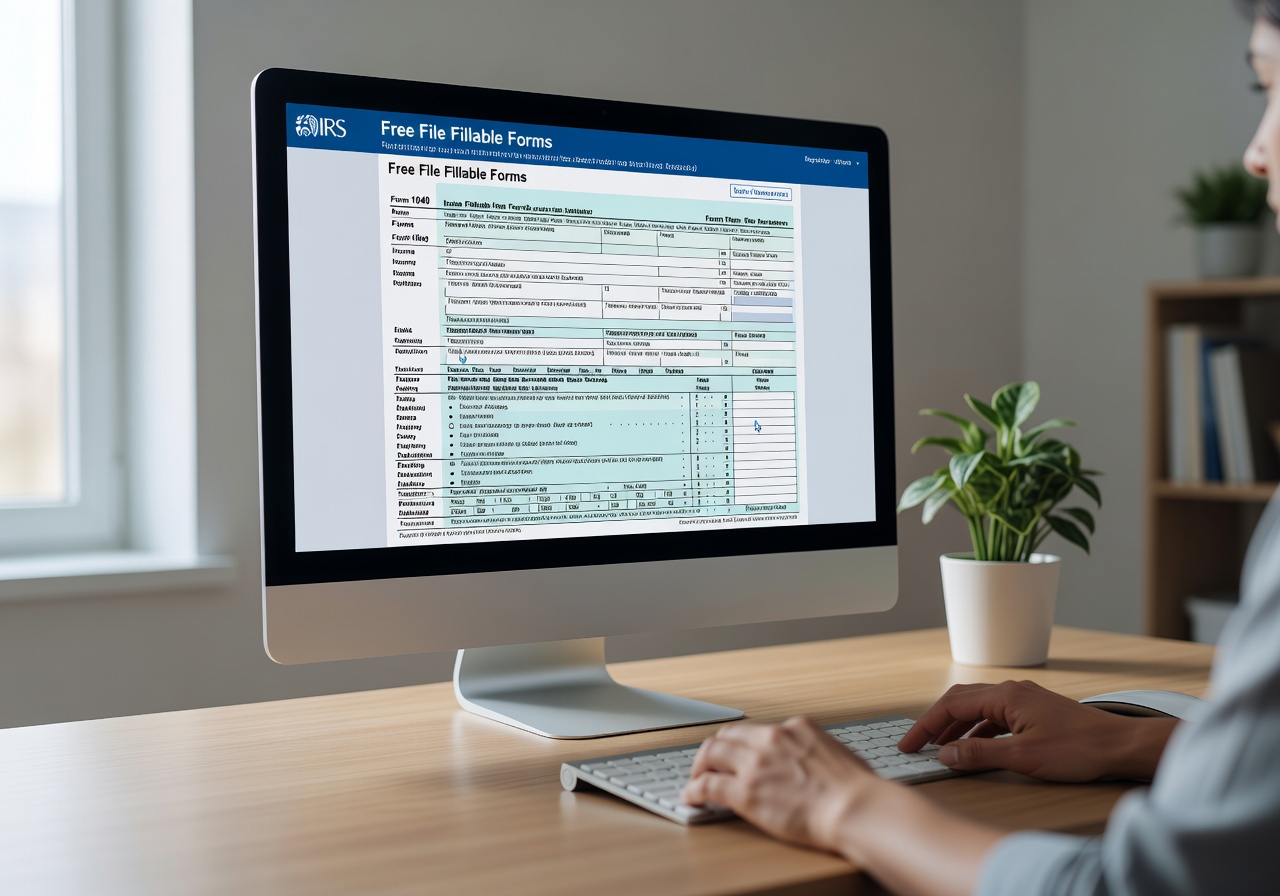
Earn more than $84,000? The IRS still has something for you: Free File Fillable Forms, digital versions of the standard paper forms, with no income cap attached. There’s no interview process, no hand-holding, just blank fields waiting to be filled. This suits people who already know their way around a 1040. Federal filing only, no state option here.
The catch: no built-in error checking. Skip a required field or fumble a calculation and you might not find out until the IRS sends a letter. First-time filers unfamiliar with how the forms link together should probably look elsewhere.
IRS Direct File: File Straight With the Government
IRS Direct File skips the middleman entirely, letting eligible taxpayers submit a federal return through a tool the IRS itself hosts. The pilot went well enough that it grew to 25 states for the 2025 tax year, and more states are expected to sign on down the road.
It’s built for straightforward returns: W-2 wages, Social Security benefits, unemployment compensation, plus common credits like the Earned Income Tax Credit and Child Tax Credit. Freelance income, rental property, or heavier deductions push you outside its lane. Check the IRS Direct File portal to see whether your state currently participates.
One hard limit worth flagging: no Schedule C, no self-employment income, period. Freelancers and independent contractors need a different tool. Even a W-2 employee with a side hustle should route that extra income through Cash App Taxes or a VITA appointment instead, just to make sure everything gets reported correctly.
VITA and TCE: Free Help From Real People
Some people would rather talk to a human than stare at a screen, and that’s fair. The Volunteer Income Tax Assistance (VITA) program gives free, IRS-certified help to anyone earning $67,000 or less, plus people with disabilities and those with limited English proficiency. Its sister program, Tax Counseling for the Elderly (TCE), focuses on taxpayers 60 and older.
Volunteers at both programs are IRS-certified and prepare returns free of charge at libraries, schools, and community centers around the country. Use the IRS VITA/TCE locator tool to find the nearest site, and bring your ID, Social Security card, income documents, and last year’s return if you’ve still got it.
VITA sites do have limits. Multiple income streams, property sales, or heavy business expenses can push a return past what volunteers are trained to handle, and they’ll point you toward paid help or another tool if that happens. Staffing also varies by location, some sites shut their doors early or cap the number of appointments they’ll take, so don’t wait until April 10 to show up.
What to Bring to a VITA Site
- Government-issued photo ID
- Social Security cards or ITIN letters for you, your spouse, and dependents
- All W-2s, 1099s, and other income statements
- Records of deductible expenses (if applicable)
- Your bank routing and account number for direct deposit
- A copy of last year’s tax return (if available)
Free Tax Software Worth Considering
Cash App Taxes (the old Credit Karma Tax) is arguably the most generous option out there. Federal and state filing, both free, no income cap, and it handles a surprising number of forms, Schedule C included, for people with self-employment income. TurboTax Free Edition and H&R Block Free Online exist too, though each covers a narrower slice of tax situations.
Read past the headline before you commit to any of them. “Free” often means free for the simplest returns only, a W-2 and the standard deduction, and one whiff of student loan interest or freelance income can bump you to a paid tier without much warning. Keeping good records year-round makes all of this easier. Our post on why every receipt counts for your taxes is a decent place to start.
Even the generous tools hide things behind paywalls sometimes. Some won’t let you claim the EITC without upgrading, or they tuck the itemized deduction option behind a paid plan. Check what’s actually included before you get halfway through your return and hit a paywall.
Tips to Maximize Your Refund Before You File
Filing for free doesn’t mean settling for a smaller refund. Before you hit submit, make sure you’ve claimed every credit you’re owed. The Earned Income Tax Credit (EITC) tops out at $7,830 for tax year 2025 for filers with three or more qualifying children, and yet roughly 20% of people who qualify never claim it. The IRS newsroom reported that same 20% figure for eligible non-claimants back in 2023.
Check your contributions to tax-advantaged accounts too. A traditional IRA contribution, an HSA deposit, student loan interest paid in 2025, all of these chip away at your taxable income. Missing a deduction is the same as handing money back to the IRS. If a bigger refund would help you knock out high-interest debt, take a look at these steps to start paying off debt today.
Free tools aren’t infallible, though. They won’t always flag something like the American Opportunity Credit or catch an edge case in the Child Tax Credit rules, especially if you’re relying on auto-fill to do the thinking for you. Double-check eligibility yourself, and hang onto documentation in case anything gets questioned later.
Speed Up Your Refund
E-filing paired with direct deposit beats mailing a paper return by weeks. The IRS generally issues refunds for e-filed returns within 21 days; paper filers wait six to eight weeks, sometimes longer. Pick direct deposit, triple-check your routing number, and file as early in the season as you can.
Even then, delays happen. Claim the EITC or the Additional Child Tax Credit and your refund may sit until mid-February by law. The IRS will let you know if your return’s under review, but that waiting period can be stressful if you’re counting on the money. Plan for it.
Related reading: How a Freelancer in California Can Optimize Taxes Without Hiring an Accountant.
Frequently Asked Questions
Can I file my federal and state taxes for free in 2026?
Yes, often. Some IRS Free File partners, Cash App Taxes among them, cover both federal and state returns in most states at no cost. IRS Direct File links up with several state tax agencies so you can file your state return free after finishing your federal one. Confirm state coverage before you start, since it varies by provider.
Is IRS Direct File available in my state?
It’s currently live in 25 states for the 2025 tax year. Check eligibility at the IRS Direct File portal. Expect more states to join in future seasons.
What if I have freelance or gig income? Can I still file for free?
Yes, with the right tool. Cash App Taxes handles Schedule C and self-employment income well, making it the top pick for gig workers. IRS Direct File does not support self-employment income at all. Some VITA sites can help with Schedule C returns too, but call ahead first to confirm.
How do I know if I qualify for VITA?
You qualify if your adjusted gross income is $67,000 or less, or if you have a disability, limited English proficiency, or are 60 or older. Find the closest site through the IRS VITA/TCE locator.
Is it safe to use free tax software?
It’s safe as long as you stick to official channels. IRS Free File, IRS Direct File, and IRS-certified VITA sites are all secure. Steer clear of third-party sites with no clear IRS link or an unfamiliar domain name, and always check the URL before typing in anything sensitive.
What if I don’t have a bank account? Can I still get my refund?
Yes. A paper check mailed to your address still works, it just takes longer than direct deposit. Some VITA sites also offer a prepaid debit card option for refunds, so ask your local site what’s available.
Can I file a 2025 return in 2026 if I miss the April 15 deadline?
You can file anytime. If you owe money, though, interest and penalties start piling up on the unpaid balance right after April 15, whether you’ve filed or not. Filing on time, even without full payment, keeps those penalties from growing further.
Does the IRS charge for e-filing?
No, the IRS itself never charges for e-filing. Third-party software companies might, but every IRS-approved free option, Free File, Direct File, VITA, lets you e-file at no cost.
Can I use Free File Fillable Forms if I don’t know how to fill out tax forms?
Only if you’re already fairly comfortable with tax forms. These are just digital copies of the paper forms, no interview, no error checking, no guidance. If that sounds intimidating, a guided software option or a VITA appointment will serve you better.
How can I verify my tax refund is real?
Only the IRS issues refunds, full stop. Any message claiming to be from the IRS that asks for personal information is almost certainly a scam, since the agency never calls, texts, or emails to request financial data. Track your actual refund through the IRS Refund Tracker.


