Quick Answer
Climate Smart Agriculture (CSA) is an integrated farming approach designed to sustainably increase productivity, build resilience to climate shocks, and reduce greenhouse gas emissions. CSA practices can cut agricultural greenhouse gas emissions by up to 30% while improving crop yields by as much as 20% in vulnerable regions.
Agriculture faces a hard problem: feed a growing world while the climate that farming depends on becomes less predictable. Climate Smart Agriculture is an approach designed to address that tension directly. Rather than treating food production and environmental protection as competing goals, CSA promotes a holistic plan to build resilience in landscapes and ecosystems by reducing greenhouse gas emissions, minimizing water use, and controlling soil erosion, while still increasing farm output. The effects of climate change on agriculture are already documented, yet existing farming systems have been slow to adapt. Human activity has driven up concentrations of carbon dioxide and other greenhouse gases, raising global temperatures in ways the Intergovernmental Panel on Climate Change (IPCC) Sixth Assessment Report has catalogued in detail.
Major agricultural systems affected by climate change include water resources, energy resources, and land resources. Climate change threatens water resources as it causes droughts, which are already present in major agricultural regions. Drought increases the odds of soil erosion, a problem made worse by rising temperatures. Warmer conditions in turn reshape plant and animal life. Animal life may be adversely affected through decreased body weight and reduced food intake, leading to malnutrition and starvation. The stress also raises the risk of diseases such as avian influenza and foot-and-mouth disease, risks highlighted by the Food and Agriculture Organization of the United Nations (FAO).
Key Takeaways
- Climate Smart Agriculture targets a reduction of up to 30% in agricultural greenhouse gas emissions, according to World Bank research on CSA.
- Drip irrigation, a core CSA water-conservation tool, can reduce water use by 30–50% compared to conventional flood irrigation, per FAO irrigation efficiency data.
- Agriculture accounts for approximately 10–12% of global greenhouse gas emissions, making it a critical sector for climate mitigation, as reported by the U.S. Environmental Protection Agency (EPA).
- Hydroponics can produce crops using up to 90% less water than traditional soil-based farming, according to USDA hydroponics research.
- Changing precipitation patterns are projected to reduce crop yields in some regions by up to 25% by 2050 without adaptation measures, per the IPCC Sixth Assessment Report.
- The CGIAR Research Program on Climate Change, Agriculture and Food Security (CCAFS) estimates that CSA adoption could benefit over 500 million smallholder farmers globally.
Challenges of Global Climate Change On Agriculture
Increasing temperatures
Some studies indicate that these changes are likely to occur, showing a link between global warming and reduced crop yields. According to research published in Nature Climate Change, global maize and wheat yields have already declined by roughly 5% and 2%, respectively, due to observed climate trends. Droughts may become more frequent and severe, which will reduce crop production. Increases in rainfall and high river flows may increase soil erosion, affecting crop production further. Temperature changes may cause animals to migrate toward the edges of their habitats, reshaping the ecosystems that farming depends on. The effects of rising temperatures on plants are not yet fully understood, but current evidence points toward reduced plant growth and a decline in soil organic matter.
Changing precipitation patterns
Future rainfall patterns are predicted to become more erratic, producing floods and drought conditions alongside greater susceptibility to flash events. These shifts may reduce crops’ ability to absorb water and nutrients, pulling yields downward. Higher erosion rates would follow any increase in droughts or flash floods, as topsoil is either removed or redeposited in ways that degrade field productivity. The National Oceanic and Atmospheric Administration (NOAA) has documented increasing frequency of extreme precipitation events across North America and other key agricultural zones.
Land use and land degradation
Changes in temperature, precipitation, and crop yields will increase land cover by an average of 2–8%. That expansion of land use will reduce the effectiveness of natural soil erosion control functions. Deforestation, mining, and urbanization each contribute to accelerated soil erosion, and all three put agricultural production at risk. The United Nations Convention to Combat Desertification (UNCCD) estimates that land degradation costs the global economy more than $10 trillion per year in lost ecosystem services.
Water resources
Temperature rise accelerates evaporation, pushing water demand higher at the same time that supply becomes less reliable. Droughts will be more frequent and more severe, reducing available water across the agricultural sector. Soil is the primary carrier of water, and its distribution is regulated by climate, vegetation, and soil type. Ironically, an increase in soil moisture from heavier precipitation events can itself drive erosion, further lowering crop output. The World Resources Institute (WRI) projects that by 2050, agricultural water demand could outstrip supply by as much as 40% in water-stressed regions without significant efficiency improvements.
The FAO’s framing of CSA as a strategic reorientation of agricultural systems reflects a growing consensus among institutions including the World Bank, CGIAR, and CCAFS: food security and climate resilience cannot be treated as separate policy tracks. Farmers who adopt integrated CSA practices have shown measurable improvements in both yields and long-term land productivity, though the scale of those gains varies considerably by region, crop type, and access to financing.
Climate-Smart Agricultural Practices to Address Climate Change
Increase water use efficiency
Maximizing the use of existing water resources for irrigation and reducing irrigation water consumption is necessary. The popular way to reduce water consumption is by increasing water use efficiency. Water use efficiency is the amount of water a plant uses to produce a unit of the crop in relation to the total amount of water used throughout the growing season. Ways to achieve this include:
Water saving/conservation
Water is one of the main substances exploited for the sustenance of human life, and climate change has contributed to significant droughts and water scarcity on nearly every continent. That scarcity threatens agricultural productivity globally. Drip irrigation has proven to be the most effective method for water conservation, with FAO data showing water savings of 30–50% compared to traditional methods. The system delivers minimal and precise amounts of water directly to crops, conserving resources while maintaining productivity. A range of water recycling technologies can support this approach further.
Water harvesting
Collecting rainwater is the most common form of water harvesting, but recycling daily-use water for farm application is becoming more widespread. Both approaches redirect water that would otherwise go to waste, raising farm productivity in the process. Organizations such as the International Water Management Institute (IWMI) have documented how rainwater harvesting systems can increase smallholder farm productivity by up to 15% in semi-arid regions.
Hydroponics
Among the most efficient ways to increase crop production is using hydroponics. Hydroponics refers to growing plants in water or other media rather than soil, with nutrients added directly to the growing solution. Because no arable soil is required, it limits pressure on fertile land. Hydroponic systems also allow multiple crop cycles in a short period, raising output per square meter. The USDA has highlighted hydroponic systems as a key tool for climate adaptation in urban and peri-urban food production. That said, setup costs, which range from $5,000 to $15,000 per hectare according to available estimates, put hydroponics out of reach for many smallholder farmers without financing support.
Reduce livestock population to allow more land for agriculture
Reducing livestock population will allow more land to be used for agriculture. With more land available, the soil is enriched and better at conserving and retaining water, which raises agricultural productivity. The EPA estimates that livestock agriculture contributes approximately 14.5% of global greenhouse gas emissions, making livestock management a critical component of any CSA strategy. It is worth noting, however, that in many developing regions livestock represent both a food source and a household asset, so blanket reductions are not always socially or economically viable without alternative income pathways in place.
Integration of technology in agriculture
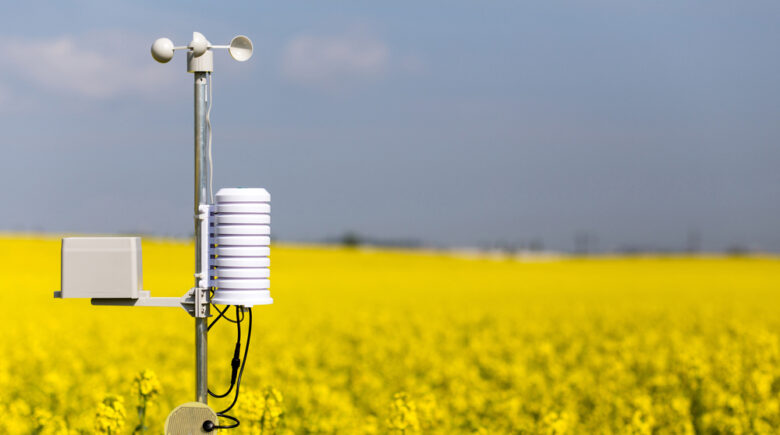
Technology is applied across agricultural systems to pursue both food security and environmental protection. Drones and data management platforms allow farmers to monitor plant and soil conditions in real time, enabling targeted interventions rather than blanket input applications. Precision agriculture platforms developed by companies such as John Deere and supported by satellite data from agencies like NASA’s Earth Applied Sciences Program enable farmers to reduce input costs while maximizing yields, directly supporting CSA goals. The integration of IoT-connected sensors and AI-powered crop management tools extends this capability further, giving even mid-scale operations access to data that was once limited to large commercial farms.
Climate Smart Agriculture Practice Comparison
| CSA Practice | Water Savings | Yield Improvement | GHG Reduction Potential | Estimated Adoption Cost (per hectare) |
|---|---|---|---|---|
| Drip Irrigation | 30–50% | 10–15% | 5–8% | $800–$2,500 |
| Hydroponics | Up to 90% | 20–25% | 10–15% | $5,000–$15,000 |
| Rainwater Harvesting | 15–25% | 10–15% | 3–5% | $200–$800 |
| Precision Agriculture (Drones/Sensors) | 20–30% | 15–20% | 12–18% | $1,500–$4,000 |
| Livestock Population Management | 10–20% | 5–10% (crop land) | 14–20% | $100–$500 |
| Agroforestry Integration | 10–15% | 8–12% | 15–25% | $300–$1,200 |
Frequently Asked Questions
What is Climate Smart Agriculture in simple terms?
CSA is a farming approach that aims to increase food production, help farmers adapt to climate change, and reduce agriculture’s contribution to greenhouse gas emissions at the same time. It combines traditional farming knowledge with modern technology and sustainable practices to make agriculture more resilient under changing climate conditions.
Who developed the concept of Climate Smart Agriculture?
The FAO formally introduced the term in 2010, ahead of the Hague Conference on Agriculture, Food Security and Climate Change. Since then, institutions including the World Bank, CGIAR, and CCAFS have helped develop and expand CSA frameworks globally.
What are the three pillars of Climate Smart Agriculture?
The three pillars are: sustainably increasing agricultural productivity and incomes; adapting and building resilience to climate change; and reducing or removing greenhouse gas emissions where possible. These goals are designed to work together, since food security, adaptation, and mitigation are deeply interconnected challenges.
How does Climate Smart Agriculture reduce greenhouse gas emissions?
CSA reduces emissions through improved livestock management, reduced synthetic fertilizer use, adoption of no-till or reduced-till farming, agroforestry, and better water management. The EPA estimates that agriculture accounts for roughly 10–12% of global greenhouse gas emissions, and CSA practices targeting these sources can reduce agricultural emissions by up to 30%.
What is the role of technology in Climate Smart Agriculture?
Precision farming tools, remote sensing, real-time soil monitoring, and data-driven decision-making all sit at the core of modern CSA. Drones, satellite imagery, IoT-connected sensors, and AI-powered crop management platforms help farmers optimize inputs like water and fertilizer, cutting waste while improving yields. Companies such as John Deere and research institutions like CGIAR are actively deploying these technologies at scale.
How does drip irrigation support Climate Smart Agriculture?
Drip irrigation is one of the most widely adopted CSA water-conservation practices. By delivering water directly to plant roots in precise, controlled amounts, drip systems reduce water consumption by 30–50% compared to conventional flood irrigation, according to FAO data. This conserves freshwater resources, reduces soil erosion, and helps maintain crop productivity even during drought conditions.
What crops benefit most from Climate Smart Agriculture practices?
Staple crops such as maize, wheat, rice, and soybeans stand to benefit significantly, as these are among the crops most exposed to temperature increases and shifting precipitation patterns. Research published in Nature Climate Change has already documented yield declines in maize and wheat attributable to observed warming trends, making CSA adoption particularly urgent for those crops.
How does Climate Smart Agriculture affect smallholder farmers?
Smallholder farmers in developing regions are among the most vulnerable to climate change and stand to benefit most from CSA adoption. CCAFS estimates that CSA practices could positively impact over 500 million smallholder farmers worldwide by improving yields, reducing input costs, and raising resilience to extreme weather events. Access to financing remains a real barrier, however: upfront costs for technologies like drip irrigation ($800–$2,500 per hectare) or precision agriculture systems ($1,500–$4,000 per hectare) are beyond the reach of many smallholders without grants, subsidized loans, or development bank support.
Is hydroponics considered a Climate Smart Agriculture practice?
Yes. Because hydroponic systems can use up to 90% less water than traditional soil farming, require no arable land, and produce higher yields per square meter, they directly address CSA goals around water efficiency and increased productivity. The USDA has highlighted hydroponics as a promising climate adaptation tool for food production, particularly in urban and peri-urban settings where arable land is scarce.
What is the relationship between land degradation and Climate Smart Agriculture?
Land degradation is both a driver and a consequence of climate change impacts on agriculture. The UNCCD estimates that degraded land costs the global economy more than $10 trillion per year. CSA addresses this directly by promoting soil health practices, reducing deforestation, and implementing erosion control measures that preserve the long-term productive capacity of agricultural land.
Does CSA have any limitations or drawbacks?
Yes, and they are worth stating plainly. Many high-impact CSA practices carry significant upfront costs that exceed the financial capacity of smallholder farmers without outside support. Hydroponics, for example, can cost $5,000 to $15,000 per hectare to establish. Precision agriculture systems require reliable connectivity and technical literacy that may not exist in remote farming communities. Even lower-cost practices like rainwater harvesting require infrastructure investment and maintenance. Without access to credit, development financing, or government programs, the farmers who need CSA most may be the least able to adopt it.
Sources
- Food and Agriculture Organization of the United Nations (FAO), Climate Smart Agriculture
- World Bank, Climate Smart Agriculture Overview
- Intergovernmental Panel on Climate Change (IPCC), Sixth Assessment Report, Working Group II
- U.S. Environmental Protection Agency (EPA), Global Greenhouse Gas Emissions Overview
- U.S. Environmental Protection Agency (EPA), Sources of Greenhouse Gas Emissions
- National Oceanic and Atmospheric Administration (NOAA), Climate Change Impacts
- United Nations Convention to Combat Desertification (UNCCD), Land Degradation Neutrality
- Nature Climate Change, Crop Yield Declines Attributable to Climate Trends
- International Water Management Institute (IWMI), Water and Food Security Research
- John Deere, Precision Agriculture Technology


