
Verdict at a Glance
For self-employed workers in Florida or Texas earning over $125,000 annually, an S-Corp election typically wins. It reduces self-employment tax by up to 17% on income above the reasonable salary threshold. Choose a sole proprietorship instead if your net income is below $100,000 and you want to avoid annual filing fees.
Updated July 2026
If your net self-employment income exceeds $250,000 in a year, the 0.9% Medicare surtax applies. This increases your effective federal tax burden beyond the standard 15.3% SE tax rate, making retirement account contributions and S-Corp structures even more critical for tax efficiency.
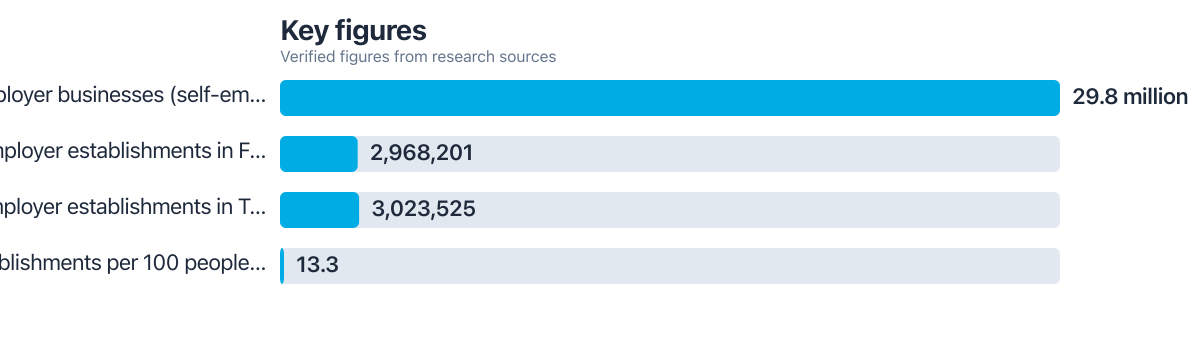
Self-employed individuals in Florida and Texas face a unique tax landscape: no state income tax, but full federal self-employment tax liability. In 2022, 2,968,201 according to U.S. Census Bureau nonemployer establishments operated in Florida, while Texas hosted 3,023,525 such businesses. These numbers reflect a high concentration of independent contractors in both states. Despite the absence of state income tax, self-employed tax strategies remain essential. The federal self-employment tax rate is 15.3%, a fixed cost that cannot be avoided in either state. This means that while you save on state taxes, you still owe the full federal burden. The key to savings lies not in state choice, but in how you structure your business and manage deductions.
The flip threshold is clear: if your net income exceeds $125,000 annually, electing S-Corp status usually begins to pay off. At this level, the difference in SE tax savings outweighs the cost of payroll processing and annual filings. For incomes under $100,000, the administrative burden of an S-Corp far exceeds any potential benefit.
Key Takeaways
- There were 2,968,201 nonemployer establishments in Florida in 2022, according to the U.S. Census Bureau. Source
- There were 3,023,525 nonemployer establishments in Texas in 2022, per the U.S. Census Bureau. Source
- Florida had a rate of 13.3 nonemployer establishments per 100 people in 2022, the highest per capita rate among U.S. states. Source
- Collectively, the nation’s 29.8 million nonemployer businesses generated $1.7 trillion in receipts in 2022, representing about 6.8% of the U.S. economy. Source
- The maximum net self-employment earnings subject to the Social Security portion of SE tax in 2025 is $176,100. Source
- Self-employment tax applies equally in Florida and Texas. The IRS confirms: “Self-employed individuals must pay SE tax on net earnings from self-employment.” Source
| Column 1 | Column 2 | Column 3 |
|---|---|---|
| Item | Florida and Texas Sole Proprietor | Florida and Texas S-Corp Election |
| Federal SE Tax (15.3%) on net income | $100,000 × 15.3% = $15,300 | $100,000 × 15.3% = $15,300 (only on salary) |
| Reasonable salary (2026 threshold) | Not applicable | Typically $80,000–$90,000 (based on industry norms) |
| SE tax on salary only | Not applicable | $85,000 × 15.3% = $13,005 |
| SE tax on distributions | $100,000 × 15.3% = $15,300 | None (distributions are not subject to SE tax) |
| Texas franchise tax (2026 threshold) | None (sole proprietors exempt) | $150,000 revenue → $0 tax (under $2.65M threshold) |
| Annual filing fees (Texas) | None | $150 (Public Information Report required) |
| Solo 401(k) contribution cap | Up to 25% of net income, max $70,000 | Same, but based on W-2 salary, not net profit |
| QBI deduction (2026) | 20% of net income (up to $100,000 threshold for service trades) | Same, but reduced by SE tax and salary deductions |
Why ‘No State Income Tax’ Doesn’t Mean ‘No Tax Strategy’
Many self-employed workers in Florida and Texas assume zero state tax means no strategy is needed. That’s incorrect. You still owe the full 15.3% federal self-employment tax, and federal income tax. The absence of state income tax removes one burden, but not the largest one.
For example, a $150,000 earner in California pays approximately $9,500 in state income tax. In Texas or Florida, that same income incurs $0 state tax. However, the federal SE tax remains $22,950–15.3% of $150,000. The real savings come from how you structure your business and maximize deductions. Without state tax planning, federal-level strategy becomes 100% of your leverage.
On this factor: An S-Corp election saves up to 17% on SE tax for high earners. This is the most impactful strategy in tax-free states. IRS: Self-Employed Individuals Tax Center
The Self-Employment Tax Breakdown Every FL/TX Freelancer Gets Wrong
Most guides simplify the 15.3% SE tax into “12.4% Social Security + 2.9% Medicare.” But the real calculation is more complex. The Social Security portion is capped at $176,100 according to Internal Revenue Service for 2025, while Medicare is uncapped. The 92.35% net-earnings rule means your taxable income is based on 92.35% of gross earnings.
You’re also subject to the 0.9% Medicare surtax if your modified adjusted gross income exceeds $250,000. This applies to both Florida and Texas filers. The IRS confirms: “If your income exceeds $250,000, you must pay an additional 0.9% on the amount exceeding that threshold.” This tax is not deductible and compounds with other obligations.
On this factor: The 0.9% Medicare surtax applies at $250,000 in AGI. This dramatically increases tax liability beyond 15.3%. IRS Publication 334, 2026
Quarterly Estimated Taxes: The System, Not Just the Deadlines
Quarterly estimated tax payments are due on April 15, June 15, September 15, and January 15. The due dates are not tied to calendar quarters. Many freelancers assume they can pay evenly across the year. But income fluctuations require dynamic adjustments.
If your income varies significantly, use the annualized income installment method (Form 2210 Schedule AI). This method allows you to pay only on income earned in each quarter. For example, if you earned $10,000 in Q1 and $50,000 in Q4, you’d pay tax only on the Q4 income in the fourth quarter. The safe-harbor method (100% or 110% of prior year’s tax) is simpler but can lead to overpayment or underpayment if income changes sharply.
For a $150,000 earner in Florida or Texas, estimated federal taxes total $32,235 annually, $8,059 per quarter on average. But using Schedule AI can reduce payments in low-income quarters by up to 40%. IRS: Estimated Tax Payments
Choosing Your Business Structure: Sole Prop, LLC, or S-Corp in FL and TX
For Florida and Texas freelancers, the decision between sole proprietorship, LLC, and S-Corp depends on income level and long-term goals. Sole proprietors avoid all filing fees and state taxes. But they pay full SE tax on all income.
LLCs offer liability protection. In Texas, even a single-member LLC must file a Public Information Report annually. The 2026 no-tax-due threshold is $2.65 million in revenue, meaning most small LLCs pay no franchise tax but still file. Florida has no equivalent tax. For high-income earners, forming an S-Corp can reduce SE tax by splitting income into salary and distributions.
For example, a $150,000 earner who sets a $90,000 salary pays SE tax only on $90,000 (15.3% = $13,770). The remaining $60,000 is distributed as dividends and not subject to SE tax. That’s a $1,530 savings compared to a sole proprietor. But this only makes sense if you’re already managing payroll and compliance.
On this factor: An S-Corp election saves 17% on SE tax above a $90,000 salary. This is the best strategy for high earners in FL/TX. IRS: Schedule SE
When S-Corp Is the Better Choice
- When your net self-employment income exceeds $125,000 annually.
- If you’re in a high-liability profession like consulting, law, or contracting.
- When you plan to save over $70,000 annually in retirement accounts.
- If you’re filing in Texas and expect to earn over $2.65 million in revenue.
- When you have employees or plan to hire within 12 months.
When Sole Proprietorship Is the Better Choice
- When your annual net income is below $100,000.
- If you’re just starting out and want to minimize administrative burden.
- When you don’t need liability protection or formal business structure.
- If you’re a remote worker based in Texas but perform work in a state that imposes income tax (nexus concerns).
- If you have an annual income under $250,000 and want to avoid the 0.9% Medicare surtax.
| Column 1 | Column 2 | Column 3 |
|---|---|---|
| Item | Sole Proprietor | S-Corp |
| Cost of formation | $0 | $200–$500 (LLC + S-Corp election) |
| Annual filing fees (Texas) | $0 | $150 (Public Information Report) |
| SE tax savings (over $125K income) | 0% | Up to 17% |
| Flexibility for retirement savings | 25% of net income, max $70,000 | Same, but based on salary |
| Liability protection | No | Yes (LLC structure) |
| Overall recommendation | Strong for low-income freelancers | Strong for high-income professionals |
S-Corp structures are not a one-size-fits-all solution. They require ongoing compliance, payroll processing, and formal recordkeeping. If you’re a low-income freelancer who values simplicity, the extra effort isn’t worth the savings. The IRS also warns: “S-Corps are not required for all self-employed individuals.” IRS: Business Structures and Taxes
Related reading: Pro Techniques for Removing Collections Before the 7.
Frequently Asked Questions
- Is an S-Corp or sole proprietorship better for a Florida-based freelancer earning $95,000? Choose a sole proprietorship. At this income level, the cost of S-Corp election exceeds any SE tax savings. Avoid filing fees and payroll complexity.
- Can I claim a home office deduction if I work remotely in Texas but live in Florida? Yes. The IRS allows home office deductions based on where you perform work. If your primary place of business is in Florida, you can claim the deduction there.
- Is the 0.9% Medicare surtax applied in Texas or Florida? Yes. The 0.9% Medicare surtax applies to individuals with modified AGI over $250,000. It is not affected by state residency or tax status.
- Do I need to file a Texas franchise tax return if I earn $100,000 as a sole proprietor? No. Sole proprietors are exempt from Texas franchise tax. Only LLCs and corporations must file if they exceed the $2.65 million threshold.
- Is the OBBBA vehicle loan interest deduction available in Florida and Texas? Yes. The 2026 OBBBA allows a deduction for up to $10,000 in interest on U.S.-assembled vehicles. This applies to self-employed workers in both states.
- Can I use a Solo 401(k) if I’m a sole proprietor in Texas? Yes. The Solo 401(k) is available to self-employed individuals regardless of state. Contributions are limited to 25% of net earnings, capped at $70,000 in 2026. IRS: Solo 401(k) Guidelines
- What happens if I perform work in California while based in Texas? You may owe California state income tax if you have nexus there. The IRS defines nexus as “a substantial presence” or “regular business activity.” Use the California Franchise Tax Board’s guidelines to assess exposure. California Franchise Tax Board
Sources
- U.S. Census Bureau: Smallest Businesses, 2025
- Internal Revenue Service: Self-Employment Tax
- Internal Revenue Service: Self-Employed Individuals Tax Center
- Internal Revenue Service: Florida Resources
- Internal Revenue Service: Texas Resources
- Internal Revenue Service: Business Structures and Taxes
- Internal Revenue Service: Publication 334, 2026
- Mott Capital Management: S&P 500 Rally Fueled by Gamma Squeeze
- ETF Trends: SpaceX Q2 Earnings

How to Save for a Dream Vacation Without Going Into Debt offers a proven method for setting aside funds without sacrificing lifestyle. Use a sinking fund for your next trip. More on saving for major life goals: a step includes templates for budgeting and tracking. Protecting Your Finances from Scams, Fraud, and Identity Theft helps you safeguard your income and tax data. How to Save for a Sabbatical: A Complete Financial Roadmap shows how to allocate income over time. Sinking funds explained: quiet strategy is ideal for tax savings, emergency funds, and large purchases.


