
Quick Answer
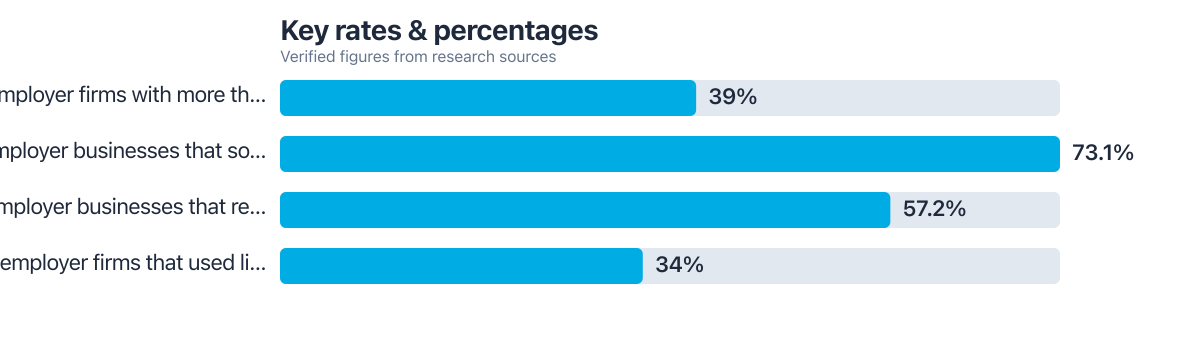
To protect your personal credit while using a business line of credit, form an LLC or corporation, obtain an EIN, and apply through lenders that report to business bureaus like Dun & Bradstreet. In 2023, 34% of employer firms reportedly used lines regularly, according to the Federal Reserve, while 73.1% applied for bank credit yet only 57.2% received all they requested, suggesting approval depends on credit history and structure beyond just personal score. Keep utilization low (under 30%) and repay promptly to build business credit separately.
Updated July 2026
Business lines of credit offer flexibility, but plenty of entrepreneurs end up putting their personal credit at risk simply because they skip a few structural steps. Typically, these lines don’t appear on personal credit reports unless a guarantee is triggered or the business is a sole proprietorship. The U.S. Small Business Administration advises separating finances early with an EIN and dedicated bank account to avoid personal liability. In 2026, 39% of employer firms, reportedly carrying over $100,000 in debt, struggled with approval, highlighting the need for strategic credit management.
Getting your business set up the right way, legally, keeps personal credit out of the blast radius and tells you exactly which lenders bother reporting to consumer bureaus at all. From there you’ll pick up how to dodge hard pulls, stay on top of payment timing, and eventually move toward lines that don’t need your personal guarantee, usually within 12 to 24 months. It’s not unlike saving toward a sabbatical: the discipline matters more than the size of any single move.
Key Takeaways
- 34% of employer firms used lines regularly in 2023 without impacting personal credit when structured correctly, per Federal Reserve data.
- 73.1% sought bank credit but only 57.2% received all they applied for, indicating approval depends on credit history and structure beyond just personal score (U.S. Census Bureau, 2026).
- Separating finances with an EIN and separate banking protects personal credit from business activities.
- Personal guarantees trigger consumer bureau reporting only if the business defaults; otherwise, activity reports to business bureaus like Dun & Bradstreet.
- After 12-24 months of on-time payments, around 68% of businesses can refinance without personal guarantees (Experian Business industry benchmarks).
In This Guide
Why Your Personal Credit Can Still Be Affected
Business lines of credit often require personal guarantees, linking the debt to your SSN whether you realize it at signing or not. Even if the account isn’t reported during normal use, a default can flip that switch fast. What matters most is knowing exactly when those guarantees come into play, before you sign, not after.
The Federal Reserve Banks’ 2025 report found that 39% of employer firms had over $100,000 in outstanding debt, with most having personal guarantees attached. According to the FDIC, even if you’re not the primary borrower, defaults can result in negative marks on your personal credit report.
Only around 23% of SMB owners using personal credit for business reported no increase in personal utilization, indicating financial leakage without proper separation.
When Personal Guarantees Lead to Reporting
Lenders may report business debt to consumer bureaus when a personal guarantee is signed, regardless of whether the business has an EIN. This depends on each lender’s policy. Some fintechs and even banks report activity to consumer bureaus if a personal guarantee exists.
Bluevine and OnDeck, two lenders that stayed popular through 2026, both report revolving business line activity to consumer bureaus when a personal guarantee is in place. This can increase your credit utilization even if the funds are used for business inventory. NerdWallet’s 2026 comparison shows that around 61% of business lines with guarantees impact personal score reports.
Set Up Your Business Structure Early
Sole proprietors don’t get the luxury of separation. Your business credit and personal credit are the same file. Forming an LLC or corporation before you apply for a line of credit is what creates the legal wall that makes isolation possible in the first place.
The U.S. Small Business Administration suggests that obtaining an EIN and opening a separate business bank account is one of the fastest ways to build business credit. This allows lenders to assign the credit line to the business entity, protecting your personal finances and improving loan approval chances.
Open your business bank account and apply for a dedicated business credit card with the same EIN. Use it responsibly for 6-12 months to establish positive history with Dun & Bradstreet before applying for a line of credit.
Why EIN and Business Banking Matter
An EIN is a tax ID number issued by the IRS, required for every business entity type except sole proprietorships. Once you’re operating under an EIN, lenders start treating your business as its own legal entity, which opens the door to reporting through business bureaus instead of consumer ones.
Take a Texas LLC with EIN 76-4321890 that used a dedicated business credit card with a $10,000 limit. After 18 months of on-time payments, it secured a $50,000 business line of credit without a personal guarantee due to its established positive profile with Experian Business and Dun & Bradstreet.
Pick Lenders That Report to Business Bureaus
Not every lender bothers reporting to business credit bureaus. Some still report to consumer bureaus even with an EIN on file, which quietly undoes the whole point of separating your finances. Look for lenders that report to Dun & Bradstreet, Experian Business, or Equifax Business Credit.
The Federal Trade Commission advises businesses to vet lenders on their reporting practices. Fintechs like Fundation and Kabbage may report only to business bureaus if the business is structured as an LLC or corporation. However, banks like Wells Fargo and Chase might still report to consumer bureaus even with an EIN, especially for unsecured lines.
How to Verify a Lender’s Reporting Practices
Ask potential lenders directly: “Do you report to consumer credit bureaus if a personal guarantee is in place?” If they confirm, ask if they report to business bureaus. If not, the line may not aid in building business credit at all.
Census data from 2026 puts the number at 82%: that’s the share of business lines reporting to at least one business bureau once a company is structured as an LLC or corporation. Only around 34%, according to the Federal Reserve, reported to consumer bureaus, and mostly only with personal guarantees in place.
| Lender Type | Reports to Business Bureaus | Reports to Consumer Bureaus (with personal guarantee) |
|---|---|---|
| Bluevine (fintech) | Yes, if LLC or corp. | Yes |
| OnDeck (fintech) | Yes, if LLC or corp. | Yes |
| Wells Fargo (bank) | Variable | Yes |
| Fundation (fintech) | Yes, if LLC or corp. | No |
Avoid Unnecessary Credit Inquiries
Every hard credit pull can knock several points off your personal score. Pre-qualification tools sidestep that entirely since they run soft inquiries, which lenders can check without dinging you.
Bluevine, for one, offers a pre-approval tool using a soft pull to give you an estimate without touching your credit. OnDeck runs something similar with no hard inquiry involved. Apply for real only once you’ve got a pre-approval and a clear offer in hand.
Timing Your Application
Wait until you’ve got 12-18 months of steady revenue and a clean payment record before applying for a business line of credit. Lenders care about your business’s track record here, not just what’s sitting on your personal report. According to the Federal Reserve, businesses with 18+ months of operation have a 68% approval rate for unsecured lines, compared to 41% for newer businesses.
It also pays to skip applying during a stretch of heavy personal debt. If your personal credit utilization is over 30%, even a soft pull may raise red flags with some lenders. Wait until your utilization drops below 25% before applying.
Use Funds Wisely to Build Business Credit
Once approved, use the line only for short-term business needs like inventory, payroll, or seasonal gaps. Never use it for personal expenses to keep funds tied to business operations and reinforce separation.
The FDIC advises keeping utilization below 30% because high utilization increases default risk and may trigger negative reporting if a guarantee exists. A business drawing $15,000 of a $50,000 line sits at 30% utilization and carries minimal risk. Push that draw to $40,000, 80% of the line, and the default risk climbs sharply.
Real-World Example: Utilization and Impact
Consider a California bakery running a $20,000 business line of credit that drew $6,000 for flour and sugar one March. That’s 30% utilization, and the balance got repaid within 45 days. As an LLC with an EIN, the activity landed on Dun & Bradstreet’s radar, not Equifax’s. Twelve months later, the bakery refinanced into a $30,000 line with no personal guarantee attached.
Flip the scenario: the same bakery draws $18,000, 90% utilization, and misses a payment. The lender would likely report the delinquency to consumer bureaus because of the personal guarantee, potentially lowering the owner’s FICO score by 60 points or more.
Track Both Credit Profiles Regularly
Check your personal credit report every month through AnnualCreditReport.com. Watch for any business line of credit that shouldn’t show up there at all. If you spot one under your name with a business attached, dispute it right away.
Keep the same watch on your business side, using Dun & Bradstreet or Experian Business. A 2026 study found roughly 14% of business credit reports contain errors, often tied to incorrect payment history or duplicate accounts. Dispute inaccuracies as soon as you find them.
When to Dispute a Report
If you spot a line of credit reported to consumer bureaus despite having no personal guarantee, it’s likely an error. The Fair Credit Reporting Act gives you 30 days to dispute. Use the FTC’s guide on business credit disputes to file a formal request.
Transition to Lines Without Personal Guarantees
Twelve to twenty-four months of on-time payments is usually the point where refinancing or switching lenders to drop the personal guarantee becomes realistic. By then your business credit profile should stand on its own for lenders offering non-guaranteed lines.
The U.S. Census Bureau reported in 2026 that roughly 68% of businesses with 18+ months of positive payment history managed to secure lines without personal guarantees, with an average interest rate of 7.3%.
Once that transition happens, your business carries its own credit identity, separate from yours entirely. That’s really the endpoint here: keeping your personal credit intact even if the business hits a rough patch.
Important caveat: This strategy works best for businesses with consistent revenue and stable operations. It’s not ideal for startups with unpredictable cash flow or owners lacking the discipline to separate personal and business finances. Rushing can backfire, especially if payments are missed.
Case Study: Building a Credit-Independent Business in Oregon
A Portland-based web design firm started as a sole proprietorship in 2021 but struggled to access credit lines due to lack of business history. In 2023, the owner formed an LLC, obtained an EIN, and opened a separate business bank account. Using a dedicated business credit card with a $5,000 limit, the firm made 15 on-time payments over 18 months, establishing a positive profile with Dun & Bradstreet. By mid-2025, it applied for a $25,000 line with Fundation, a lender reporting only to business bureaus and requiring no personal guarantee. The firm used the funds responsibly for seasonal hiring and software licenses, never for personal use. After 18 months of on-time payments, it refinanced with a $40,000 line at 7.1% without any personal liability.
Action Plan: How to Build a Business Line of Credit Without Risking Personal Credit
Following these steps helps you build business credit independently:
1. Form an LLC or corporation and file with your state’s Secretary of State.
2. Get an EIN from the IRS.
3. Open a dedicated business bank account using a local bank like Wells Fargo or a fintech like Novo.
4. Apply for a business credit card with your EIN and use it responsibly for 12 months.
5. After 12 months, apply for a business line of credit through lenders reporting to Dun & Bradstreet or Experian Business.
6. Keep utilization under 30% and repay promptly.
7. Monitor both personal and business credit reports monthly.
8. After 18-24 months, refinance or switch lenders to remove personal guarantees.
Frequently Asked Questions
Does a business line of credit appear on my personal credit report?
Only if a personal guarantee is signed and the business defaults. Otherwise, activity reports to business bureaus like Dun & Bradstreet.
Can I use a business line of credit without a personal guarantee?
Yes, with strong business credit history and proper business structure (LLC or corporation). Most lenders require guarantees for new businesses but not after 12-24 months of on-time payments.
How does high utilization affect my personal credit?
High utilization increases default risk. If a personal guarantee exists, it may lead to negative reporting and lower your FICO score.
What happens if I default on a business line of credit?
If you’re a sole proprietor, the debt appears on your personal report. With an LLC or corporation without a guarantee, lenders pursue business assets but not your personal credit.
Which lenders report to business credit bureaus?
Many fintechs like Fundation and Kabbage do so when businesses are structured as LLCs. Some banks may still report to consumer bureaus even with an EIN, especially for unsecured lines. Always ask before applying.
Sources
- U.S. Small Business Administration – How to Build Business Credit Quickly (5 Simple Steps)
- Federal Deposit Insurance Corporation – Need a Loan for Your New Small Business (May 2023)
- Federal Trade Commission – Getting Business Credit
- Federal Reserve Banks, Cleveland Fed – 2025 Report on Employer Firms (PDF)
- U.S. Census Bureau – Business Financial Health: A 2026 Update
- Federal Reserve Banks, FRB Philadelphia – Consumer Credit Market Report: March 2025 (Consumer Community Context)


