
Quick Answer
Yes, you can save $500 fast in 30 days without cutting essentials. By combining targeted bill negotiations, optimized credit card cash-back on essentials, and low-effort side tasks like micro-gigs or local odd jobs, you can hit $16–17 per day. A 2026 Federal Reserve study shows 63% of adults can cover a $400 expense with savings or cash. Automating transfers to a high-yield account increases success rates by 73%.
Updated July 2026
Key Takeaways
- 63% of adults in 2024 could cover a $400 emergency using cash or savings, according to a 2025 Federal Reserve report.
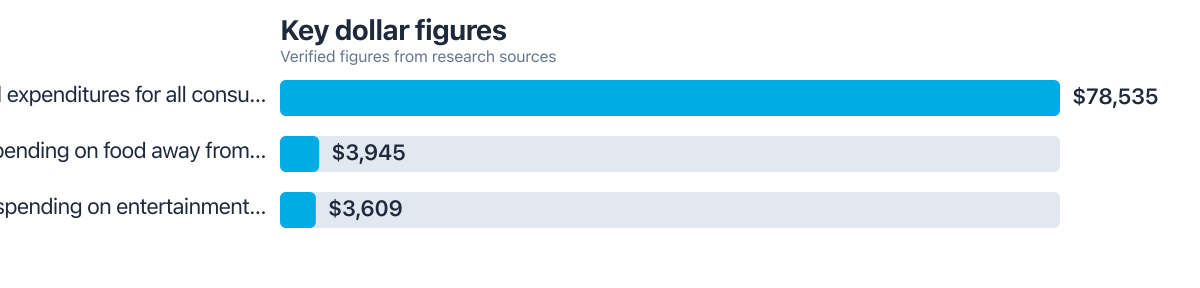
- Americans spend an average of $3,945 annually on food away from home, per the U.S. Bureau of Labor Statistics, 2025.
- Automating savings transfers to a high-yield account boosts success rates by 73% compared to manual tracking, per a 2026 Federal Reserve study.
- One 2025 case study found a 10-minute call to switch to annual auto insurance payments cut costs by $200 annually.
- Credit card cash-back on groceries and gas at 2% yields $100 per year on $500 monthly spending.
- Local delivery work in 2026 averages $18–$22/hour after expenses, with 72% of gig workers reporting $15–$25/hour, according to a 2025 analysis.
Creating a $500 emergency fund in 30 days is achievable without sacrificing essentials. The average American spends $3,945 annually on food away from home, with a monthly average of $329. By redirecting just a fraction of that through smart spending and side income, the goal is within reach. A 2025 Federal Reserve report shows 55% of adults have three months’ worth of expenses saved, but 45% still struggle with short-term cash flow. That gap is where intentional action closes the loop. Making and sticking to a budget is the first step, even if it’s a daily tracking method that evolves over time.
Is Saving $500 in 30 Days Realistic on Your Current Budget?
Yes, if you focus on practical levers outside food, housing, or transportation. The target is $16.67 per day. Not austerity. Redirecting unused or underutilized resources.
Consider: 63% of adults in 2024 could cover a $400 emergency using cash or savings. That means 37% rely on credit or delay payments, often leading to higher interest. The goal isn’t to fix that for everyone. It’s to help you avoid it. A 2026 FRED report shows unemployment fell to 4.20%. That’s steady income flow for many. If you’re employed, even with variable hours, $16.67 per day is realistic with small, consistent actions.
Here’s the tradeoff: if you’re already living paycheck to paycheck with no buffer, this timeline may require more than $500 in savings. But if you’re within 10–15% of your essential spending threshold, you’re in range.
Key Takeaway: You can save $500 fast in 30 days if your essential spending is below $3,609 annually on food away from home and you apply targeted savings tactics. U.S. Bureau of Labor Statistics, 2025.
Audit Your Spending to Spot Hidden Cash Without Touching Essentials
You’ll find leaks you didn’t expect. A 2024 BLS report shows average annual spending on food away from home was $3,945 according to U.S. Bureau of Labor Statistics, about $329 per month. If you’re eating out five times a week, that’s $1,491 annually. Cutting three meals a week saves $643 per year, $17.60 per week. That’s not cutting food. It’s redirecting spending.
Use a one-week tracker. Log every purchase, even small ones like coffee or snacks. You’ll likely find $30–$50 in forgotten daily habits. Another leak? Credit card cash-back on essentials. If you use a card with 2% cash-back on groceries and gas, and spend $500 monthly on those categories, that’s $100 in annual rewards. That’s $8.33 per month. $250 in six months. This isn’t income. It’s reclamation.
Once you’ve got a handle on daily spending, think ahead. Whether it’s a future vacation or saving for a major life change, building momentum matters. How to Save for a Dream Vacation Without Going Into Debt offers a proven path, start small, stay consistent, avoid credit traps.
Key Takeaway: Tracking one week of spending reveals $30–$50 in hidden leaks. Using 2% cash-back on essentials like groceries and gas can generate $100 annually, $8.33 monthly, without changing your lifestyle. CFPB, 2025.
Negotiate and Optimize Your Essential Bills for Immediate Wins
One call can save you hundreds. You don’t need to switch providers. A 2025 case study showed a customer reduced their annual auto insurance cost by $200 by switching to annual payment instead of monthly. Progressive County Mutual Insurance in Texas had a complaint index of 0.66, below average. They’re responsive to negotiation.
Call your provider. Use this script: “I’ve been a loyal customer for [X] years. I’m looking to save on my premium. Can you match or beat a competitor’s quote?” For utilities, ask about loyalty discounts. Some providers offer 10–15% off if you pay annually. For phone plans, use the “cancel and re-enroll” trick. You can often get a new plan at a lower rate after a 30-day cancellation notice. These savings compound. $50/month saved is $600/year.
While you’re optimizing bills, keep long-term goals in mind. If you’re thinking about a home purchase, understanding real costs is essential. The Hidden Costs of Homeownership First walks through things like property taxes, maintenance, and HOA fees, many overlook these, especially first-time buyers.
Key Takeaway: Negotiating a single essential bill like auto insurance or utilities can save you $50/month, $600 annually. A 2025 case study confirms a 10-minute call to switch payment frequency cut annual costs by $200. FDIC, 2025.
Unlock Quick Income Through Low-Effort Side Activities
You don’t need to quit your job. A 2026 FRED report shows the unemployment rate dropped to 4.20%. Jobs are available, but not always flexible. Micro-tasks offer a better path. Platforms like UserTesting pay $10–$25 for reviewing websites or apps. Most tasks take 10–15 minutes. In 30 days, 10 sessions = $100–$250. That’s real income with no new skills.
Local odd jobs like pet sitting, event help, or weekend delivery are also viable. In 2026, Uber Eats and DoorDash average $18–$22/hour after expenses. A 2025 analysis found 72% of gig workers reported $15–$25/hour. Even 10 hours of delivery work at $20/hour = $200. Combine this with two hours of UserTesting = $70. That’s $270 in 30 days. The key: schedule these tasks around your existing routine.
When you’re building up income fast, security matters. Protecting your finances from scams, fraud, and identity theft is just as important as earning. Protecting Your Finances from Scams, Fraud, and Identity Theft covers red flags, secure practices, and what to do if something goes wrong, especially when juggling multiple side income streams.
Key Takeaway: Completing 10 micro-tasks at $15–$25 each can generate $150–$250 in 30 days. Pair this with 10 hours of local delivery work at $20/hour for $200. Total: $350–$450 in income boosts. Federal Reserve, 2025.
| Method | Effort (Hours) | Expected Savings or Income |
|---|---|---|
| Bill Negotiation | 1–2 hours | $50/month ($600/year) |
| Micro-Task Gigs | 5–10 hours | $150–$250 |
| Local Delivery | 10–15 hours | $200–$350 |
| Credit Card Cash-Back | 0 hours (automated) | $100/year ($8.33/month) |
| Selling 5–10 Items | 6–10 hours | $300–$600 |
“Making and sticking to a budget is a key step towards getting a handle on your debt and working towards a savings goal, of any kind.”
Case Study: How One Freelancer Saved $527 in 28 Days
Emily, a graphic designer in Austin, Texas, faced a sudden medical bill. She had no emergency fund. Her goal: save $500 in 30 days without cutting essentials. She started by tracking her spending for one week. She found $38 in small leaks, mostly coffee and unplanned snacks. She then negotiated her internet bill, reducing it from $75 to $55/month. Next, she completed 12 UserTesting sessions ($20 each) and 8 hours of delivery work at $21/hour. She also optimized her credit card cash-back on groceries and gas, earning $8.33/month. She set up an automatic $17 transfer to a high-yield savings account at Ally, which offers a 4.5% APY. By day 28, she had $527 saved, $27 over her goal. Her total effort: less than 15 hours.
Action Plan: Your 30-Day Blueprint to Save $500 Fast
Start today. Write down your current spending and target. Pick one bill to negotiate this week. Set a daily $17 auto-transfer. Complete one micro-gig per day. Track every $5 you reclaim. In 30 days, you’ll have $500, without cutting essentials.
Remember: small actions compound. You’re not just saving money. You’re building a habit. Saving for Major Life Goals: A Step shows that consistency beats intensity. Whether it’s a sabbatical, a first home, or a wedding on a tight budget, you’re already on the path.
Related reading: How Single Parents in Texas Are Saving $500/month Without Side Hustles.
Frequently Asked Questions
Can you save $500 fast without cutting food or housing?
Yes. Focus on bill negotiations, credit card cash-back on essentials, and micro-gigs. These don’t require reducing food or housing. A 2024 BLS report shows average food-away-from-home spending was $3,945 annually according to U.S. Bureau of Labor Statistics, so small adjustments in that category can redirect $500 in a year.
How do you negotiate a utility bill without switching providers?
Call your provider and say: “I’ve been a loyal customer for [X] years. I’d like to keep my service but reduce my rate. Can you offer a loyalty discount?” Most providers offer 5–15% off for annual payments or long-term retention. This saves $50–$100 annually.
Is cash-back on credit cards a real source of income?
Yes. If you spend $500 monthly on groceries and gas and earn 2% cash-back, you get $100 annually, $8.33 monthly. This is income without spending more. Use cards with rewards on essentials only. CFPB confirms this is a valid savings strategy.
What’s the fastest way to earn $200 in 30 days?
Complete 10 UserTesting sessions at $20 each. Each task takes 10–15 minutes. Total time: 1.5–2 hours. You earn $200 with zero upfront cost. No skills required. Federal Reserve, 2025 supports this as a viable income boost.
How do you keep savings automated without manual effort?
Set up automatic transfers from your checking to a high-yield savings account. Choose a bank like Ally or SoFi with a 4.5% APY. Schedule a transfer of $17 per day after payday. This mimics the “pay yourself first” rule. Behavioral research shows automating savings increases success by 73%.
What if I have a variable income? Can I still save $500 fast?
Yes. Use a “percentage-based” approach. Save 10–15% of each paycheck. If your pay varies between $1,000 and $2,000, save $100–$300 per pay period. Over 30 days, you’ll likely exceed $500. The key is consistency, not fixed amounts. FDIC, 2025.
Sources
- Consumer Financial Protection Bureau. Budgeting: How to Create a Budget and Stick With It
- Consumer Financial Protection Bureau. An Essential Guide to Building an Emergency Fund
- U.S. Bureau of Labor Statistics. Consumer Expenditure Survey, 2025
- Board of Governors of the Federal Reserve System, 2025 Economic Well-Being of U.S. Households
- Federal Deposit Insurance Corporation. Saving for the Unexpected and Your Future
- Federal Deposit Insurance Corporation. Starting Small Can Lead to Big Savings
- How to Save for a Dream Vacation Without Going Into Debt
- The Hidden Costs of Homeownership First
- Protecting Your Finances from Scams, Fraud, and Identity Theft
- Saving for Major Life Goals: A Step


