Quick Answer
Smartphones have reshaped how people get around cities, make payments, and access information. More than 7.2 billion smartphone users exist worldwide, and mobile payments are projected to exceed $10 trillion annually, making these devices central to modern urban life and global commerce.
The term smartphone refers to mobile phones equipped with advanced software, hardware, connectivity, and the capacity to handle electronic transactions and data communications. Smartphones have been around since the late ’90s. It took a little longer for them to catch on than most other breakthrough technologies, but they’ve grown exponentially in the years since. Now that more people walk around with smartphones in their pockets than the total population of any single country, it makes sense to examine one of their most fascinating effects: how phones help make our cities smarter.
By no means are phones the only way we’ve converted our cities into more intelligent, interactive spaces, but they’re one of our most familiar methods. They’re involved in everything from noise pollution monitoring to urban planning, global tracking systems, and data gathering. According to Pew Research Center’s mobile technology data, ownership has become nearly universal across most developed economies. These devices are even considered part of the new era of high-tech cities designed from scratch to be more forward-thinking and efficient.
Key Takeaways
- There are more than 7.2 billion smartphone users globally, according to Statista’s smartphone usage report.
- Mobile payment platforms like Apple Pay, Google Pay, and Samsung Pay processed over $10 trillion in transactions annually, reshaping how consumers interact with businesses, per Business Insider Intelligence.
- GPS-enabled apps like Google Maps and Uber have become essential navigation tools, with Google Maps alone logging more than 1 billion active users per month, as reported by Google’s official Maps blog.
- Smartphone cameras have become the world’s most widely used cameras, with over 1.4 trillion photos taken on mobile devices each year, according to InfoTrends research.
- Ride-sharing platforms like Uber and Lyft, both powered by smartphone GPS technology, operate in more than 70 countries and have completed billions of trips collectively since their founding.
- Streaming services including Spotify and YouTube Music have replaced traditional music players, with Spotify reporting more than 600 million active users, per Spotify’s official newsroom.
How smartphones affect the way we interact
There are obvious ways phones make cities more intelligent, such as allowing us to access information remotely. We can look up a menu in advance at a restaurant or find directions to a destination before we arrive there. But how are these devices also changing how we interact with the world?
For one thing, they make it easier to help others. If you see someone having car trouble on the side of the road, you can use your phone to call them a tow truck or a taxi. For something more in-depth, a crowdsourcing app like Uber or Lyft lets you find a ride nearby and get around while out of town. These apps run on a digital map and use GPS to show you exactly how far away the cars are.
Some cities have citizen apps that let residents report problems and keep track of projects in their neighborhoods. Even traffic can be monitored with a smartphone app; if congestion is building around a specific part of town, you can take another route and save time. Platforms developed in partnership with organizations like the U.S. Department of Transportation’s Smart City Challenge have helped municipalities integrate smartphone data into broader urban management systems.
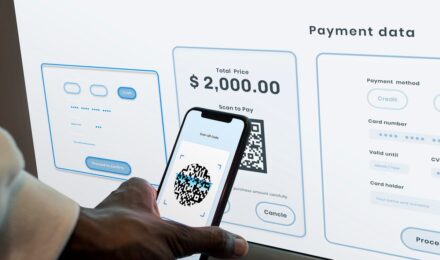
Phones are also increasingly being used for payment. In stores, many people use smartphones instead of cash, debit cards, and credit cards. Transactions process quickly and securely with just a few taps on the screen. It’s even possible to receive payments digitally; you can look into accepting payments through apps like Square or PayPal if your business takes credit card payments online. Square’s mobile payment system has made it especially accessible for small businesses to accept card payments without traditional point-of-sale hardware. The Consumer Financial Protection Bureau (CFPB) has also published guidelines around digital payment security to help both consumers and merchants understand their rights when transacting through mobile apps.
That said, the shift toward mobile payments is not without trade-offs. Consumers who lose access to their phone, whether through theft, a dead battery, or a software failure, can find themselves locked out of their preferred payment method at the worst possible moment. Relying too heavily on a single device for financial transactions introduces a point of failure that cash and physical cards simply don’t have.
Important features
These devices can be used in ways that are still being developed and discovered. But they’ve already made a big difference in how we live, work, and play. Some of their most essential features include:
Access to the internet and apps
One of the core features of smartphones is the ability to access the internet. People can surf the web with a data connection, check social media, and play games. They can also use apps specific to their interests, like a travel app that shows where to eat in a city or a fitness app that tracks daily steps. According to DataReportal’s Global Digital Overview, the average person spends more than 4 hours per day on their smartphone, with app usage accounting for the majority of that time.
Camera capabilities
Accessing the internet also means you can find and download whatever app you want. But there’s another reason phones are so capable: cameras. Many people use their phones to take pictures, which they share on social media and sometimes email or text to friends. Companies like Apple and Samsung have invested heavily in computational photography, with flagship devices now featuring multi-lens systems capable of producing near-professional-quality images directly from a pocket-sized device.
GPS services, including maps and directions services
Search engines like Google and apps like Uber use a global positioning system (GPS) to tell you how far away you are from a destination. Most maps these days are even built with street views, so you can almost feel like you’re walking down the street rather than just looking at it on a screen. If you get lost, GPS services can be invaluable. The underlying GPS infrastructure is maintained by the U.S. Space Force and monitored by the National Coordination Office for Space-Based Positioning, Navigation, and Timing, which ensures the satellites powering your maps remain accurate and operational.
According to Google’s official Maps blog, Google Maps alone logs more than 1 billion active users per month. The integration of GPS into everyday smartphone use has done more to democratize navigation than almost any consumer technology in recent memory. People who once relied entirely on paper maps or local knowledge can now find their way in any city on earth within seconds.
Music options like iTunes and streaming
For many people, phones are their primary music player. Some use them to listen to music even without an internet connection, storing downloaded songs and playlists directly on the device. Others stream from services like Spotify, Pandora, and YouTube. Apple’s iTunes, which helped pioneer the digital music economy in the early 2000s, has evolved into the broader Apple Music ecosystem, now competing directly with Spotify for a share of the global streaming market. According to the Recording Industry Association of America (RIAA), streaming now accounts for more than 84% of all music industry revenue in the United States.
And as technology continues to improve, phones will likely be used for more things than we can currently anticipate.
Types of smartphones
Nowadays, smartphones come in many different forms. Before getting into the details, here’s a look at which types are in use and their main features.
Primary Smartphones
This is the type you will mostly find on the market today. It has a physical keyboard option and a touch screen. It usually comes with a data plan (or tethering capability), a camera, and a music player preinstalled. Flagship devices from Apple (iPhone series) and Samsung (Galaxy series) fall into this category and represent the bulk of global smartphone sales.
Secondary Smartphones
The second type is an improved version of a basic smartphone. It usually has a built-in touchscreen, a data plan (or tethering capability), a camera, and a preinstalled music player. Mid-range devices from manufacturers like Google (Pixel A-series) and OnePlus often compete in this segment, offering many flagship features at more accessible price points.
Pocket Smartphones
Also known as “first-generation smartphones” or “feature phones,” they only come with a physical keyboard and a touch screen, so all other features are added by software upgrades, like access to the internet. The GSMA Mobile Economy Report notes that feature phones still play a critical role in connecting populations across developing markets in Africa and Southeast Asia, where smartphone adoption is still expanding rapidly.
| Smartphone Type | Typical Price Range (USD) | Key Features | Major Examples | Global Market Share (Est.) |
|---|---|---|---|---|
| Primary (Flagship) | $800 – $1,599 | Multi-lens camera, 5G, large RAM, advanced AI features | Apple iPhone 14 Pro, Samsung Galaxy S22 Ultra | 22% |
| Secondary (Mid-Range) | $300 – $799 | Touchscreen, data connectivity, camera, music player | Google Pixel 6a, OnePlus Nord | 48% |
| Pocket / Feature Phone | $20 – $299 | Physical or basic touchscreen keyboard, basic internet via software | Nokia 3310 (modern), HMD Pulse | 30% |
Advantages of using smartphones
Phones allow us to do many things more efficiently and faster than ever, making our lives more convenient. The most obvious advantage is having everything you need in one place. Who wants to pack up a whole suitcase to head out for a short trip? It’s far easier to grab a few essentials from a single device.
Access to information and entertainment on demand is another clear benefit. You can choose any activity and get everything you need right on your phone. It functions like an encyclopedia that’s only a click away.
The data stored on phones is also worth considering. Contacts, calendar entries, notes, and passwords are all accessible from one place. The Federal Trade Commission (FTC) recommends using dedicated password manager apps rather than storing credentials in plain text, and many phones now include built-in credential vaults, from Apple’s iCloud Keychain to Google’s Password Manager. Financial data stored on phones, including credit card information linked to mobile wallets, is also governed by protections outlined by the Federal Reserve’s Regulation II and related digital payment oversight frameworks.
Frequently Asked Questions
What is a smartphone and how does it differ from a regular mobile phone?
A smartphone is a mobile phone with an advanced operating system, internet access, app support, GPS, and a high-resolution camera, going far beyond basic calling and texting. Traditional mobile or “feature” phones offer limited functionality, while smartphones run full applications, support mobile payments, and connect to cloud services.
How many people use smartphones worldwide?
More than 7.2 billion people use smartphones globally, according to Statista. This figure surpasses the population of any single nation on earth and reflects decades of exponential adoption driven by falling hardware costs and expanding mobile network infrastructure.
How do smartphones make cities smarter?
Phones contribute to smarter cities by enabling real-time data collection, citizen reporting apps, GPS-driven traffic management, and mobile payment systems. Cities use aggregated and anonymized smartphone data to optimize transit routes, reduce congestion, and improve emergency response times. Organizations like the U.S. Department of Transportation have formally integrated smartphone data into urban planning frameworks.
What are the most widely used smartphone payment apps?
The most widely used mobile payment platforms include Apple Pay, Google Pay, Samsung Pay, PayPal, and Square. These apps allow users to make contactless payments in stores, send money to others, and receive payments for goods and services. The CFPB has established digital payment guidance to protect consumers using these platforms.
Is it safe to store financial information on a smartphone?
Storing financial data on a smartphone is generally safe when best practices are followed, including strong biometric authentication, two-factor verification, and using reputable apps from verified developers. The FTC and the CFPB both publish guidelines on protecting financial data on mobile devices. One important caveat: if your phone is lost or stolen, anyone who bypasses your lock screen could potentially access linked accounts, so enabling remote wipe capability is worth doing in advance.
How accurate is smartphone GPS navigation?
Modern smartphone GPS is accurate to within approximately 3 to 5 meters under open sky conditions. Apps like Google Maps and Apple Maps layer GPS data with Wi-Fi positioning and cell tower triangulation to improve accuracy in urban areas where satellite signals may be partially blocked. The GPS infrastructure underpinning these services is maintained by the U.S. Space Force.
What percentage of music listening now happens on smartphones?
Streaming services accessed primarily through mobile devices, including Spotify, Apple Music, YouTube Music, and Pandora, account for more than 84% of all music industry revenue in the United States, according to the RIAA. Physical media and digital downloads make up the remaining share.
What is the difference between a primary smartphone and a feature phone?
A primary or flagship smartphone offers a full-featured operating system (like iOS or Android), high-resolution multi-lens cameras, 5G connectivity, and support for thousands of apps. A feature phone offers basic calling, texting, and limited internet, often relying on software upgrades to add functionality that flagship devices include by default.
How do ride-sharing apps like Uber and Lyft use smartphone technology?
Uber and Lyft rely on GPS, real-time mapping, mobile data, and digital payment processing to match riders with drivers, calculate routes, estimate arrival times, and complete transactions through a smartphone app. Both platforms operate in more than 70 countries and have collectively completed billions of trips since launching, making them among the most GPS-dependent consumer applications available.
Will smartphones continue to evolve significantly?
Yes, and several directions look likely. Deeper integration with artificial intelligence for on-device processing, extended reality capabilities, satellite connectivity for areas without cell coverage, and tighter integration with smart home ecosystems are all active areas of development. Companies like Apple, Samsung, and Google continue investing heavily in hardware and software research, and industry analysts at firms like Gartner and IDC project continued innovation across both flagship and mid-range device categories well into the next decade.
Sources
- Pew Research Center – Mobile Fact Sheet
- DataReportal – Global Digital Overview Report
- GPS.gov – National Coordination Office for Space-Based Positioning, Navigation, and Timing
- Recording Industry Association of America (RIAA) – U.S. Sales Database
- Federal Reserve – Regulation II and Digital Payment Oversight
- Consumer Financial Protection Bureau (CFPB) – Sending Money & Digital Payments Guide
- Spotify Newsroom – Company Information and User Statistics