Fact-checked by the The Credit Scout editorial team
The Verdict
Plugging money leaks is usually worth it if your household is spilling at least $150 a month into unnoticed recurring charges, habit purchases, or stale bill rates. It is not worth the effort if your budget is already stripped to bare essentials and every expense has been renegotiated, but most middle‑class families haven’t done that audit yet.
Household money leaks drain bank accounts in amounts so small they barely register, a streaming service here, an in‑app purchase there, yet together they can top $2,000 a year. A CNET survey found the average subscriber believes they spend $86 a month on subscriptions; the actual outlay is $219. That gap explains why so many middle‑class families who earn enough still feel stretched.
The decision to hunt down leaks isn’t about deprivation. It’s about reclaiming cash that’s already leaving your account without delivering real value, money that can seed an emergency fund, pay down debt, or simply stop the quiet anxiety of a balance that never grows as fast as the paycheck.
| Reasons to plug money leaks | Reasons to put it off |
|---|---|
| Recurring charges you forgot about | You may cancel a service you actually value if you audit too quickly. |
| Fees from overdrafts and convenience purchases | Some leaks feel like small luxuries that keep daily life manageable. |
| Auto‑renewed insurance and utility rates that rise silently | A full audit takes a few hours, time you may not have right now. |
| Impulse digital buys and in‑app purchases that add up | If you share accounts, canceling one may inconvenience a family member. |
| Money that can build an emergency fund or invest for retirement | Some leaks are tied to annual contracts; you may face early termination fees. |
Key Takeaways
- Your total monthly leak is at least $150, roughly the threshold where plugging them makes a meaningful dent.
- You have at least one unused subscription still billing your credit card or checking account.
- You haven’t compared auto or home insurance rates in over 12 months.
- You’ve been charged an overdraft fee at least once in the past year.
- You spend more than $50 a month on impulse app purchases, one‑click online buys, or digital tipping.
- Your emergency fund is less than three months of living expenses, and you aren’t sure where to find the extra cash.
What Exactly Counts as a Money Leak for Middle‑Class Households?
Money leaks are small, repeated expenses that fly under the radar because they’re automatic or habitual. They aren’t the obvious splurges most people cut when money gets tight. They’re the $12.99 cloud storage plan you haven’t opened in six months, the $3 tip added to every coffee‑shop checkout, and the insurance premium that crept up because you didn’t shop around.
The middle‑class squeeze makes these leaks especially dangerous. A steady paycheck gives enough breathing room that a handful of tiny drains never trigger an alarm. The Federal Reserve Bank of St. Louis estimates a household can save hundreds of dollars a year just by reviewing bills and negotiating. For families with kids, the leak list expands: recurring youth sports fees, school‑activity app subscriptions, and the “just one more” digital download cycle that turns into a monthly hit.
Digital payments make leakage worse. One‑click checkout, in‑app micro‑transactions, and tipping screens that default to 20% turn spending into muscle memory. A Consumer Financial Protection Bureau (CFPB) report found that more than a quarter of households were surprised by overdraft or NSF fees in a single year, and those who incurred them often struggled to meet other obligations. The leaks aren’t just annoying, they compound into real financial fragility.
Life stage changes the shape of the leak. A single renter might hemorrhage through food delivery apps and streaming bundles. New parents see an uptick in convenience purchases and baby‑gear subscriptions. Empty‑nesters face creeping home‑insurance premiums they haven’t questioned in a decade. The pattern is the same across all of them: automated outflow without a regular check. Each household needs its own lens.
The Subscription Audit Most Households Skip
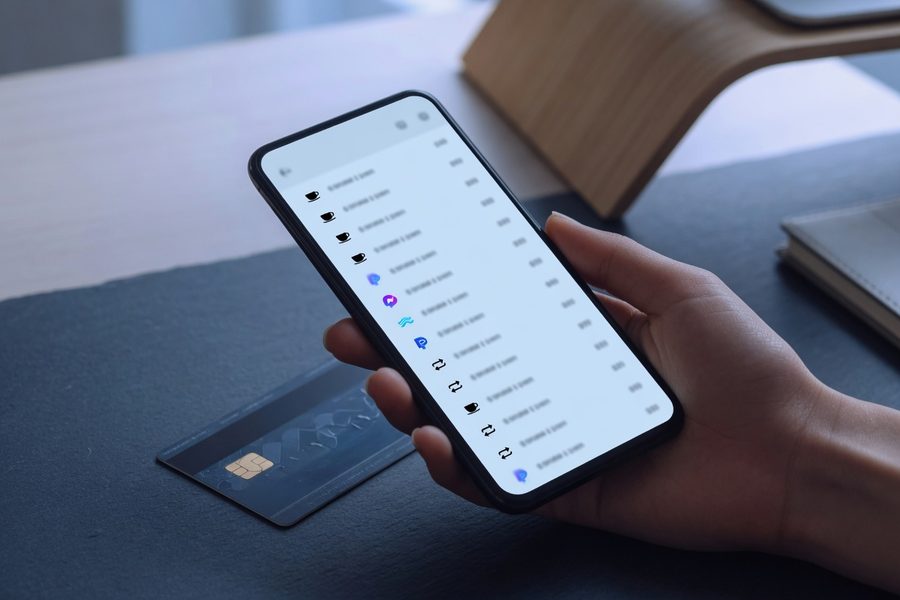
The average household wastes at least $204 a year on subscriptions it never uses, according to the CNET subscription survey, and the perception gap between the $86 people think they spend and the $219 that actually leaves their accounts each month is where the easiest money hides.
You don’t need to live like a monk to fix this. A straightforward audit, list every recurring charge on your checking account and credit cards, highlight anything you haven’t actively used in the last 30 days, then cancel or downgrade, can free up cash without sacrificing a single comfort. The Oregon Department of Financial Regulation recommends tracking all expenses for a month and reviewing them at month‑end to spot exactly these drains.
When you find a service you still like but rarely use, swap the premium tier for a basic plan. For streaming platforms, rotate them: keep one at a time and reactivate the others only when a new season drops. For fitness apps, see whether a free YouTube routine works just as well. Even trimming $30 a month redirects $360 a year to a high‑yield savings account, money that was previously evaporating into someone else’s quarterly earnings report. SoFi, for instance, has marketed high-yield savings rates well above the national average, which means recovered leak money can actually compound rather than sit idle.
If the mental friction of a manual audit feels too high, a budgeting app that links to your accounts will surface recurring charges in minutes. I’ve seen freelancers use the same trick I cover in our guide to budgeting apps for irregular income, a quick weekend audit with an app often uncovers $50 to $100 in immediate monthly savings.
One honest caveat: canceling services mid-cycle rarely yields an immediate refund, and some annual plans, think Adobe, Amazon Prime, or Microsoft 365, lock you in until the renewal date. Factor that lag into your timeline so the savings arrive when you expect them.
The Silent Drain of Convenience and Habit Creep
Habitual spending, extra supermarket runs, daily takeout coffee, the lunch ordered because the fridge looked too empty, can leak $200 or more each month without any single purchase feeling outrageous. The money disappears in $5 and $12 increments, so it never registers as a budget problem until you add up the week.
Emotional triggers make this creep sticky. Stress‑shopping, the social pressure to grab drinks after work, or the exhaustion that pushes a parent toward a takeout button, those aren’t line items in a spreadsheet, but they’re just as real as any utility bill. One extra mid‑week supermarket trip averaging $35 adds $1,820 a year. Throw in a daily $4 coffee and you’re at $2,280 before counting any other leaks.
Digital frictionlessness accelerates the drain. One‑click checkout and default tipping prompts have replaced the friction of pulling out cash. Research from the CFPB shows that surprise fees and impulse purchases frequently overlap. For many households, simply tracking one week of spending, every single transaction, reveals a pattern generic advice misses: maybe it’s the Sunday evening delivery order after a long weekend, or the in‑app game top‑up that’s become a nightly habit.
You don’t have to cut everything. Slot two or three tracked “grace” purchases per week and compare that total to what autopilot spending was costing you. The difference often shocks people into action, and that’s before you tackle bigger leaks like a budgeting method that makes every dollar intentional.
Bill Creep and the Money You Can Get Back
Auto‑renewal on insurance, internet, and utilities is the quietest wealth eroder. Rates rise year after year, and the provider bets you won’t notice. The CFPB’s inquiry into junk fees found that even in mortgage closing costs, opaque charges siphon dollars away, and the same principle plays out in your cellphone bill and auto policy. Fifty‑six percent of Gen X and 60% of baby boomers rarely or never compare auto insurance rates, effectively handing insurers permission to raise premiums.
Overdraft and NSF fees illustrate how fast bill‑creep compounds. Banks and credit unions, including large institutions like Chase, collected $5.83 billion in overdraft and NSF revenue in 2023, according to the CFPB’s data spotlight. A household that avoided those fees saved an average of $185 just from recent fee reductions. The Federal Deposit Insurance Corporation (FDIC) has long flagged overdraft programs as a financial strain on lower- and middle-income households, and that concern is well-founded when you see how quickly a single missed transfer turns into a $35 penalty.
Carrying a balance on a high-APR credit card is another form of bill creep that compounds silently. If a Chase Sapphire or Citi card charges an APR above 20% and you’re rolling even $500 month to month, you’re paying close to $100 a year in interest on money you already spent. Credit bureaus like Experian track that utilization, and a high debt-to-income (DTI) ratio can suppress your FICO Score, making future borrowing more expensive. The leak isn’t just the interest, it’s the downstream cost of a weakened credit profile.
Seasonal and irregular expenses, holiday shopping, back‑to‑school supplies, annual dues, also qualify as leaks because they hit the budget as lump sums that were never planned for monthly. They often end up on a credit card, generating interest that compounds the leak. The countermove is to list every annual or semi‑annual charge and auto‑transfer a monthly amount into a separate account earmarked for those obligations.
Money‑leak recovery goes beyond canceling services. Call your internet provider and ask for the latest promotion; if they won’t budge, switch. Check your home and auto insurance deductibles; raising them slightly often cuts the monthly premium enough to justify the added risk. For any unused service that auto‑renewed in the last 30 days, request a refund, many companies will grant it rather than lose a potential returning customer. Even saving only $50 a month from renegotiated bills recovers $600 a year that can go straight into an emergency fund, exactly the kind of buffer that the Federal Reserve’s 2024 household survey shows only 55% of adults have.

Who Should and Who Should Not
Good candidates
Households that feel steady but never seem to get ahead, there’s income, yet the savings balance barely moves, are the prime audience for a leak audit.
- You earn a middle‑class income but ended the last year with less than three months of expenses saved.
- You have never sat down and listed every recurring subscription linked to your bank account and credit cards.
- You have kids in activities, a busy schedule, and a string of small convenience purchases that feel unavoidable.
- You’ve been hit with an overdraft fee in the past 12 months, even just once.
- You suspect you’re overpaying on at least one of your recurring bills, internet, phone, or insurance, but haven’t looked for a better rate.
Who should skip it
If you already run a tight, automated budget and know where every dollar goes, a leak audit may yield little new cash.
- You already track all expenses weekly and renegotiate every bill at renewal.
- You have no unused subscriptions, or you deliberately keep a “fun” budget category you’re content with.
- Your emergency fund sits at six months of living expenses, and you’re investing consistently.
- You’ve recently already done a deep audit and cut out all the obvious fat.
Tracking spending helps identify and plug spending leaks by recording all expenses, reviewing them at month‑end, and adjusting the budget accordingly.
Frequently Asked Questions
How much does the average household lose to money leaks each year?
Household‑level estimates vary, but the combination of uncovered subscription waste, convenience spending, and bill creep easily exceeds $1,800 a year for a typical middle‑class family. Just unused subscriptions average $204 annually, and a single extra grocery trip per week can add another $1,500.
What are the most common money leaks middle‑class families overlook?
Unused subscriptions, auto‑renewing insurance with inflated premiums, digital in‑app purchases, and daily coffee‑shop stops top the list. Overdraft fees, modem‑rental charges, and back‑to‑school spending that wasn’t planned monthly are close behind. High-APR credit card balances that roll month to month, whether on a Chase, Citi, or store card, also drain money quietly through accumulated interest.
How do I find and cancel unused subscriptions?
Scan the last two months of bank and credit‑card statements for any recurring charge, then cross‑reference with your email inbox to see which services you’ve actually used. Cancel directly through the provider’s website or app, and set a calendar reminder to review again in six months, automation makes reinstating leaks easy.
Can closing money leaks really help me build an emergency fund?
Yes. Redirecting even $150 a month, about the savings from one unused premium subscription, a renegotiated internet bill, and fewer impulse buys, deposits $1,800 into a dedicated savings account in a year. That single action moves a household from zero buffer to a meaningful cushion, and the shift from leaking to saving becomes self‑reinforcing once you see the balance grow. Parking that cash in a high-yield savings account, through providers like SoFi or a FDIC-insured online bank, means the money earns interest rather than sitting flat.
What’s the easiest first step to plug money leaks?
Take 20 minutes to log into every bank and credit‑card portal and export the last three months of transactions into a single list. Sort by payee and highlight anything you can’t immediately identify or justify, that shortlist is your starting point. Pulling your free Experian credit report at the same time can surface any recurring charges tied to cards you’ve forgotten about.
Do I need a budgeting app to track money leaks?
No. A simple spreadsheet or even a paper list works, but an app that auto‑categorizes charges can make the process faster. What matters most is the consistency of reviewing charges at month‑end. If you haven’t yet built a strong emergency buffer, tackling leaks can also help you decide whether to pay off debt or save first without feeling squeezed.
Sources
- Oregon Department of Financial Regulation, Budgeting and Plugging Spending Leaks
- Consumer Financial Protection Bureau, CFPB Launches Inquiry into Junk Fees in Mortgage Closing Costs
- Consumer Financial Protection Bureau, Overdraft/NSF Revenue in 2023 Down More Than 50% Versus Pre‑Pandemic Levels
- Federal Reserve Bank of St. Louis, Ways to Plug Leaks in Your Household Budget
- CNET, Subscription Survey 2025