Reviewed by the The Credit Scout Editorial Team
Our Take
For most new parents, the smartest baby gear spending guide is to splurge on 3-4 items that directly affect safety, daily function, and multi-year use, a car seat, crib mattress, quality stroller system, and a reliable breast pump if nursing, while saving aggressively on short-lived, rapidly outgrown categories like clothing, swings, and bouncers. Secondhand markets can cut those costs by 50% or more. The case for an ultra-minimalist, buy-nothing-expensive approach weakens when cheap gear breaks and triggers repeated replacements, and with baby item prices up 24% since April 2025, durability has a real financial payoff. The honest tradeoff? This strategy works best for parents with some budget flexibility; households with extremely tight cash flow may need a different sequence.
May 2025, The price of bringing a baby home has taken another sharp turn upward. New parents can now expect to spend roughly $20,384 on baby-related costs in the first year, according to BabyCenter’s 2025 analysis, and a chunk of that, anywhere from $2,000 to $5,000, goes to gear alone. Making those dollars count has never been tougher: a Senate Joint Economic Committee report released just weeks ago found that a basket of five everyday baby items now costs 24% more than it did on April 1, hitting families with an average extra $400 in expenses since early March. Nobody needs a baby gear spending guide that just says “buy less.” They need one that tells them where less hurts and where it helps.
This article is for expectant parents and those in the fog of the first year who want a straightforward playbook for spending on baby gear without trashing their financial footing. I’ll walk you through the specific items that earn every dollar of a splurge, the ones where secondhand swaps are almost always the better call, and the point where even a well-justified purchase can start undercutting bigger goals, like keeping an emergency fund intact. The recommendation builds from concrete 2025 price data, federal safety rules, and what I’ve seen trip up parents who overbought early and regretted it later.
Key Takeaways
- The average first-year baby cost now tops $20,000, with gear soaking up $2,000–$5,000, according to BabyCenter (2025).
- A car seat in the $150–$300 range meets the exact same federal FMVSS 213 safety standard as a $600 model, spending more here buys convenience, not extra crash protection.
- Disposable diapers alone run about $840 per year (The Bump, 2025), and formula adds $222 per month, or roughly $2,664 per year (BabyCenter); recurring consumables can quietly chew through gear budgets.
- Secondhand clothing and non-safety items can reduce startup costs by 50% or more, but the American Academy of Pediatrics strictly advises against used car seats and crib mattresses where safety history is unknown (HealthyChildren.org).
- In my experience, the parents who regret their gear spending the most are the ones who bought short-term “deals” on items like strollers and carriers, only to replace them inside 18 months, a pattern that often costs more than buying one durable piece up front.
Setting a Realistic Baby Gear Budget in 2025
Before you add a single onesie to a registry, get the numbers in front of you: the first-year sticker shock is real, but it’s also manageable if you separate one-time gear spending from the relentless monthly consumables. The $20,384 first-year estimate from BabyCenter covers everything, housing, food, childcare, and gear. The gear slice itself, $2,000 to $5,000, breaks down into car seats, strollers, cribs, nursing equipment, and all the small stuff that somehow fills a nursery. What makes 2025 different is that tariff-driven price hikes have compressed the margin for error. According to the Joint Economic Committee, families with new infants are now paying about $400 more for baby goods since March 10, 2025, a cost that falls squarely on the gear and consumable categories. When every big-box run is more expensive, having a deliberate baby gear spending plan stops being optional.
That total also hides the recurring drain. At $86 per month on diapers and wipes and $222 per month on formula per BabyCenter, those two line items alone can top $3,700 annually ($840 from diapers plus $2,664 from formula), which approaches the upper end of an entire gear budget. I tell parents to build their gear plan around the monthly outflow first, and then decide how much they can commit to one-time purchases without tapping their emergency fund. That’s not just financial hygiene; it’s what kept the single-income family profiled here afloat when surprise medical bills hit. If you’re torn between filling a nursery and keeping cash on hand, run the numbers on building an emergency fund first, it frames every gear purchasing decision differently.
It’s also worth thinking about how first-year baby costs interact with your broader credit picture. Parents carrying high-interest credit card debt, say an APR above 20%, should be especially cautious about charging gear they can’t pay off quickly. Your debt-to-income ratio (DTI) and FICO Score both affect your ability to refinance, take on a home equity line, or qualify for a personal loan from lenders like SoFi or Chase if a financial emergency lands in year one. Experian’s consumer research consistently shows that new parents who increase revolving credit utilization significantly in the months around a birth tend to see FICO Score dips that linger for six to twelve months. Keeping gear spending within a defined cash budget, rather than reaching for credit, protects that score at a vulnerable moment.
What I see in practice: Parents frequently underestimate how fast consumables add up, treating formula and diapers as separate from the gear conversation. Then, six months in, they’re pulling from savings meant for a stroller upgrade. I’ve watched families who set a monthly cap for disposables and formula stick to their gear spending plan far more consistently than those who winged it.
One practical move is to earmark no more than 3-5% of total first-year baby costs for gear, which puts the range between about $600 and $1,000 if you’re on a lean budget and up to $5,000 for a full complement of new, higher-end items. That might sound low, but when you factor in secondhand sourcing for clothing and short-use gear, it holds. I’ll show the math on where secondhand cuts the deepest in a later section. Every dollar spent on gear is a dollar not going toward an unexpected NICU co-pay or the months of reduced income during parental leave, and that tradeoff is the lens through which every gear splurge should be evaluated.
Safety Non-Negotiables: Where to Spend to Protect What Matters
There are exactly a handful of items where I will never tell a parent to pinch pennies: a car seat, a firm crib mattress, and safe feeding equipment. The justification isn’t personal preference, it’s regulation, pediatric guidance, and the simple reality that the cheapest version of a safety item can carry risks that no savings are worth. The good news? Spending extra here doesn’t mean buying the most expensive model. Mid-range options consistently deliver the protection you need.
Car Seats: Federal Standards Make “Mid-Range” Enough
All car seats sold in the United States must meet identical Federal Motor Vehicle Safety Standard 213 (FMVSS 213) for crash protection, enforced by the National Highway Traffic Safety Administration (NHTSA). That means a $150 convertible seat provides the same baseline protection as a $600 luxury version. The higher price tags buy easier installation, lighter materials, and extra convenience features, not a safer shell. Consumer Reports’ latest baby gear top picks routinely feature models in the $150–$300 range as “Best Buy” or “Recommended” exactly because the value proposition flips at the high end. Splurge if you genuinely want the no-rethread harness or the click-in stroller system, but don’t mistake that spend for a safety upgrade. From a financial perspective, this is one of the few gear items you must buy new, never used, never from an unknown history, because microfractures from a prior accident can compromise the seat invisibly.
What I see in practice: Parents often mistake higher stroller or carrier price tags for better safety, but the real safety splurge is the car seat. I’ve had clients walk into a big-box store and leave with a $500 travel system after a five-minute demo, then later realize the $250 seat-and-stroller combo at the next aisle had the same crash-test certification. The extra $250 disappeared from their budget for nothing.
Crib Mattresses and Feeding: Health-Driven Spending
A firm, new crib mattress is the other absolute. The American Academy of Pediatrics explicitly warns against used mattresses where firmness can be compromised, and against inclined sleepers, sleep positioners, and soft bedding that raise suffocation risk. This isn’t a consumer preference; it’s a safety directive backed by decades of pediatric research. The AAP guidance covers inclined sleepers, sleep positioners, and nursing pillows that pose suffocation risks as items parents should avoid entirely. A good crib mattress costs $100–$200 new, which is a fraction of a single emergency room visit. Feeding equipment like bottles and pump parts also falls into the health-risk category, worn plastic, micro-scratches that harbor bacteria, or outdated pump motors can lead to infections or inadequate milk supply. Spend to buy these new and, for pumps, check whether your health insurance covers a free or subsidized unit (most ACA-compliant plans do).
The financial logic holds even if you extend the timeline. A car seat used daily for three years costs less than $0.15 per trip for a $200 model, compared to roughly $0.30 per trip for an impulse $600 seat bought because it matched the stroller. Factor in resale, which you should not do with a used car seat, and the gap widens. Buy the certified standard, not the marketing premium.
| Item | Budget (New) | Premium (New) | Safety Difference? | Buy Used? |
|---|---|---|---|---|
| Convertible Car Seat | $150–$200 | $400–$600 | None (same FMVSS 213 standard, per NHTSA) | No, never |
| Crib Mattress | $100–$130 | $180–$300 | No, if both are firm and new | No, AAP advises against |
| Stroller (mid-range) | $120–$150 | $400–$550 | No direct safety gap | Yes, if no crash history |
| Baby Carrier | $30–$50 | $120–$160 | Ergonomics differ; no federal standard | Yes, if undamaged |
| Breast Pump | $0–$60 (with ACA insurance coverage) | $200–$300 portable upgrade | No | No, FDA advises single-user |
| Baby Clothing (0–3 mo) | $20–$40/month new | $80–$120/month new | None | Yes, strongly recommended |
High-Use Gear Worth the Splurge
Once safety is covered, the next tier to spend on is gear you’ll use multiple times a day, or at least multiple times a week, across several years. In my work with parent budgeting, I’ve seen that durability and repairability in these items can actually lower lifetime costs, even if the price tag stings initially.
A $120 budget stroller replaced every 18 months runs you $240 over three years with zero resale, and that’s if it doesn’t break sooner. The $450 stroller, sold at the end of three years for 40% of its price, nets $180 back, making the true cost $270, or only $30 more than the budget route over the same period. I’m not pulling those percentages from the air; parent resale groups consistently show well-maintained mid-range stroller brands retaining 40–60% of retail on platforms like GoodBuy Gear and local swap sites. The same math applies to carriers and high-quality nursing pillows, items where the cheap version sags or fails and gets replaced. Spending more upfront on the gear you touch constantly often costs less in the long run, provided you can front the cash and avoid credit card interest.
Breast pumps deserve a special note because the Affordable Care Act requires most health plans to cover a pump at no cost. Many parents don’t realize their insurance will pay for a standard double electric pump, and some plans also offer an upgrade allowance that brings a hospital-grade or wearable pump down to $50–$150 out of pocket. Call your insurer and ask specifically about the Durable Medical Equipment (DME) benefit for breast pumps, that’s the phrase that gets you past the general customer service script. The Consumer Financial Protection Bureau (CFPB) has noted that unexpected out-of-pocket medical and childcare costs are among the most common triggers for new-parent debt, so treating the breast pump as an insurance claim rather than a retail purchase is one of the more consequential calls you can make in the first trimester. Taking advantage of this benefit can transform a $300 gear headache into a $0–$50 line item, freeing up cash for the stroller or carrier that makes life functional.
Where Saving Makes the Biggest Impact
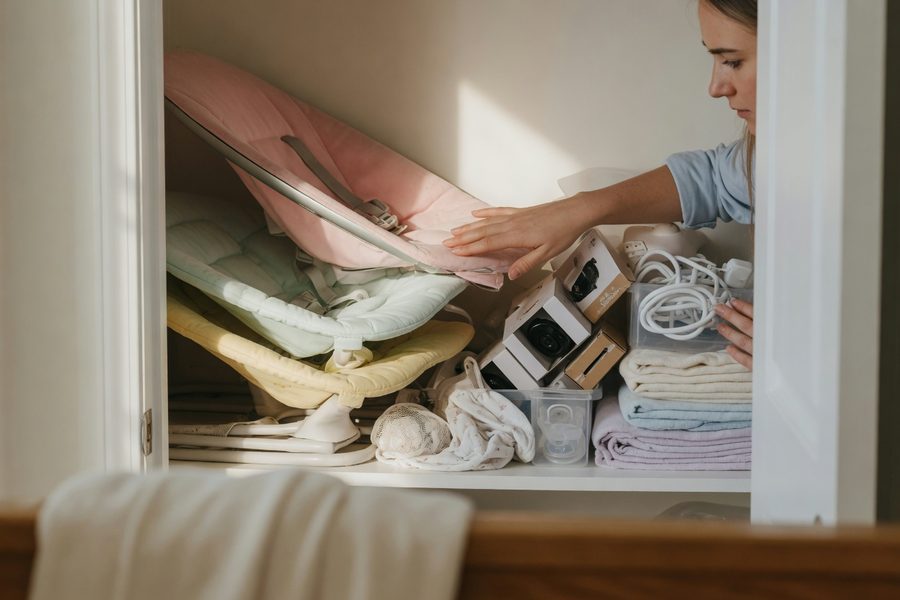
About half the baby products marketed as “must-haves” will get used for a few weeks, then stashed in a closet. Swings, bouncers, wipe warmers, high-end baby monitors with features you’ll never touch, mountains of newborn clothes, these are the categories where I urge parents to apply maximum cost-cutting. Not because they’re useless, but because the price tag almost never aligns with actual usage, and secondhand alternatives are abundant and safe.
Clothing is the poster child. Babies outgrow 0–6 month sizes in weeks, and used items in those ranges are often worn fewer than a dozen times. Shopping local buy-nothing groups, consignment shops, and multi-family garage sales can reduce clothing costs by 50–75% without sacrificing quality. I’ve seen families spend as little as $20 a month on secondhand outfits, compared to a $100+ monthly tally on new retail. For swings and bouncers, parent reports compiled by multiple review outlets note that roughly half of babies show limited or no interest after a few weeks. Spending $150 on a swing that sits empty stings; grabbing one for $30 from a neighbor’s basement does not.
What clients often miss: Secondhand baby clothes, especially in newborn and 0–3 month sizes, are essentially unworn. I’ve worked with parents who assembled an entire first-year wardrobe for under $100 by combining hand-me-downs with a seasonal consignment sale. It’s not glamorous, but it’s one of the most efficient money moves in any baby gear spending guide.
Toys and changing gear follow the same pattern. A basic changing pad on a dresser is functionally identical to a $300 changing table, and developmentally, a baby doesn’t care whether the blocks came from a boutique or a library lending program. I’d rather a parent put the saved $150–$300 into a 529 college savings plan, or simply keep it in their emergency fund. A Child Tax Credit can partially offset first-year costs, but only if you plan for it and adjust withholding early, and every dollar not sunk into an underused gadget is a dollar that stays in your control. Parents who use tax-advantaged accounts like a Dependent Care FSA through their employer can also redirect those pretax savings toward consumables, reducing the effective monthly cost of formula and diapers below the sticker figures cited above.
Where This Recommendation Falls Short
This strategy, splurge on 3-4 multi-year safety and daily-use items while saving aggressively on short-lived gear, has a real drawback: it assumes you have enough liquidity to absorb the upfront cost of a $450 stroller or a $200 car seat without disrupting other priorities. For parents in a true cash crunch, particularly those already carrying high-interest debt or living paycheck to paycheck, the immediate appeal of a $60 secondhand stroller and a free hand-me-down car seat is undeniable. In that situation, the “splurge” recommendation becomes yet another source of financial pressure, not relief. No baby gear spending guide should ignore that reality.
The catch is that skimping on high-use items comes with its own cost, just a deferred one. The $60 stroller that breaks on a cracked sidewalk four months in forces a replacement purchase that may be more expensive, and more stressful, because you’re buying it on an urgent timeline without the chance to compare prices. The hand-me-down car seat might have an expired shell or a history you can’t verify, which is exactly why NHTSA and the AAP both advise against used seats. If the only way to afford a safe car seat is through a hospital or community program that provides new, discounted models, that’s a better path than taking a chance. The tradeoff is real, and it’s weighted toward those who already have the most stretched budgets.
There’s also a geographic dimension that can undercut the secondhand advantage. Families in rural areas without active parent networks or consignment infrastructure may find the “buy used” advice impractical, and online resale platforms add shipping costs that eat into savings. Similarly, parents expecting multiples or children close in age will find the calculation tilts further toward durable, convertible gear that can span children, but the upfront outlay is higher. The risk is that this approach gets weaponized as “you should have bought better stuff” when a parent’s circumstances genuinely don’t allow it. In those cases, the better version of the gear plan is to start with the absolute safety must-haves, source everything else as cheaply as possible, and then upgrade one item at a time as cash flow permits.
Finally, parents who finance gear purchases on a credit card and carry a balance face an APR cost that can quietly inflate the “true price” of any item. A $450 stroller financed at 24% APR and paid off over 12 months actually costs closer to $510. Lenders like SoFi offer personal loans at lower rates that some parents use to consolidate new-parent expenses, but taking on new debt for discretionary gear rarely makes sense unless the interest rate is meaningfully below what you’re already carrying. Your FICO Score and DTI ratio will determine what rates you qualify for, and Experian’s CreditMatch tool is one practical way to compare personal loan options before committing.
How We Sourced This
This article draws from multiple data sources, primarily BabyCenter’s 2025 first-year cost analysis, the Senate Joint Economic Committee’s May 2025 report on baby-item price increases, and The Bump’s 2025 survey of diaper and formula costs. All pricing and tariff figures reference the period from January–May 2025. We also incorporated safety guidance from the American Academy of Pediatrics (via HealthyChildren.org) and product evaluation criteria from Consumer Reports’ 2025 baby gear testing. The resale recovery percentages are based on aggregated parent-resale group observations and platform data from GoodBuy Gear for 2024–2025. The methodology excludes items not directly related to gear (like childcare or housing) and focuses exclusively on the cost and safety tradeoffs for physical baby products. Last verified: May 20, 2025.
Frequently Asked Questions
What baby items are truly safe to buy used?
Clothing, sturdy furniture (like a dresser used as a changing table), baby carriers that haven’t been in a crash, and hard plastic toys without electronic components are all safe categories for secondhand purchases when cleaned thoroughly. The AAP specifically advises against buying used car seats, crib mattresses, and any sleep device with soft or inclined surfaces where safety history is unknown.
Do I really need a new crib mattress?
Yes. A firm, new crib mattress is one of the few non-negotiable purchases in any baby gear spending guide. Used mattresses may have compromised firmness that isn’t visible to the eye, and the American Academy of Pediatrics links soft or degraded sleep surfaces to increased suffocation risk. At $100–$200 for a quality new model, it’s also one of the more affordable safety investments on this list.
How much should I realistically budget for baby gear in 2025?
For a lean but complete setup, safe car seat, new crib mattress, secondhand clothing, one quality carrier or stroller, budget $800–$1,500. A fuller kit with a mid-range stroller system, nursing pillow, swing, and monitor runs $2,000–$3,500. The upper end of the gear range, around $5,000, includes premium versions of everything plus duplicates for multiple caregiving locations. Given the 24% price increase on common baby items since April 2025, those ranges have shifted upward from prior years.
Is it worth buying a convertible car seat instead of an infant seat?
Often, yes. Infant bucket seats have a weight limit of roughly 22–35 pounds and may be outgrown by 12–18 months, at which point you’d need to purchase a convertible seat anyway. Buying a convertible seat from the start (rear-facing for infants, then forward-facing as they grow) can eliminate one purchase cycle entirely, which matters more now that car seat prices have risen with broader baby-gear inflation. The tradeoff is that infant bucket seats are easier to carry in and out of the car without waking a sleeping baby, a convenience some parents genuinely value.
Does insurance really cover breast pumps?
Under the Affordable Care Act, most health insurance plans are required to cover breast pumps as preventive care with no cost-sharing. Coverage specifics vary, some plans cover a standard double electric pump fully, others offer a set dollar allowance toward a pump of your choice. Call your insurer before your third trimester and ask specifically about the Durable Medical Equipment (DME) benefit for breast pumps. Many parents are unaware this benefit exists and end up paying out of pocket for something their plan would have covered.
Sources
- BabyCenter, First-Year Baby-Related Expenses (2025)
- U.S. Senate Joint Economic Committee, New Parents Are Paying 24% More for Five Common Baby Items Since Trump’s Tariffs (2025)
- American Academy of Pediatrics, HealthyChildren.org, Inclined Sleepers and Other Baby Registry Items to Avoid
- Consumer Reports, Top Picks for Baby Gear (2025)
- BECU, Year 1 Baby Costs: It’s More Than You Think (2025)
- National Highway Traffic Safety Administration, Car Seats and Booster Seats: Federal Safety Standards
- HealthCare.gov, Breastfeeding Benefits and Breast Pump Coverage Under the ACA
{“@context”:”https://schema.org”,”@graph”:[{“@type”:”Organization”,”@id”:”https://the-credit-scout.com/#organization”,”name”:”The Credit Scout”,”url”:”https://the-credit-scout.com”},{“@type”:”Person”,”@id”:”https://the-credit-scout.com/#person-tobias-wrenfield”,”name”:”Tobias Wrenfield”,”description”:”Tobias Wrenfield is a certified financial planner with over 12 years of experience helping individuals navigate the complexities of retirement planning and long-term investing. He previously worked as a senior advisor at a regional wealth management firm before transitioning to financial education and writing. Tobias is passionate about making retirement strategies accessible to everyday Americans”,”knowsAbout”:[“Personal Finance”]},{“@type”:”Article”,”headline”:”Smart Spending for New Parents: Where to Splurge and Where to Save on Baby Gear”,”datePublished”:”2026-07-01″,”dateModified”:”2026-07-01″,”publisher”:{“@id”:”https://the-credit-scout.com/#organization”},”mainEntityOfPage”:{“@type”:”WebPage”,”@id”:”https://the-credit-scout.com/baby-gear-spending-splurge-save”},”inLanguage”:”en”,”author”:{“@id”:”https://the-credit-scout.com/#person-tobias-wrenfield”}},{“@type”:”FAQPage”,”mainEntity”:[{“@type”:”Question”,”name”:”What baby items are truly safe to buy used?”,”acceptedAnswer”:{“@type”:”Answer”,”text”:”Clothing, sturdy furniture (like a dresser used as a changing table), baby carriers that haven’t been in a crash, and hard plastic toys without electronic components are all safe categories for secondhand purchases when cleaned thoroughly. The AAP specifically advises against buying used car seats, crib mattresses, and any sleep device with soft or inclined surfaces where safety history is unknown.”}},{“@type”:”Question”,”name”:”Do I really need a new crib mattress?”,”acceptedAnswer”:{“@type”:”Answer”,”text”:”Yes. A firm, new crib mattress is one of the few non-negotiable purchases in any baby gear spending guide. Used mattresses may have compromised firmness that isn’t visible to the eye, and the American Academy of Pediatrics links soft or degraded sleep surfaces to increased suffocation risk. At $100–$200 for a quality new model, it’s also one of the more affordable safety investments on this list.”}},{“@type”:”Question”,”name”:”How much should I realistically budget for baby gear in 2025?”,”acceptedAnswer”:{“@type”:”Answer”,”text”:”For a lean but complete setup, safe car seat, new crib mattress, secondhand clothing, one quality carrier or stroller, budget $800–$1,500. A fuller kit with a mid-range stroller system, nursing pillow, swing, and monitor runs $2,000–$3,500. The upper end of the gear range, around $5,000, includes premium versions of everything plus duplicates for multiple caregiving locations. Given the 24% price increase on common baby items since April 2025, those ranges have shifted upward from prior years.”}},{“@type”:”Question”,”name”:”Is it worth buying a convertible car seat instead of an infant seat?”,”acceptedAnswer”:{“@type”:”Answer”,”text”:”Often, yes. Infant bucket seats have a weight limit of roughly 22–35 pounds and may be outgrown by 12–18 months, at which point you’d need to purchase a convertible seat anyway. Buying a convertible seat from the start (rear-facing for infants, then forward-facing as they grow) can eliminate one purchase cycle entirely, which matters more now that car seat prices have risen with broader baby-gear inflation. The tradeoff is that infant bucket seats are easier to carry in and out of the car without waking a sleeping baby, a convenience some parents genuinely value.”}},{“@type”:”Question”,”name”:”Does insurance really cover breast pumps?”,”acceptedAnswer”:{“@type”:”Answer”,”text”:”Under the Affordable Care Act, most health insurance plans are required to cover breast pumps as preventive care with no cost-sharing. Coverage specifics vary, some plans cover a standard double electric pump fully, others offer a set dollar allowance toward a pump of your choice. Call your insurer before your third trimester and ask specifically about the Durable Medical Equipment (DME) benefit for breast pumps. Many parents are unaware this benefit exists and end up paying out of pocket for something their plan would have covered.”}}]}]}