
Fact-checked by the The Credit Scout editorial team
Quick Answer
A renter can cut monthly expenses by $400 or more without moving by combining lease-line-item negotiation, subscription audits, utility adjustments, and food delivery reduction. The average U.S. renter pays $1,487/month in gross rent and utilities, with additional recurring costs that often exceed $500/month in subscription and food spending alone, enough room to find $400 across several smaller categories.
Cutting monthly expenses as a renter is genuinely achievable without signing a new lease or acquiring a roommate. According to the U.S. Census Bureau’s 2025 American Community Survey, median gross rent (rent plus utilities) reached $1,487 per month in 2024, and nearly half of all U.S. renter households are cost-burdened, spending more than 30% of their income on housing. That pressure is real, and the strategies that actually move the needle are not about dramatic sacrifice.
This guide focuses on what most renter savings articles skip: the negotiable line items buried in your lease, the subscription math most people underestimate by a factor of two, and the food delivery costs that compound faster than almost any other discretionary category. By the end, you will have a clear picture of where $400 per month is sitting in plain sight.
Key Takeaways
- A record 22.7 million U.S. renter households were cost-burdened in 2024, spending more than 30% of income on housing, according to the Harvard Joint Center for Housing Studies.
- The average American spends $219 per month on subscription services but estimates spending only $86, a gap of $133 per month, per C+R Research’s consumer survey.
- Average utility costs for U.S. renters reached $444 per month in 2025, a 20% increase from four years prior, according to RentCafe analysts via ResidentShield.
- Americans spent an average of $191 per month per person dining out in 2024, up from $166 in 2023, per the US Foods 2024 Diner Dispatch Survey.
- Renters with an unused included parking space can rent it for $50–$200 per month on platforms like SpotHero or Neighbor, a cash-flow lever that appears in almost none of the top-ranking renter savings guides.
In This Guide
- Why $400 Is a Realistic Target for Most Renters
- How to Run a Renter-Specific Expense Audit
- The Negotiation Lever Most Renters Never Pull
- Cutting the Utility Bill Without Landlord Permission
- Subscription and Recurring Bill Triage
- Where Most Renters Lose the Most Ground: Food Spending
- Turning Your Apartment Into a Micro-Revenue Source
Why $400 Is a Realistic Target for Most Renters
The $400 figure is not a round number chosen for convenience. It reflects what becomes available when a renter stops treating rent as a single fixed block and starts looking at the full cost structure of renting, including utilities, add-on fees, and non-housing recurring expenses.
The national average rent in 2026 sits around $1,698 per month. Add average utility costs of $444 per month and you are at roughly $2,142 in housing-related spending before a single subscription or meal is counted. Renters as a group spend an additional 32.8% of their household income on housing alone, according to USAFacts citing U.S. Census Bureau data. That leaves a meaningful portion of income flowing into categories where savings are far more accessible than the lease itself.
The Constraint This Article Respects
Every strategy here works without moving, subletting the entire unit, or getting a roommate. Those three workarounds appear at the top of most competing articles, but they are not available to someone in a current lease, living solo by choice, or renting a studio. The goal is to find $400 across multiple smaller categories: a negotiated lease line item here, a trimmed subscription there, a reduced food delivery habit, and perhaps a passive income stream from an unused parking space. No single item has to carry the full weight.
A record 22.7 million U.S. renter households were cost-burdened in 2024, the fourth consecutive year the figure set a new high, according to the Harvard Joint Center for Housing Studies. For many renters, finding $400 per month is not a lifestyle optimization exercise. It is survival math.
How to Run a Renter-Specific Expense Audit
A renter’s expense audit is not the same as a generic budget review. Renters carry cost categories that homeowners do not, or that function differently, and most budgeting templates miss them entirely.
Start with your lease and your last three months of bank statements. Look specifically for line items that appear separate from base rent: pet rent, parking fees, amenity fees for a fitness center or pool you rarely use, valet trash charges, package locker fees, and admin fees. These are what housing experts call phantom rent, charges that are legally distinct from base rent and, unlike the lease rate itself, are often negotiable or removable at renewal without requiring a full re-lease.
The Common-Area Utility Overcharge Most Renters Miss
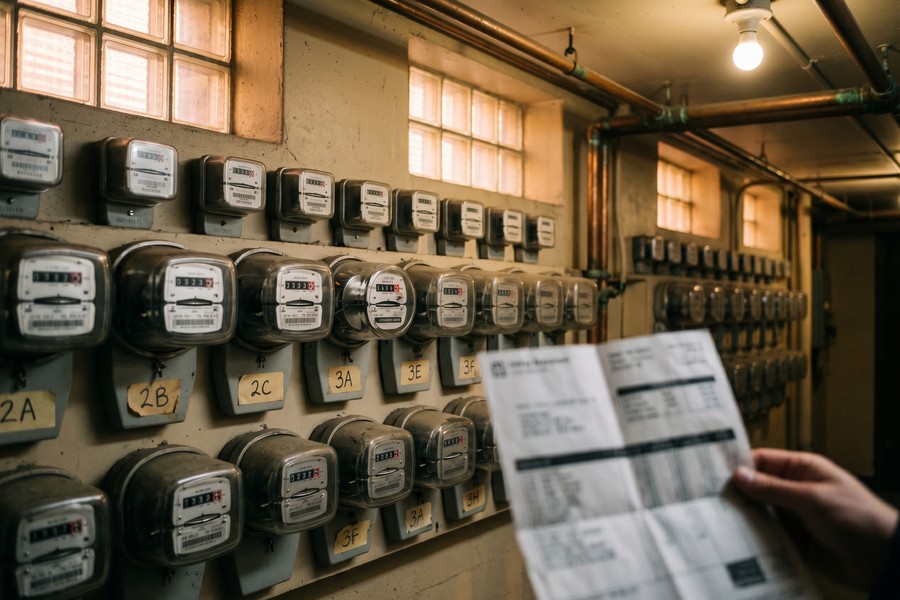
Here is a gap that almost no competing renter savings article addresses. In several states, landlords are legally required to offer a rent reduction if tenants are billed for utilities that serve common areas, such as hallway lighting, laundry room electricity, or shared water. If your utility bill covers any shared-space consumption, you may be legally owed a credit you have never claimed. Check your state’s tenant rights statutes or contact a HUD-approved housing counseling agency through the CFPB’s renter resources to find out whether this applies to your lease.
The nonprofit credit counselor InCharge Debt Solutions advises renters to review all fixed monthly bills before assuming they are locked in. The framing matters: recurring charges feel permanent until you check whether they actually are. For a solid general framework to track everything you find, the comparison between cash envelope budgeting and zero-based budgeting is worth reviewing. The zero-based approach in particular forces every dollar to be justified, which is exactly the mindset an expense audit requires.
The Negotiation Lever Most Renters Never Pull
Talking directly to your current landlord about rent is the highest-value action most renters never take. The reason to do it now is economic, not emotional: replacing a tenant costs a private landlord real money.
Advertising a vacancy, cleaning the unit, and carrying even one month of vacancy on a $1,698 unit costs more than $1,698. A modest concession of $100 per month to keep a reliable, on-time-paying tenant costs a private landlord roughly $1,200 per year. One vacancy month costs more. That math makes a renewal negotiation a rational offer for both sides, not a confrontation.
Joel Berner, Senior Economist at Realtor.com, has noted publicly that tenants who have lived in the same unit for several years and paid on time consistently should use that payment history as a concrete basis for asking for a lower monthly rate. The track record is the negotiating asset.
What to Offer and How to Frame It
Concrete trade offers work better than open-ended requests. Consider offering to extend the lease to 18 or 24 months in exchange for a rate freeze or a small reduction. A longer commitment reduces the landlord’s vacancy risk, which is the same thing they are paying to avoid. Alternatively, offer to take on a minor recurring task such as groundskeeping, snow removal, or common-area maintenance in exchange for $50–$100 off monthly rent. Get any agreement in writing, attached to the lease as an addendum.
Danielle Hale, Chief Economist at Realtor.com, has pointed out that renters facing a proposed increase can counter with current market data showing comparable units in the area. Showing a landlord that the asking rate is above market is a more persuasive argument than simply stating you cannot afford more.
The approach differs by landlord type. Large corporate apartment complexes have less flexibility on base rent but more often offer referral credits, waived parking fees, or one-time concessions. Private landlords have more flexibility but require a direct conversation. The key is asking clearly and early, at least 60 days before renewal, when they still have time to avoid a listing cycle.
Real estate investors who manage their own properties have said openly that cash flow matters more than any individual month of higher rent. A vacant unit does not cash flow at all. That framing is worth keeping in mind when you sit down to have the conversation.
Cutting the Utility Bill Without Landlord Permission
The utility bill is one of the most accessible expense categories for renters, because the highest-impact interventions require no landlord approval, no deposit, and no permanent modification to the unit.
Start with the reversible, zero-permission changes: replace incandescent bulbs with LED equivalents, install smart power strips on entertainment centers and home office setups to eliminate phantom electrical loads, apply temporary window weatherstripping film in winter (fully removable), and hang blackout curtains to reduce cooling load in summer. The U.S. Department of Energy recommends setting thermostats to 78°F when home in summer and 68°F in winter as the baseline for energy-efficient operation. Each degree of adjustment in the right direction reduces energy consumption by approximately 1%.
The Internet Bill Negotiation Most Renters Skip
Most renters are paying for the internet tier their ISP defaulted them into at move-in. A single phone call to ask for a retention rate or a competitor match can reduce the bill by $20–$50 per month. ISPs consistently offer promotional rates to new customers that existing customers can request on renewal. If your provider refuses, Experian’s renter savings guidance notes that switching providers, where competition exists, is often the most effective lever.
Time-of-use electricity rates are another option most renters overlook. Many utilities offer lower per-kilowatt-hour rates during off-peak hours, typically late at night or early morning. Shifting laundry and dishwasher runs to those windows does not reduce consumption but does reduce the bill, sometimes meaningfully. Check with your utility provider directly or visit your state’s public utility commission website to confirm availability.
Average utility costs for U.S. renters hit $444 per month in 2025, a 20% increase from four years earlier, according to RentCafe analysts. Even modest efficiency changes such as LED bulbs, smart power strips, and thermostat discipline can reduce that figure by 10–15% without any landlord involvement.
Subscription and Recurring Bill Triage
Subscription spending is almost universally underestimated, and the data on this is striking. The average American actually spends $219 per month on subscription services but believes they spend only $86, a gap of $133 per month, according to C+R Research’s consumer survey. 42% of consumers have continued paying for a subscription service they stopped using, what analysts call a zombie subscription.
The most common zombie subscriptions among renters: streaming services accumulated during 2020–2021 that were never canceled, gym memberships at facilities no longer convenient to the current address, and food delivery memberships like DashPass or Instacart+ whose monthly fees get absorbed inside order totals and become invisible. For a structured look at when subscriptions make financial sense versus when buying outright is smarter, the buy vs. subscribe guide on The Credit Scout offers a practical decision framework.
The Bill Negotiation Call
One afternoon of calls to your cell phone carrier, internet provider, and insurance company, asking specifically for retention rates or competitor matches, routinely recovers $50–$100 per month. The script is simple: state that you are reviewing your budget, mention a competitor’s rate if you have one, and ask what they can do. Retention departments have discretion that front-line customer service representatives do not. Calling rather than chatting online generally produces better results.
On insurance: renters insurance averages around $22 per month on its own, but bundling it with auto insurance through the same carrier typically yields a 5–15% discount on both policies. Experian and SoFi both highlight insurance bundling as one of the highest-return, lowest-effort moves available to renters. If you have not compared auto and renters bundles in the past year, that is an easy call to make.
One more angle worth checking: your FICO Score. A meaningfully higher credit score can qualify you for lower APR on any financing you carry, and some insurers in states that permit credit-based pricing will adjust your premium when your score improves. The CFPB maintains public guidance on how credit scoring affects insurance and lending costs. If your score has risen since you last shopped your policies, it is worth calling your insurer to ask whether a re-rating is available.
| Savings Category | Realistic Monthly Savings | Effort Required |
|---|---|---|
| Lease line-item negotiation | $50–$150 | One conversation at renewal |
| Zombie subscription cancellation | $40–$100 | One audit session |
| Internet/cell bill negotiation | $20–$60 | One or two phone calls |
| Utility efficiency changes | $30–$70 | One-time setup, no ongoing effort |
| Food delivery reduction | $75–$150 | Habit change, two fewer orders/week |
| Parking spot rental income | $50–$200 | One-time listing, passive thereafter |
Where Most Renters Lose the Most Ground: Food Spending
Food spending is where the gap between what renters think they are spending and what they are actually spending is most dramatic. Americans spent an average of $191 per month per person on restaurant dining in 2024, up from $166 in 2023, per the US Foods 2024 Diner Dispatch Survey. That number does not include food delivery, which carries its own separate fee structure that most people undercount.
Here is the delivery math that almost no renter savings article calculates explicitly. DoorDash charges a service fee of approximately 15% of the meal cost (with a minimum of $3), plus a delivery fee, plus a tip. A meal priced at $15 on the app commonly arrives as a $25–$28 total transaction. Three such orders per week produces $300–$336 per month in delivery spending on what would cost roughly $180 in food value. The overhead is not a minor surcharge. It is 40–50% of the total bill.
A Practical Food Reset That Is Not a Lecture
The goal here is not to eliminate delivery entirely or prescribe a rigid meal prep routine. Reducing from three weekly delivery orders to one saves approximately $75–$100 per month with a single habit shift. Buying proteins in bulk and freezing portions, using grocery store apps with digital coupons, and running cashback apps like Ibotta on regular grocery purchases all add up without requiring a change in what you eat.
Chase and SoFi both offer credit cards with elevated cashback rates on grocery purchases, some returning 3–5% on supermarket spending. If your FICO Score qualifies you for one of those products, the annual return on a typical grocery budget is worth factoring into the overall savings picture. Just make sure the card carries no annual fee that offsets the rewards, and that you are paying the full balance monthly so APR never becomes a cost.
One honest note on grocery savings strategies: the math is different for a single-person household than for two people. Most articles on this topic write vaguely for a “family,” and the portions, quantities, and per-unit costs do not translate to a solo renter. A single person buying a bulk package of chicken breasts needs a freezer plan; without one, bulk buying produces waste, not savings. Plan for your actual household size.
For additional strategies on making a tight grocery budget work, The Credit Scout’s guide to grocery shopping on a tight budget covers tactics that most mainstream guides overlook, including store-brand substitutions by category and the specific apps that generate the highest average cashback on food purchases.

Before your next lease renewal, pull three months of bank and credit card statements and add up every line item that is not base rent. Pet fees, parking charges, amenity fees, valet trash, and package locker fees frequently total $100–$200 per month, and unlike base rent, these are often negotiable or removable at renewal by simply asking.
Turning Your Apartment Into a Micro-Revenue Source
If your lease includes a parking space you rarely use, that space has cash value right now. In urban and suburban markets, unused parking spots rent for $50–$200 per month on platforms like SpotHero and Neighbor. This is not a side hustle requiring ongoing time investment. After an initial listing, it operates passively.
The distinction between renting a parking space and subletting your apartment is legally significant. Subletting an apartment without landlord permission violates nearly every residential lease and carries real legal risk. Renting an assigned parking space or an assigned storage unit through a platform like Neighbor.com is a legally distinct action that many leases do not address or prohibit. Always read your lease before listing anything, and if the lease is silent on parking subletting, confirm with your landlord in writing before proceeding.
Storage Space Rental
Renters with an assigned storage unit can also list unused square footage on Neighbor.com. Storage rates in most metro areas range from $30–$80 per month for a small unit. This is not a replacement for a full savings strategy, but combined with other adjustments, it contributes to the monthly total without requiring any change to daily habits.
The honest limitation here is geography. A renter in a dense urban market with high parking demand can realistically generate $100–$200 per month from an unused space. A renter in a suburban or rural area with ample free parking nearby will find little demand. Assess your market before counting on this as a significant lever.
According to the U.S. Census Bureau’s 2024 cost-burden data, the median monthly housing cost for renters rose from $1,354 to $1,406 between 2022 and 2023 even after adjusting for inflation. For cost-burdened households, the U.S. Department of Housing and Urban Development offers Housing Choice Vouchers (Section 8) and subsidized housing programs that can dramatically reduce the rent burden for qualifying households.
Managing an irregular or variable monthly budget while implementing multiple savings changes at once is easier with the right tools. The best budgeting apps reviewed on The Credit Scout cover several options that work well for tracking non-uniform monthly expenses, useful whether your income is steady or fluctuates. And if a portion of your new savings is earmarked for debt payoff versus emergency reserves, the question of whether to pay off debt first or build an emergency fund is worth resolving before you decide where the extra $400 goes each month. The Federal Reserve’s Survey of Consumer Finances consistently shows that households with even a small liquid reserve are significantly less likely to carry revolving credit card debt, which means the DTI math improves in both directions when you build the cushion first.
Frequently Asked Questions
Can a renter actually negotiate base rent without moving?
Yes, and renewal time is the strongest moment to do it. Landlords, especially private owners, face real turnover costs if a unit sits vacant for even one month, which often exceeds a modest rent concession. A tenant with a clean payment history who offers to extend the lease term has genuine negotiating leverage.
What are phantom rent charges and how do I find them?
Phantom rent refers to mandatory fees charged separately from base rent, including valet trash, package locker access, amenity fees, and admin fees. They appear as individual line items on your lease or monthly statement. Review your lease and three months of payment records to identify them, then ask at renewal whether any can be removed or reduced.
How much can cutting subscriptions realistically save per month?
The average American underestimates subscription spending by $133 per month, according to C+R Research. Canceling zombie subscriptions, renegotiating cell and internet bills, and bundling insurance policies can realistically recover $60–$150 per month, depending on how many services have accumulated over time.
Is it legal to rent out a parking space included in my lease?
It depends on the lease and local law. Renting an assigned parking space is legally distinct from subletting the apartment, and many leases do not explicitly prohibit it. Always review your lease language first and, if the lease is silent on the matter, get written landlord confirmation before listing the space on a platform like SpotHero or Neighbor.
What utility changes can renters make without landlord approval?
Fully reversible changes require no landlord approval: LED bulb replacements, smart power strips, temporary window weatherstripping film, blackout curtains, and thermostat adjustments. These changes leave no permanent modification to the unit and can collectively reduce a utility bill by 10–15% per month.
What is HUD’s definition of housing cost burden, and do I qualify for assistance?
The U.S. Department of Housing and Urban Development defines cost-burdened as spending more than 30% of gross income on rent and utilities. Renters who meet this threshold may qualify for Housing Choice Vouchers (Section 8) or other subsidized housing assistance programs. The CFPB’s renter resources page links directly to HUD-approved housing counselors who can assess eligibility at no cost.
How do I know if I’m overpaying for food delivery?
Add the platform service fee, delivery fee, and tip to each order total and compare that to the base cost of the food. On a $15 meal, the all-in cost frequently reaches $25–$28. If you place three or more delivery orders per week, you are likely spending $150–$175 per month in fees and tips alone, separate from the food itself.
Sources
- U.S. Census Bureau, 2024 American Community Survey 1-Year Estimates
- Harvard Joint Center for Housing Studies, Housing Unaffordability Soared to New Highs in 2024
- USAFacts, How Much Do Households Spend on Rent (U.S. Census Bureau Data)
- C+R Research, Subscription Service Statistics and Costs (2024)
- ResidentShield / RentCafe, Trends in Average Utility Costs for Renters (2025)
- US Foods, 2024 Diner Dispatch Survey: American Dining-Out Habits
- Consumer Financial Protection Bureau, Help for Renters: Get Help Paying Rent and Bills
- InCharge Debt Solutions, How to Save Money on Rent
- Experian, Ways to Save Money on Rent
- CNBC, 2025 Is a Renter’s Market: Here’s How to Take Advantage