Quick Answer
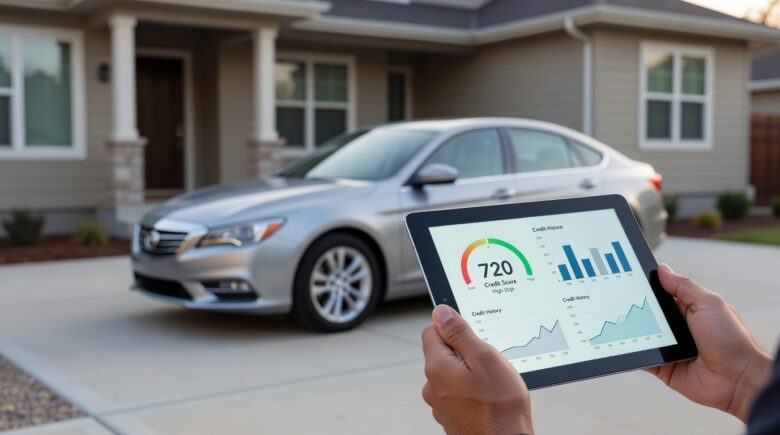
To buy a car in 2026, aim for a credit score of at least 661 for competitive rates. Borrowers with scores above 780 qualify for the best APRs. The average new car loan borrower has a score of 755, while the average used car borrower scores 691. Your score directly impacts your total cost, over $9,000 in interest differences on a $30,000 loan.
Updated July 2026
Why Your Credit Score Matters
Shopping for a car this year? Your credit score is going to shape almost every part of that experience, whether you realize it yet or not. Knowing the credit score to buy a car lenders actually want to see can save you thousands in interest, and in some cases decide whether you drive off the lot at all or get sent home empty-handed.
There’s no single magic number here, and anyone who tells you otherwise is oversimplifying. Lenders pull from a range of scores to set your rate and terms, but the pattern holds: higher score, better deal. Below is what actually matters before you walk into a dealership in 2026.
Key Points
- ✅ Most lenders approve auto loans for scores as low as 580, but the best rates go to borrowers with 720 or higher.
- ✅ A difference of 100 credit score points can cost, or save, you thousands of dollars over the life of a loan.
- ✅ Subprime lenders will work with scores below 580, but expect high interest rates and stricter terms.
- ✅ Checking and improving your credit before applying can dramatically change your loan offers.
What Score Do You Need for a Car Loan?
There’s no universal minimum credit score to buy a car. Most traditional lenders want to see at least 661, which puts you in what the industry calls the “prime” category. Experian’s State of the Automotive Finance Market report found that borrowers scoring 661–780 captured the largest share of new and used auto loans in 2024.
Lenders typically break scores into these tiers for auto lending:
- Super Prime: 781–850, best rates available
- Prime: 661–780, competitive rates, easy approval
- Near Prime: 601–660, moderate rates, some restrictions
- Subprime: 501–600, higher rates, stricter terms
- Deep Subprime: 300–500, very high rates, limited lender options
Falling into the subprime range doesn’t shut the door on financing. It just means you’ll pay a premium for it. That’s exactly why it pays to know where you stand before you ever sit down with a finance manager.
Here’s a scenario worth sitting with. Say you’re carrying a 620 score and need roughly $8,000 for a used car. That puts you in near-prime territory, and at current averages you’re looking at an APR around 9.83%. Stretched over 48 months, that’s about $200 a month, with total interest landing near $1,800. Now push that score to 661 before you apply, and the rate falls to about 6.87%, saving you roughly $800 in interest over the loan’s life. A few months of aggressively paying down credit cards could be the entire difference.
| Loan Type | Average Credit Score | Financing Rate Share (Q4 2024) |
|---|---|---|
| New car loan | 755 | 80% of buyers financed their purchase |
| Used car loan | 691 | 36.5% of buyers financed their purchase |
New car buyers, on average, carry stronger credit than used car buyers do. That’s not surprising given the price gap. But it also points to something bigger: more of the market, across both categories, is financing rather than paying cash.
How Your Score Affects Your APR
Your credit score is the single biggest lever on your APR, the annual percentage rate attached to your loan. And the gap between a great score and a poor one isn’t cosmetic. Stretched across a 60 or 72-month term, it can mean paying thousands more for the identical car.
Here’s a real-world breakdown, built from Experian’s Q4 2024 average auto loan rates, applied to a $30,000 new car loan over 60 months:
- Super Prime (781+): ~5.25% APR → $572/month → ~$34,300 total
- Prime (661–780): ~6.87% APR → $591/month → ~$35,460 total
- Near Prime (601–660): ~9.83% APR → $637/month → ~$38,220 total
- Subprime (501–600): ~13.18% APR → $685/month → ~$41,100 total
- Deep Subprime (300–500): ~15.77% APR → $723/month → ~$43,380 total
That’s a swing of more than $9,000 between a super prime borrower and a deep subprime borrower financing the exact same car. Your score isn’t an abstract number sitting on a report somewhere. It’s cash, plain and simple.
Quick Fact: According to CFPB data, auto loans are the third largest category of consumer debt in the U.S., behind mortgages and student loans. Getting a good rate matters at scale.
New vs. Used: What’s the Difference?
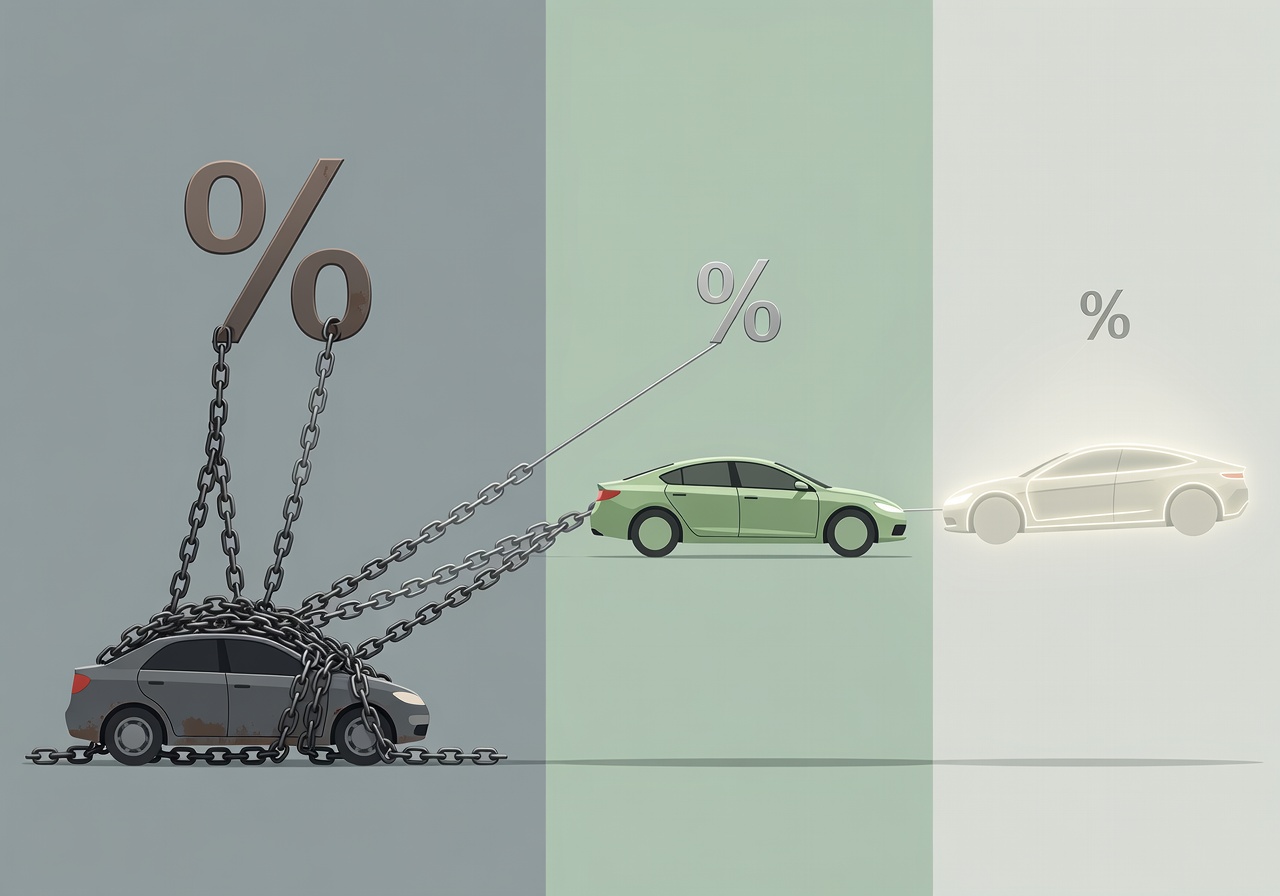
New or used changes the whole equation. New car loans tend to carry lower rates because the vehicle holds value longer and makes for stronger collateral. Used car loans run higher across nearly every credit tier, even for borrowers with excellent scores.
According to Experian’s 2024 report, 80% of new car buyers financed their purchase, compared to just 36.5% of used car buyers. New car financing is simply more accessible and more common.
Here’s roughly how the split looks between used and new auto loans:
- Used car loans average 1.5–3% higher APR than new car loans at the same credit tier
- Lenders may set a higher minimum credit score for older or high-mileage vehicles
- Some credit unions and banks cap the loan-to-value ratio on used cars, affecting how much you can borrow
If you’re buying used with a lower score, put more money down. It cuts the lender’s risk and can get you better terms. If you’re sitting in the near prime or subprime range, aim for 10–20% down at minimum.
How to Boost Your Score Before Applying
Whatever your score reads today, it doesn’t have to stay there. Even modest improvements can move you into a better tier and save real money. Give yourself three to six months of runway before you plan to buy, if you can manage it.
Steps to Boost Your Score Fast
- Pay down credit card balances. Keeping utilization below 30% (ideally below 10%) has the fastest impact on your score. FICO data shows that high utilization is a top score detractor.
- Dispute errors on your credit report. The FTC estimates 1 in 5 Americans has an error on their credit report. Check yours at AnnualCreditReport.com.
- Avoid new hard inquiries. Each application for credit dings your score slightly. Hold off on applying for new cards or loans before your auto loan.
- Become an authorized user. If a family member has a long-standing account in good standing, being added can boost your score. NerdWallet notes this can help, especially with length of credit history.
- Don’t close old accounts. Length of credit history counts. Closing old cards can hurt your score right before a major purchase.
Rate shopping is the one exception to the hard-inquiry rule. FICO and VantageScore both treat multiple auto loan inquiries within a 14–45 day window as a single inquiry. So compare offers freely, just keep it within that window.

When Your Score Falls Short
If your score isn’t where you’d like it, you’re not out of options. Just don’t let the dealership’s finance office be the only door you try, that’s frequently where the worst rates hide. A few smarter paths exist.
Alternatives When Your Score Is Low
- Credit unions: They often offer lower rates than banks and are more flexible with near-prime borrowers. Membership is usually easy to qualify for. NerdWallet confirms credit unions often provide better terms for lower-score borrowers.
- Get a co-signer: A co-signer with strong credit can help you qualify for a much better rate. Just make sure both of you understand the responsibility involved.
- Buy a cheaper car: A smaller loan is easier to qualify for and easier to repay. Consider a reliable used car under $15,000 to keep your risk low.
- Wait and save: Three to six months of credit repair, combined with a bigger down payment, can dramatically change your options.
- Dealer financing as a last resort: Buy-here-pay-here lots often charge very high rates. Only use them if no other option exists, and refinance as soon as your score improves.
Refinancing deserves its own mention. If you take a high-rate loan now because you need the car, plan on refinancing in 12–18 months once your score has climbed. Many lenders offer auto refinancing with no prepayment penalty, and shaving even 2–3% off your rate adds up faster than people expect.
None of this is a one-size-fits-all strategy, though. If you only plan to keep the car a couple of years, the upfront cost of a high-rate loan might outweigh whatever you’d save by refinancing later. And if your income isn’t steady, a high monthly payment now could strain your budget more than any future rate cut helps. Improving your credit reduces risk. It doesn’t erase it, and it’s not a guarantee that a better deal is waiting on the other side.
One more thing worth saying plainly: if your score sits below 500 and you need a car right now, spending months chasing credit repair may not be realistic for your situation. In that case, a co-signer or a cheap car bought with cash is usually the smarter call, even if it means giving up features you’d prefer. The math on waiting only works in your favor when you actually have time for those improvements to land.
FAQs
What is the minimum credit score to buy a car?
There is no hard minimum, but most mainstream lenders look for a score of at least 580–600. Some subprime and buy-here-pay-here lenders will approve scores below that, though rates will be significantly higher. Your best loan options open up at 661 and above.
Can I buy a car with a 500 credit score?
Yes, but your options will be limited and expensive. You’ll likely need a larger down payment, expect APRs above 14–15%, and may only qualify through specialty subprime lenders or buy-here-pay-here dealers. It’s worth taking a few months to improve your score if possible.
Does applying for an auto loan hurt my credit score?
A single application creates a hard inquiry that may lower your score by a few points temporarily. However, if you apply with multiple lenders within a 14–45 day window, FICO treats all those inquiries as one. So rate shopping doesn’t compound the damage.
What credit score do I need to get 0% APR on a car?
Promotional 0% APR financing from manufacturers is typically reserved for super prime borrowers, those with scores of 740 or higher. Even then, it’s not guaranteed. These offers are also usually limited to specific models and shorter loan terms (24–48 months).
Is it better to get a car loan from a bank or a dealership?
Generally, getting pre-approved through a bank or credit union before visiting the dealership gives you more leverage and often a better rate. Dealer financing can be competitive, but dealers sometimes mark up the interest rate (called a “dealer reserve”) and keep the difference. Always compare offers.
What is the average credit score for new and used car loan borrowers in 2024?
The average credit score for new car loan borrowers is 755, while the average used car loan borrower scores 691, according to Experian’s 2024 data.
How much do new car loans average in 2026?
The average new car loan amount in Q1 2026 was $43,925, with an average interest rate of 6.39% according to Experian’s 2026 report.
What percentage of used car buyers financed their vehicle in Q4 2024?
According to Experian’s 2024 data, 36.5% of used car buyers financed their purchase.
Are used car loans more expensive than new car loans?
Yes. Used car loans carry higher interest rates across all credit tiers, averaging 1.5–3% higher than new car loans for the same borrower. This is due to higher depreciation and perceived risk.
Can I improve my credit score in three months before buying a car?
Yes, especially with focused actions like reducing credit utilization, disputing errors, and avoiding new debt. FICO data shows scores can improve significantly in under six months with consistent effort.
Sources
Sources
- Experian. Average Credit Scores for New and Used Car Loans (2024)
- Experian. Average Car Loan Interest Rates by Credit Score (Q1 2026)
- Consumer Financial Protection Bureau (CFPB). Consumer Credit Trends: Auto Loans
- AnnualCreditReport.com. Free Credit Reports
- NerdWallet. Average Auto Loan Interest Rates by Credit Score
- Edmunds. How to Get the Best Auto Loan Rate
- Federal Reserve. Consumer Credit Report (G.19)
- Bureau of Labor Statistics. Employment Situation Summary
- Bankrate. Auto Loan Rates and Trends
- Reuters. US Auto Loan Default Rates Rise in 2024
- Credit Karma. What Is a Credit Score?
- AnnualCreditReport.com. How to Access Your Free Credit Report