
Fact-checked by the The Credit Scout editorial team
Quick Answer
A goodwill letter asks a creditor to remove an accurate late payment from your report out of courtesy, while a pay-for-delete offers to pay a collection debt in exchange for its deletion. Here’s the blunt reality: goodwill letters work for isolated 30-day late payments on open accounts, but pay-for-delete agreements succeed less than 20% of the time with original creditors, according to CFPB data on collection tradeline outcomes.
Here’s the truth: most credit repair tactics don’t work the way people hope they will. A goodwill letter and a pay-for-delete agreement are two of the most searched credit repair methods, and they target completely different problems. A goodwill letter asks a creditor to forgive a one-time slip on an otherwise healthy account. A pay-for-delete offers cash to a collection agency in exchange for scrubbing the entire tradeline from your report. The gap between what consumers expect and what lenders actually do is wide, and knowing that gap saves you months of wasted effort.
The data isn’t encouraging. According to the Consumer Financial Protection Bureau’s 2023 market snapshot on third-party debt collections, pay-for-delete practices are unlikely to substantially impact the number of collection tradelines on consumer credit reports, since only a small percentage of consumers successfully negotiate such agreements. This article breaks down exactly how each tactic works, who it works for, and what to do instead when neither option delivers. We’ll also cover the lender-side logic most consumers never hear, because understanding why a creditor says no is the key to knowing what to try next.
Key Takeaways
- Goodwill letters target isolated late payments on open accounts, not collections or charge-offs (confirmed by Experian’s director of consumer education).
- Pay-for-delete agreements succeed more often with debt buyers who paid pennies on the dollar than with original creditors holding full-balance charge-offs (per CFPB collection tradeline analysis).
- Paying a collection without a deletion agreement typically does not improve FICO scores because paid and unpaid collections score similarly in most models (standard FICO scoring practice).
- Neither tactic is required by law, creditors and collectors can refuse even with a written agreement (CFPB guidance on accurate negative information).
- Some collection agencies now automatically delete tradelines upon settlement, making negotiation unnecessary, but most original creditors explicitly refuse (industry practice).
In This Guide
- What Are Goodwill Letters and Pay-for-Delete Agreements?
- How Do Goodwill Letters Actually Work in 2026?
- How Do Pay-for-Delete Negotiations Work?
- Which Tactic Fits Your Situation: A Head-to-Head Breakdown
- What Are the Real Odds of Success in 2026?
- Risks and Limitations You Cannot Ignore
- Alternatives That Actually Improve Your Credit
What Are Goodwill Letters and Pay-for-Delete Agreements?
A goodwill letter is a written request asking an original creditor to remove an accurate late payment from your credit report. You’re not disputing the information, you’re admitting it happened and asking for forgiveness. The target is almost always an isolated 30-day delinquency on a revolving account like a credit card, usually on a tradeline that was otherwise spotless before and after the slip.
A pay-for-delete agreement is a negotiation with a collection agency. You offer to pay some or all of an outstanding debt in exchange for the agency deleting the entire collection tradeline from your credit reports. This tactic targets charged-off accounts that have already been sold or assigned to third-party collectors, not late payments on open accounts. The distinction matters. A goodwill letter is for late payments; a pay-for-delete is for collections. Using the wrong tool for the wrong problem wastes time and postage.
Why Consumers Turn to These Tactics
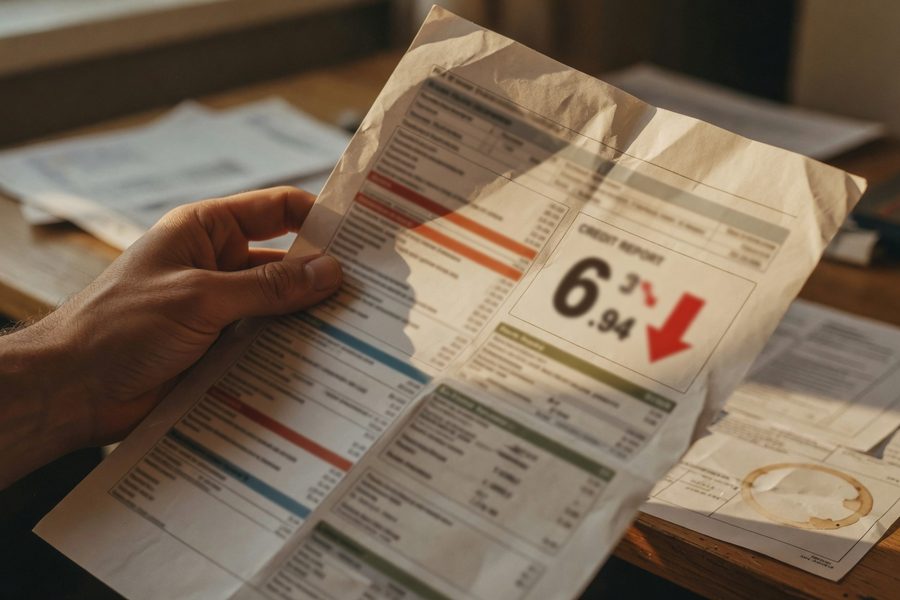
The appeal is obvious. A single 30-day late payment can drop a FICO score by 60 to 80 points for someone with excellent credit, according to FICO scoring data. A collection account, even a paid one, functions as a scarlet letter on your report for up to seven years. Consumers facing mortgage applications, rental approvals, or employment background checks want the fastest fix available. Goodwill letters and pay-for-delete agreements promise exactly that: removal instead of waiting.
The reality is less tidy. Creditors have contracts with the three major credit bureaus, Experian, TransUnion, and Equifax, that require accurate reporting. Deleting accurate information breaches those agreements. That’s why most creditors refuse. Experian’s Director of Consumer Education and Engagement has stated publicly that while it never hurts to ask, in most instances a goodwill letter won’t result in removal of the negative information.
The Consumer Financial Protection Bureau states plainly that you generally cannot have negative information removed from your credit report if it is accurate. That’s the starting point. Everything else is an exception to the rule.
How Do Goodwill Letters Actually Work in 2026?
A goodwill letter works by appealing to a creditor’s customer-retention instincts. You write a concise letter, one page, direct, no sob stories, explaining that you made a one-time error on an otherwise strong account. You state what happened, acknowledge the mistake, and request that the late payment be removed as a gesture of goodwill. You mail it to the creditor’s executive office, not the general customer service address.
The letter must hit specific notes to have any shot: it must reference your account history, show zero pattern of delinquency, and demonstrate that you’ve already corrected whatever caused the slip, a missed autopay, a billing address error, a life disruption. Creditors receive these letters constantly. Yours needs to stand out by being specific. Generic templates get generic rejections.
What Makes a Letter More Likely to Succeed
Timing is everything. A goodwill letter sent within 90 days of the late payment has the highest chance. The older the delinquency, the harder the ask. Creditors also respond better when the late payment is 30 days, a 60- or 90-day late is exponentially harder to remove through goodwill alone.
The account relationship matters more than the letter’s prose. Creditors are far more receptive when the account is still open, in good standing, and has generated years of on-time payments. An account with 48 consecutive on-time payments and one 30-day late is the ideal candidate. If you’ve already closed the account or burned the relationship, expect a form-letter refusal.
There’s no law requiring a response. Creditors can, and often do, ignore goodwill letters entirely. Persistence sometimes works: sending a second letter after 45 days to a different executive contact occasionally gets results. But sending more than three is counterproductive. It signals you’re more trouble than the relationship is worth.
Send your goodwill letter via certified mail to the creditor’s executive office, not their dispute address. The executive team has the authority to make retention decisions that frontline customer service agents cannot override. Include your account number, dates, and a single-sentence ask, long letters get scanned, not read.
How Do Pay-for-Delete Negotiations Work?
A pay-for-delete negotiation starts when you contact a collection agency and propose paying the debt in exchange for complete removal of the tradeline from Experian, TransUnion, and Equifax. The offer structure is simple: you pay a negotiated amount, typically 30% to 60% of the balance, and the collector agrees in writing to delete the account from your reports.
The key phrase is “in writing.” Verbal promises are worthless. If a collector refuses to put the agreement in writing before you pay, walk away. The written agreement must state explicitly that the debt will be deleted, not marked as “paid in full” or “settled.” Those status updates do not improve your scores.
Who you’re dealing with determines whether this works. Debt buyers, companies like Portfolio Recovery Associates or Midland Credit Management, purchase charged-off accounts for pennies on the dollar. A debt they bought for 4 cents on the dollar generates profit even at a 40% settlement. Original creditors like Chase or Capital One rarely agree. They’ve already charged off the full balance and have nothing to gain by deleting accurate data for a fraction of what’s owed.
Debt Buyers vs. Original Creditors: The Deciding Factor
The CFPB data is instructive here. According to the CFPB’s market snapshot, pay-for-delete practices are unlikely to substantially impact the number of collection tradelines on consumer credit reports because only a small percentage of consumers successfully negotiate such agreements. The reason: most collection accounts are still held by original creditors or large agencies with strict reporting policies.
Some agencies now offer auto-deletion policies without negotiation. Portfolio Recovery Associates, states publicly that it will delete tradelines upon settlement or payment in full without requiring a separate request. Midland Credit Management has a similar policy. Other agencies, particularly smaller, regional operations, either refuse outright or refuse to state their policy clearly. When an agency’s policy is unclear, that’s when you negotiate. When the policy is explicit, you don’t need to, but you do need to verify the policy yourself before sending any money.
| Collector Type | Likelihood of PFD Agreement | Typical Settlement Range | Written Confirmation Policy |
|---|---|---|---|
| Large Debt Buyers (PRA, Midland) | Often automatic upon payment | 40%–60% of balance | Yes, stated on website |
| Small/Regional Collectors | Negotiable; success varies | 30%–50% of balance | Must be requested in writing |
| Original Creditors (Chase, Capital One) | Very low | Typically requires full balance | Rarely provided |
| Medical Collections | Often deleted upon payment | Varies by provider | Check provider policy |
Which Tactic Fits Your Situation: A Head-to-Head Breakdown
The choice between a goodwill letter and a pay-for-delete depends entirely on what’s on your report. If you have a 30-day late payment on an open credit card from six months ago, you write a goodwill letter. If you have a charged-off account from a debt buyer reporting as a collection, you negotiate a pay-for-delete. They are not interchangeable tools.
Here’s the matchup on the dimensions that matter in 2026. Cost: goodwill letters cost postage. Pay-for-delete costs whatever settlement you negotiate, usually hundreds or thousands of dollars. Speed: goodwill letters take 30 to 60 days for a response, if you get one. Pay-for-delete agreements take the same timeline after payment clears. Score impact: a successful goodwill removal can restore 60 to 80 points on FICO scoring models. A successful pay-for-delete removal can restore 50 to 100 points depending on what else is on your report.
When Neither Works for Your Situation
Understanding when neither tactic applies is as useful as understanding when they do. A goodwill letter does nothing for charge-offs, collections, bankruptcies, or any account that has already been transferred to a third party. A pay-for-delete does nothing for late payments on open, active accounts. If you’re carrying high credit card balances, above 30% utilization, neither tactic addresses the factor dragging your score down most.
For those dealing with broader credit damage, DIY credit repair offers a more comprehensive approach than chasing single-tactic fixes. Removing one negative item while four others remain produces underwhelming results. The credit repair process rewards breadth, not just speed.
FICO’s latest scoring models place less weight on paid medical collections than unpaid ones, but standard mortgage underwriting still uses older FICO models where any collection, paid or not, is scored identically. This discrepancy trips up homebuyers every year.
What Are the Real Odds of Success in 2026?
The odds of a goodwill letter working in 2026 depend on the creditor, the account history, and frankly, luck. Some issuers, Discover and certain credit unions, have internal goodwill policies that customer service agents can invoke for a single 30-day late. Others, like American Express, rarely remove accurate late payments regardless of account history. No public data tracks success rates precisely, but consumer reports across credit forums suggest fewer than one in four goodwill letters result in removal.
The CFPB’s finding that pay-for-delete practices are unlikely to substantially shift collection tradeline numbers tells you the structural story. Creditors have reporting contracts with the bureaus. Deleting accurate data violates the spirit of those contracts, even when a specific provision doesn’t explicitly prohibit it. The Fair Credit Reporting Act requires accuracy, and accurate negative information stays.
Why Some Collectors Now Auto-Delete
The policy shift among large debt buyers toward automatic deletion is a 2020s development worth understanding. It’s not altruism. The CFPB has signaled repeatedly that it views pay-for-delete agreements as a potential consumer protection issue, not because they harm consumers, but because they create inconsistency in credit reporting. In response, major agencies standardized their policies. Portfolio Recovery Associates and Midland Credit Management now delete tradelines upon settlement or payment automatically, eliminating the negotiation entirely.
This means the pay-for-delete tactic is evolving. For consumers with debts at auto-delete agencies, negotiation is unnecessary, you pay, they delete. For debts at smaller agencies or original creditors, the tactic is effectively dead. The window where pay-for-delete was a broadly usable strategy has narrowed to a specific subset of cases: small collectors who are not yet policied into refusal but who also lack the scale to standardize.

Risks and Limitations You Cannot Ignore
Neither tactic is guaranteed. Neither is required by law. And both carry specific downsides worth naming before you commit.
Goodwill letters risk signaling to a creditor that you’re a higher-maintenance customer. A bank that already sees you as a borderline account may accelerate a credit limit decrease if you draw attention to the relationship. More practically, a goodwill letter that fails may result in the creditor verifying the late payment with the bureaus, which resets the seven-year clock on when it falls off naturally. That’s a bad outcome from a well-intentioned request.
Pay-for-delete agreements carry tax implications. If you settle a collection debt for less than the full balance owed, the forgiven amount above $600 is typically reported to the IRS on a Form 1099-C. You’ll owe income tax on the difference. On a $3,000 debt settled for $1,200, you’re looking at taxable income of $1,800, at your marginal rate. The credit fix costs you in April.
Broader Credit Repair Pitfalls
Chasing single-tactic fixes while ignoring broader credit habits is a common trap. Someone who negotiates one pay-for-delete while continuing to carry maxed-out cards hasn’t solved their score problem. Common credit building mistakes, like closing old accounts or applying for multiple new ones, erase the gains from a single successful deletion. Credit repair is cumulative. One removal on a report full of negatives changes very little.
Paid collections remain on credit reports for 7 years from the original delinquency date, not the payment date. Paying a collection without a deletion agreement does not restart the clock, but it also does not remove the item, you pay and wait.
Alternatives That Actually Improve Your Credit
Time is the most reliable credit repair tool. Late payments lose scoring impact after two years and fall off reports entirely after seven. Collection accounts follow the same timeline. If you’re not facing an immediate lending deadline, a mortgage application, a rental screening, waiting out the clock is often the smartest move.
Disputing inaccurate information works where goodwill letters fail. The Fair Credit Reporting Act gives you the right to dispute any item on your report that is incorrect, incomplete, or unverifiable. A collection account with a wrong date, wrong balance, or wrong original creditor is vulnerable to a dispute in a way that an accurate late payment is not. Understanding the statute of limitations on your debt also matters, if a debt is time-barred for collection, a dispute based on the reporting period may succeed.
Building new positive history outweighs removing old negatives in most scoring models. Alternative credit-building methods, like rent reporting, authorized user status on a strong account, or a credit-builder loan from a credit union, generate on-time payment data that dilutes the impact of older negatives. A single collection on a report with 24 months of perfect payment history scores better than a clean report with no history at all.
For self-employed readers whose income doesn’t follow a W-2 pattern, building credit as a freelancer requires different strategies. Lenders evaluate income stability alongside credit history, and inconsistent deposits can trigger additional scrutiny even when the credit report looks clean. Fixing the report matters less when the income story doesn’t match.
When to Seek Professional Help
If your credit report contains multiple errors, mixed files, or identity theft-related accounts, a consumer law attorney often achieves more than a stack of DIY letters. The Fair Credit Reporting Act and Fair Debt Collection Practices Act provide for statutory damages when creditors and collectors violate the law. A demand letter from a lawyer on letterhead changes the response you receive. For straightforward accurate negatives, though, professional credit repair services rarely deliver results you can’t produce yourself, and they charge monthly fees for efforts with the same structural limitations outlined above.
Related reading: more on 52.
Frequently Asked Questions
Does a goodwill letter work for late payments on a closed account?
Rarely. Creditors have zero incentive to do favors for former customers. A closed account generates no revenue, which eliminates the retention rationale behind granting goodwill. You can still send the letter, but expect a rejection.
Can a pay-for-delete agreement hurt my credit instead of helping it?
Yes, if the collector reports the payment but fails to delete the tradeline, a common outcome when agreements are verbal rather than written. A settled collection still shows as a derogatory item, and now you’re out the settlement cash. Written confirmation before payment is nonnegotiable.
How many goodwill letters should I send before giving up?
Send two, one to the executive office and a follow-up to a different contact 45 days later. Three or more signals desperation and can damage the customer relationship. If two letters fail, the creditor has made its position clear.
Do pay-for-delete agreements work with original creditors like banks?
Almost never. Original creditors have no financial incentive to delete accurate charge-off data for a settlement payment. Large banks maintain reporting standards across millions of accounts, and making exceptions creates operational and regulatory risk they won’t accept.
Will paying off a collection without deletion improve my score?
In most FICO models, no, paid and unpaid collections score identically. Some newer VantageScore models ignore paid collections, but lenders primarily use FICO scores for mortgage and auto underwriting, making VantageScore’s treatment largely irrelevant in real-world lending decisions.
What should a goodwill letter include to maximize the chance of success?
Your account number, the specific late payment date, a brief explanation of the circumstances, an acknowledgment of responsibility, and your request. One page. No attachments besides a payment history summary if the rest of the account is flawless. Send it certified mail to the executive office.
Are there collection agencies that automatically delete upon payment in 2026?
Yes. Portfolio Recovery Associates and Midland Credit Management, two of the largest debt buyers in the U.S., publicly state that they delete tradelines upon settlement or payment in full. Smaller agencies vary, always check their website or request written policy confirmation before paying.
Sources
- Consumer Financial Protection Bureau, Is It Possible to Remove Accurate Negative Information from My Credit Report?
- Consumer Financial Protection Bureau, Market Snapshot: Third-Party Debt Collections Tradelines Reporting
- Credit Karma, Guide to Goodwill Letters (Featuring Experian Commentary)
- Internal Revenue Service, About Form 1099-C, Cancellation of Debt
- Federal Trade Commission, Fair Credit Reporting Act
- Federal Trade Commission, Fair Debt Collection Practices Act


